Learning Chinese: Quicker on the draw
The 8th Chinese International
Cartoon and Games Exposition (CCG Expo) was held from July 12 to 16 in Pudong New Area, and attracted some 200,000 visitors to share in the accomplishments of domestic ACG (animation, comic and games) producers over the past few years.According to the Shanghai Animation Industry Annual Report 2011, there are 38 television animation production companies citywide, which, last year, produced 26 shows, totaling 4,303 minutes of screen time. This figure is roughly four times that of production in Shanghai in 2010.
Last year, an updated, 3-D version of the classic The Monkey King: Uproar in Heaven which was originally created in the 1960s by Shanghai Animation Film Studio (SAFS), took in almost 50 million yuan ($7.84 million) at the box office. Other homegrown productions found success abroad including Animen produced by Shanghai Hippo Animation (Hippo) which raked in more than US$100,000 in Russia.
Animation pioneer
The history of Chinese animation began in Shanghai when the four Nanjing-born Wan brothers created a 12-minute silent film called Da Nao Huashi (literally, "uproar in a painting studio") in 1926. They were inspired by famous American-made cartoons of the time such as Popeye the Sailor. The brothers later made China's first sound animation film Luotuo Xian Wu (The Camel's Dance) in 1935. The SAFS was founded in 1957, the precursor of which was the animation film group at the Shanghai Film Studio, and the Wan brothers were instrumental in the setting up and running of both organizations.
The first 10 years of SAFS was seen as a "golden period" in Shanghai's animation industry. Its first director, known as Te Wei, put forward the idea of showcasing Chinese characteristics in domestic animations rather than following the dominant "Soviet style" in terms of music and subject matter. Jiao'ao de Jiangjun (literally, "the arrogant general," 1956), which integrated Peking Opera performances and traditional musical instruments into an ancient story, marked the first time Shanghai animators had attempted to make a film highlighting specifically Chinese elements. Later on, films featuring Chinese ink-and-wash paintings and paper-folding were also created at SAFS, some of which went on to win international prizes.
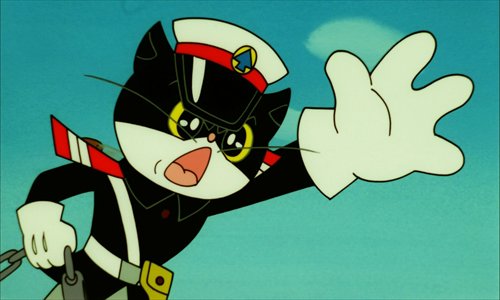
However, due to management reforms and the influx of Japanese and American films in the 1990s, SAFS went into a decline during these years. But in the recent years it has experienced a renaissance with works like The Magic Aster (2009), The Monkey King: Uproar in Heaven (3-D) (2011), as well as the upcoming film King of Mess and Black Cat Detective II.
Fierce competition
"Domestically-made animation films rarely turn a profit, and most suffer heavy losses," said Lu Xiaoqi, business development manager at Hippo. According to box office figures for the first half of 2011 released by the State Administration of Radio Film and Television (SARFT), animation films took nearly 1 billion yuan at the Chinese box office. However, just two releases, Kung Fu Panda II and Rio, both from America, accounted for 70 percent of this astronomical figure. "Chinese audiences seem to prefer overseas-made films to domestic ones," lamented Lu.
Hippo is one of the 300 privately-owned studios in Shanghai, and employs some 120 animators. Since its founding in 2006, Hippo has persisted in creating original works of art and has become established thanks to its Animen series of films, and a television series called Anny's Adventure, all of which are made in 3-D. "Each 3-D film costs more than 10 million yuan, but the subsidies given by the government only amount to 600,000 yuan or so, which is relatively small," Lu told the Global Times.
Guo Xiaobo, business development manager at Shanghai Cartoon Digital Technology Development (Cartoon Digital) told the Global Times that the company has to use revenues from its profitable, commercial-making department to support its 100 animators on other projects.
In an attempt to balance the high financial risks associated with original animations, some companies survive by carrying out postproduction work for overseas animators. "The staff who do the 'farmed-out' foreign animations can earn five times as much as animators working on original shows," said Lu from Hippo. "But it's not the way to develop China's own animation industry."
How to deal with the shortage of animation talent is another problem facing the domestic industry. "We have many graduates majoring in animation every year, but often they don't receive sufficient training during their studies in how to use the necessary software," said Lu.
Future development
During this summer vacation, Shanghai audiences can enjoy a feast of homegrown animated films such as McDull: Pork of Music, Seer II, GGBond: Fairy Tales of the Brick Kingdom and Animen II.
As the co-producer of McDull: Pork of Music and GGBond: Fairy Tales of the Brick Kingdom, Shanghai Toonmax Media is regarded as one of the two major animation production companies based in the city - the other is SAFS. The director of the creation and investment department, Chen Bin, told the Global Times that the major task facing Toonmax is to invest in, and create, animations that are centered around Chinese culture, and that "excel in story telling."
Many local animators agree that domestic animation skills and creativity still lag behind those of their US equivalents.
But the development of merchandising based on films has also helped animation firms to survive.
For example, Cartoon Digital has recently launched a series of multimedia educational packages catering to children under 6, as a way of financially capitalizing on their respected brand name.
Robin King, an animation professor at De Tao Masters Academy in Beijing said on a creative forum at the CCG Expo: "Great films take time to develop, and China, with its rich culture and exquisite fine arts, will present to the world great animation works that are based on Chinese culture and can be understood and appreciated by audiences around the world as well as at home."
Chinese you need:
Cartoon:卡通 (kǎ tōng)
Exposition:展览会 (zhǎn lǎn huì)
Animation:动漫 (dòng màn)
Inspire:启发 (qǐ fā)
Precursor:前身 (qián shēn)
Dominant:支配的 (zhī pèi de)
Influx:涌入 (yǒng rù)
Astronomical:极大的 (jí dà de)
Original:原创的 (yuán chuàng de)
Balance:平衡 (píng héng)
Survive:生存 (shēng cún)
Feast:盛会 (shèng huì)
Equivalent:对等物 (duì děng wù)
Merchandizing:销售规划 (xiāo shòu guī huà)
Multimedia:多媒体 (duō méi tǐ)