Games under the table
While China celebrates its continued dominance of the gold medal tally at the ongoing London Olympic Games, it is facing controversy once again with the way it chooses athletes for the Olympic squad. One accusation is that the athlete selection method is heavily affected by wrestling rivalries, as provinces struggle to put their own athletes on board.
So far in the London Games, China has been the subject of abundant media reports, haunted by controversies including the disqualifications of two women Chinese badminton players who were accused of match fixing.
Within the Chinese team, these Olympic Games have brought to light some existing problems, and the fairness of the athlete selection procedure has come under question. Critics say the best athletes have not always been picked due to the implicit practice of guanxi (connections). They contend this has harmed China's medal-winning power potential and insulted athletes who were not given their due chance to compete in the ultimate arena, the Olympic Games.
Plots are afoot
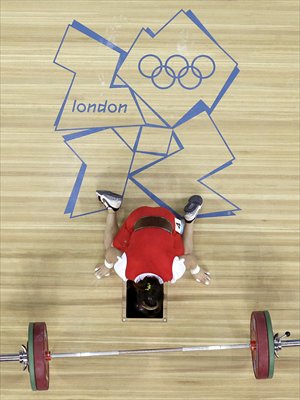
One of the most dramatic scenes came on July 29, when 17-year-old Chinese weightlifter Zhou Jun finished her Olympic journey with three failed attempts in her 53-kilogram weight class.
The zero points she scored startled Chinese audiences, serving as a big contrast to her weightlifting teammates who grabbed five gold medals. China has become a regular weightlifting contender, with its four female athletes all winning gold in the 2008 Beijing Olympic Games and nobody expected such a rout.
A number of newspapers labeled Zhou's performance the "most humiliating failure" in China's Olympic weightlifting history.
Though some papers later apologized for their inappropriate personal attacks on Zhou, many fans agreed with their interpretation. However, their ire was not aimed at Zhou but at the under-the-table decision-making process of Olympic athlete selection by China's sport authorities.
People scrutinized Zhou's past after her rout, and disclosed how she was selected. The seeds of this poor result seemed to have been planted even before the Games began.
China uses its national weightlifting championships, held in April, for pre-Games athlete selection. However, when the final Olympic roster was announced on July 10, people found that the weightlifting squad did not match the winners from the pre-Games trials.
To people's surprise, Zhou, who was not a top athlete among Chinese weightlifters, was selected for the Olympic roster instead of Ji Jing, the best athlete in the 53-kilogram group who came first place in the national championships. Both Zhou and Ji are from Hubei Province.
Prior to this, Zhou had been unknown on the weightlifting circuit. Young and inexperienced, she had only once competed in an international sports meeting and didn't even participate in the April competition.
Answering questions as to why Zhou was picked ahead of Ji, Hubei Administration of Sport officials said that Ji had suffered a loss of form while Zhou was doing well, which many people found unconvincing due to their evident different records. Zhou's personal best was 220 kilograms in the snatch and the clean and jerk combined, while Ji's best was 228 kilograms.
Provincial pulling power
Although all Olympic athletes and players compete under the unified Chinese team, back home, they only represent their respective provinces. All provinces and municipalities are under pressure to have "their own" athletes win medals in the Olympic arena, as the medals will be attributed to the provinces as being achievements of their sports training.
Despite this, how could Hubei dictate the selection of national Olympic athletes, and how could the State Sport Administration approve the inclusion of a less successful athlete?
According to media reports, this privilege was reserved to the Hubei sport administration to remedy the loss of another Hubei weightlifting athlete from the Olympic squad. It may also have come about as a result of a compromise between Hunan and Hubei provinces.
Tian Yuan, from Hubei, is China's strongest athlete in 48-kilogram women's weightlifting. She won three titles and broke two national records during the April trials. However, her highly-anticipated position on the Olympic team was mysteriously claimed by Wang Mingjuan from Hunan.
A widely circulated explanation to this is that Tian was sacrificed to allow Hunan to have one more Olympic athlete. But so far, no one has been able to pinpoint who exactly signed off on Tian being booted off the squad.
Tian's loss made Hubei determined to secure the other Olympic seat for Ji. Otherwise there would have been no Hubei athletes on the Olympic weightlifting regiment, meaning the province would have been unable to claim any success for Olympic gold medals.
This is a perfect example of regional interests triumphing over national decisions. The State Sport Administration allowed Hubei to change the squad on its own. By allowing Hubei a free pass at nominating an athlete, Zhou was able to enter the London Olympics.
However, all these changes of athletes were conducted behind the scenes and explanations by sport authorities at varying levels have not been convincing.
These seemingly random changes have confused the public and made many cast doubts over the use and significance of the pre-Games sports meeting, given its original intention of highlighting China's best medal prospects. Furthermore, the mystery remains as to why Hubei, when given this free pass, picked Zhou ahead of Ji.
Dissent in the ranks
Ma Wenguang, president of the Chinese Weightlifting Association (CWA) and director of the Weightlifting, Wrestling and Judo Administrative Center under the General Administration of Sport of China, said that Tian Yuan was shelved because she was injured, which Tian denied. Tian told China Business Daily that no athlete was completely free of injuries but hers were merely a minor issue.
Ma said the decision was made by the Hubei sport administration and against the original intentions of the central authorities.
But Hu Dechun, director of the Hubei Administration of Sport, told media that the national administration had made all the decisions.
Enquiries to the Hubei sport administration for further clarification went unanswered. One member of staff with the Hunan sport administration said that all its top officials were in London and would only be able to answer questions about athlete selection once they returned.
The International Olympic Committee does not interfere with the selection standard and process in each country, though it can restrict the number of athletes a country can send in each sport. In women's weightlifting, for example, one country can only send four female athletes to compete in the Games. As such, the selection process can vary widely from country to country.
The US adopts a clear-cut policy in athlete selection, and most potential Olympic athletes must compete in national trials.
Problems at the very top
Yan Qiang, vice-director of news portal Netease and a veteran sports commentator, said he believes entangled regional and individual interests are mostly to blame for the chaotic Olympic athlete selection in China.
He said central authorities must abandon their principle of maintaining balanced relationships between different provinces and stop being lenient toward provincial officials while being harsh on individual athletes.
Yan added this institutional problem has led to provincial sport administrations wielding huge power in trying to secure their athletes on Olympic squads. On top of this, Olympic gold medals will also be counted on the medal tally of the 12th National Games which will be held next year.
The gold medals are attributed to the medalists' home provinces during the National Games, the most competitive sports meeting in China. The ranking of provinces in winning gold medals at the national games is an important gauge in determining the performances of provincial sports officials. Many people believe this arrangement is behind much of the present-day double dealings.
"It's a strange practice. The fact that Olympic gold medals are also counted as national games medals has long been criticized," Yan said. "Judging the work of a regional sports bureau through the number of national games medals shows the link between sports and bureaucracy."
China's sport administrations at all levels focus on training champions to win medals at international and domestic sports games, and the number of medals directly determine these officials' promotion chances and careers, according to Yan.
Although feeling that they were unfairly replaced, Tian Yuan and Ji Jing chose to accept the decision. However, Tian did complain to the media. Meanwhile fencer Huang Liangcai quit the national team in protest at his exclusion from the Olympic squad.
Huang ranked No.3 in China for men's foil, but was excluded from the four-man Olympic group. The disgruntled Huang told reporters that he had been mistreated and seriously questioned the fairness of the opaque Olympic squad decision-making process.
Seeing only a dim hope to prove his own abilities, Huang chose to separate himself from the system, dealing a body blow to China's fledgling fencing hopes.