HOME >> LIFE
The pearl of Brazil’s northern coast
By Angela Corrias Source:Global Times Published: 2012-8-24 16:55:03
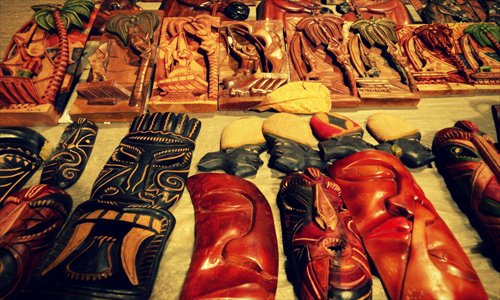
Local art for sale at Beira Mar market. Photo: Angela Corrias
"Abacaxi, óleo de coco, camarao, lagosta!" Pineapple, coconut oil, grilled shrimp, lobster! These are the main products offered by the noisy and ubiquitous street vendors that are found on Brazilian beaches. Everything about them seems to shout: their colorful hats, their dancer-like allure under the unforgiving sun, and their broad smiles.
The first time I went to Brazil was in 1992, and Rio de Janeiro was then a poverty-stricken, yet hypnotically beautiful, metropolis. Every time I have visited in the past twenty years, the powerful winds of unrelenting development seemed to be blowing stronger by the minute. In the last two decades, the country has earned a well-deserved place as a new world emerging power.
While sun-drenched Fortaleza, the capital of the state of Ceará, hasn't yet reached the level of Rio de Janeiro's seductive charisma, it is nevertheless quickly becoming the new favorite destination among Europeans and in-the-know travelers who want to unearth the soul of the northeastern part of the country. Known among Brazilians as the City of Light, Fortaleza allows visitors to soak up its tribal past while offering all the comforts of modernity.
In 1500, when Spanish conquistador Vicente Yá?ez Pinzón landed on the city's Praia Mucuripe, this beach was little more than a modest bit of coastline. Today, fishermen moor their jangadas (traditional fishing boats still in use) near the docks every morning at 5 am, after a whole night of fishing adventures on the Atlantic, only to hoist their sails once again in the afternoon.
An ocean full of fish, the blessing of more than 300 sunny days a year, and a dream-like stretch of white sand have conspired to make this once inviolate sweep a busy market. Every day, fishermen sell their catch directly to a crowd of eager customers who flock there no later than 6 am to score the best stock.
The first time I went to Brazil was in 1992, and Rio de Janeiro was then a poverty-stricken, yet hypnotically beautiful, metropolis. Every time I have visited in the past twenty years, the powerful winds of unrelenting development seemed to be blowing stronger by the minute. In the last two decades, the country has earned a well-deserved place as a new world emerging power.
While sun-drenched Fortaleza, the capital of the state of Ceará, hasn't yet reached the level of Rio de Janeiro's seductive charisma, it is nevertheless quickly becoming the new favorite destination among Europeans and in-the-know travelers who want to unearth the soul of the northeastern part of the country. Known among Brazilians as the City of Light, Fortaleza allows visitors to soak up its tribal past while offering all the comforts of modernity.
In 1500, when Spanish conquistador Vicente Yá?ez Pinzón landed on the city's Praia Mucuripe, this beach was little more than a modest bit of coastline. Today, fishermen moor their jangadas (traditional fishing boats still in use) near the docks every morning at 5 am, after a whole night of fishing adventures on the Atlantic, only to hoist their sails once again in the afternoon.
An ocean full of fish, the blessing of more than 300 sunny days a year, and a dream-like stretch of white sand have conspired to make this once inviolate sweep a busy market. Every day, fishermen sell their catch directly to a crowd of eager customers who flock there no later than 6 am to score the best stock.
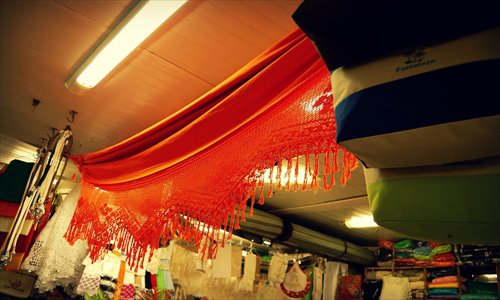
A hammock hangs on display in a market.
African and tribal flavors
With its nearly 600 kilometers of coastline, the cuisine of Ceará is heavily based on the plentiful bounty drawn from the Atlantic Ocean. While menus in most restaurants primarily feature shrimp, lobster and sirigado, or whiting, seafood dishes make up at least half of their offerings, in perfect line with the rest of the country's coastal cities. The array of seafood-based dishes in the region's gastronomic tradition is wide and diverse, and no restaurant would dare open its doors with a menu that failed to offer some classic dishes.
Moqueca de arraia is a recipe in which ray or skate fish is deliciously stewed in a sauce made from coconut milk, tomato, onions, coriander and a clear, orange palm tree oil locally known as azeite de dendê. Another staple is the popular bai?o-de-dois, a dish from the desert areas featuring rice, beans, butter and fresh cheese. As a weekly ritual, a tradition called caranguejada takes place every Thursday, when locals gather in different restaurants or beach stalls and eat crab with different sauces.
The African origins of moqueca, enriched by flavors introduced by the slaves in colonial times and retained in the present cuisine, beautifully blend with indigenous Brazilian food traditions and their reliance on native tropical plants. This combination of races and ethnic groups, influenced also by European traditions brought by navigators as early as the 16th century, has resulted in a fascinating gastronomic heritage.
Although lunch time is conventionally around 1 pm, by late morning the sweet smell of the common ingredient coconut milk and the fragrance of cassava flour, in all its forms, are released into the streets. Following one's nose will lead to churrascarias, Brazilian steakhouses, and restaurants such as the famed Colher de Pau and Rei dos Mares tucked into residential Meireles, overlooking the beautiful Beira Mar promenade.
The cassava, or manioca, a woody shrub with an edible root, was once considered the typical food of the poor due to its ability to survive lengthy periods of drought and inclement conditions. However, as often happens, over time it has become a specialty cherished by locals and tourists alike. Whether boiled, deep-fried, ground into seasoned flour, or farofa, or, most popularly, as tapioca, today manioc is a useful ingredient in all meals, thanks to its high levels of calcium, vitamins B and C, and essential minerals.
Tapioca, abundant throughout the Northeast and a staple food in the diet of the Tupí and Guaraní indigenous tribes, is best consumed in two cities, Olinda, in the state of Pernambuco, and Fortaleza. Manioc starch, water and a dash of salt are put through a sieve, and a layer of this mixture is laid on a hot frying pan, causing the starch to gel and become slightly chewy. Served either thin or thick, this tapioca dish is a typical breakfast and is delicious when lightly soaked in coconut milk. It is often offered with a variety of toppings such as queijo coalho (cheese curds), goiabada (guava marmalade) or bananas. When eaten for lunch or dinner, a classic traditional filling is carne de sol, shredded sun-dried meat that is typical of Ceará.
The huge array of fillings and toppings for tapioca makes for a perfect meal for fish and meat lovers as well as vegetarians. While you can find this staple nearly everywhere, there are some places that provide the perfect atmosphere in which to enjoy it. Centro das Tapioqueiras, on Avenida Washington Soares, where more than twenty local women make a very traditional tapioca, has become a cultural and culinary tourist attraction. Coco Bambu, another favorite, is a rustic eatery constructed entirely with bamboo.
Tapioca, like many manioc-based dishes in northeastern cuisine, is an important legacy of indigenous Brazilians. Today there remain at least fifty tribes, mainly in the Amazon, that never experienced any contact with early European pioneers or later immigrants. Where such contact has actually taken place, the blend of different traditions with the prominent native culture has engendered an utterly captivating folklore.
Indigenous philosophy dictates that people rely heavily on what Mother Nature has blessed the land with, using plants as food and medicine and to make everyday tools. This is the foundation of a culture that never fails to dazzle visitors thanks to its unique ability to connect modernity with ancient civilizations that are still alive and well.
Despite a stormy past of colonization and a not-so-remote history of poverty and shaky governments, Brazil's timeless appeal is in large part due to its population's stubbornness to always smile no matter what. Unadulterated kindness, spontaneous generosity and an unfailing festive spirit are the ingredients that make for an unforgettable holiday in this South American giant.
With its nearly 600 kilometers of coastline, the cuisine of Ceará is heavily based on the plentiful bounty drawn from the Atlantic Ocean. While menus in most restaurants primarily feature shrimp, lobster and sirigado, or whiting, seafood dishes make up at least half of their offerings, in perfect line with the rest of the country's coastal cities. The array of seafood-based dishes in the region's gastronomic tradition is wide and diverse, and no restaurant would dare open its doors with a menu that failed to offer some classic dishes.
Moqueca de arraia is a recipe in which ray or skate fish is deliciously stewed in a sauce made from coconut milk, tomato, onions, coriander and a clear, orange palm tree oil locally known as azeite de dendê. Another staple is the popular bai?o-de-dois, a dish from the desert areas featuring rice, beans, butter and fresh cheese. As a weekly ritual, a tradition called caranguejada takes place every Thursday, when locals gather in different restaurants or beach stalls and eat crab with different sauces.
The African origins of moqueca, enriched by flavors introduced by the slaves in colonial times and retained in the present cuisine, beautifully blend with indigenous Brazilian food traditions and their reliance on native tropical plants. This combination of races and ethnic groups, influenced also by European traditions brought by navigators as early as the 16th century, has resulted in a fascinating gastronomic heritage.
Although lunch time is conventionally around 1 pm, by late morning the sweet smell of the common ingredient coconut milk and the fragrance of cassava flour, in all its forms, are released into the streets. Following one's nose will lead to churrascarias, Brazilian steakhouses, and restaurants such as the famed Colher de Pau and Rei dos Mares tucked into residential Meireles, overlooking the beautiful Beira Mar promenade.
The cassava, or manioca, a woody shrub with an edible root, was once considered the typical food of the poor due to its ability to survive lengthy periods of drought and inclement conditions. However, as often happens, over time it has become a specialty cherished by locals and tourists alike. Whether boiled, deep-fried, ground into seasoned flour, or farofa, or, most popularly, as tapioca, today manioc is a useful ingredient in all meals, thanks to its high levels of calcium, vitamins B and C, and essential minerals.
Tapioca, abundant throughout the Northeast and a staple food in the diet of the Tupí and Guaraní indigenous tribes, is best consumed in two cities, Olinda, in the state of Pernambuco, and Fortaleza. Manioc starch, water and a dash of salt are put through a sieve, and a layer of this mixture is laid on a hot frying pan, causing the starch to gel and become slightly chewy. Served either thin or thick, this tapioca dish is a typical breakfast and is delicious when lightly soaked in coconut milk. It is often offered with a variety of toppings such as queijo coalho (cheese curds), goiabada (guava marmalade) or bananas. When eaten for lunch or dinner, a classic traditional filling is carne de sol, shredded sun-dried meat that is typical of Ceará.
The huge array of fillings and toppings for tapioca makes for a perfect meal for fish and meat lovers as well as vegetarians. While you can find this staple nearly everywhere, there are some places that provide the perfect atmosphere in which to enjoy it. Centro das Tapioqueiras, on Avenida Washington Soares, where more than twenty local women make a very traditional tapioca, has become a cultural and culinary tourist attraction. Coco Bambu, another favorite, is a rustic eatery constructed entirely with bamboo.
Tapioca, like many manioc-based dishes in northeastern cuisine, is an important legacy of indigenous Brazilians. Today there remain at least fifty tribes, mainly in the Amazon, that never experienced any contact with early European pioneers or later immigrants. Where such contact has actually taken place, the blend of different traditions with the prominent native culture has engendered an utterly captivating folklore.
Indigenous philosophy dictates that people rely heavily on what Mother Nature has blessed the land with, using plants as food and medicine and to make everyday tools. This is the foundation of a culture that never fails to dazzle visitors thanks to its unique ability to connect modernity with ancient civilizations that are still alive and well.
Despite a stormy past of colonization and a not-so-remote history of poverty and shaky governments, Brazil's timeless appeal is in large part due to its population's stubbornness to always smile no matter what. Unadulterated kindness, spontaneous generosity and an unfailing festive spirit are the ingredients that make for an unforgettable holiday in this South American giant.
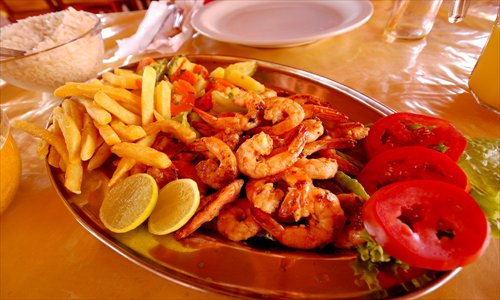
A plate of grilled shrimp. Photo: Angela Corrias
Arts and crafts
Along with a cuisine that combines ancient and modern traditions, the northeastern state of Ceará also boasts a tradition of art and handicrafts that blends tribal features with contemporary tastes.
The best place to witness native craftsmanship is Fortaleza's Centro do Turismo, on Rua Senador Pompeu, where a lovely exhibition of ancient tools and local artwork can be appreciated right in the city's old prison. It was built in 1850 and later converted into a tourist center in 1973.
Meandering through the different floors and rooms of this former jail, where every cell could house between twelve and twenty prisoners, I felt as if I was stepping back to a time when I wouldn't have enjoyed the country as much as I do now. This sentiment seems to permeate the air as soon as a visitor steps over the threshold of this big, white colonial building.
Today, cells have been refurbished to accommodate the more pleasant purpose of displaying and selling local textile handicrafts, finely embroidered t-shirts, tablecloths, dresses, purses and all kinds of everyday objects.
Still overwhelmed by a mixture of curiosity about the city's difficult past and a fear of delving into it, I decided to dig deeper into the world of local crafts.
I hailed a taxi, and the driver whisked me directly to the Mercado Central, the central market. I spent hours exploring the three-story building with more than 500 stalls selling all sorts of locally made products, from leather bags, to colorful bikinis, to tablecloths made with coconut fiber.
Many stalls carried charming decorated bottles of the world-famous sugar cane-based liqueur cacha?a, bottled with a crab or fruits inside. Such a presentation, I thought, cleverly combined the city's most famous symbols.
Sugar cane is also used to make other products such as rapadura, a very sweet delicacy typical of northeastern areas. The sugar is extracted from the cane's juice by a series of steps including smashing, boiling, shaping and drying.
Mainly geared to tourists, the items in these stalls are up for bargaining. However, due to the booming economy, don't expect the unbending shopkeepers to go down in price too much.
Along with a cuisine that combines ancient and modern traditions, the northeastern state of Ceará also boasts a tradition of art and handicrafts that blends tribal features with contemporary tastes.
The best place to witness native craftsmanship is Fortaleza's Centro do Turismo, on Rua Senador Pompeu, where a lovely exhibition of ancient tools and local artwork can be appreciated right in the city's old prison. It was built in 1850 and later converted into a tourist center in 1973.
Meandering through the different floors and rooms of this former jail, where every cell could house between twelve and twenty prisoners, I felt as if I was stepping back to a time when I wouldn't have enjoyed the country as much as I do now. This sentiment seems to permeate the air as soon as a visitor steps over the threshold of this big, white colonial building.
Today, cells have been refurbished to accommodate the more pleasant purpose of displaying and selling local textile handicrafts, finely embroidered t-shirts, tablecloths, dresses, purses and all kinds of everyday objects.
Still overwhelmed by a mixture of curiosity about the city's difficult past and a fear of delving into it, I decided to dig deeper into the world of local crafts.
I hailed a taxi, and the driver whisked me directly to the Mercado Central, the central market. I spent hours exploring the three-story building with more than 500 stalls selling all sorts of locally made products, from leather bags, to colorful bikinis, to tablecloths made with coconut fiber.
Many stalls carried charming decorated bottles of the world-famous sugar cane-based liqueur cacha?a, bottled with a crab or fruits inside. Such a presentation, I thought, cleverly combined the city's most famous symbols.
Sugar cane is also used to make other products such as rapadura, a very sweet delicacy typical of northeastern areas. The sugar is extracted from the cane's juice by a series of steps including smashing, boiling, shaping and drying.
Mainly geared to tourists, the items in these stalls are up for bargaining. However, due to the booming economy, don't expect the unbending shopkeepers to go down in price too much.
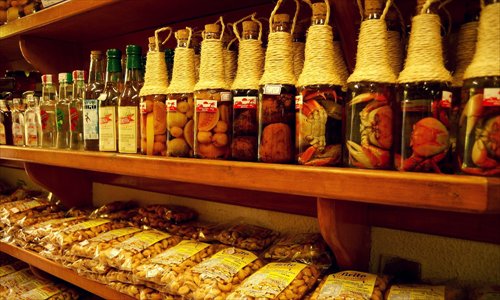
Bottles of cachaca. Photo: Angela Corrias
Spectacle on the beach
You can't say you have fully enjoyed Fortaleza and felt its inner spirit if you haven't sipped from a fresh coconut while swinging on a hammock by the ocean. Visitors and locals alike will watch in awe as the sun sets on the turquoise horizon, swaddled in clouds. These same sun-worshippers light up with anticipation for the night to unfold.
Every night by sunset, local artisans have already set up their stalls right on the beautiful Beira Mar beach, in preparation for the evening handicraft fair. It might have been thanks to the charming atmosphere provided by the rustic lights flickering in the darkness around the handmade products, but the same goods I saw earlier at the Mercado Central didn't quite live up to the idyllic images of a tropical society as much as they did later on this beach.
Making my way through the stalls of this local market strung along the coastline and festooned with all kinds of artifacts, I forked over some good cash at the irresistible sight of colorful jewelry and somber tribal masks. It was the perfect end to a long but rewarding day spent exploring museums and tucking into the local delicacies of this vibrant and thriving city that dominates Brazil's northern coast.
You can't say you have fully enjoyed Fortaleza and felt its inner spirit if you haven't sipped from a fresh coconut while swinging on a hammock by the ocean. Visitors and locals alike will watch in awe as the sun sets on the turquoise horizon, swaddled in clouds. These same sun-worshippers light up with anticipation for the night to unfold.
Every night by sunset, local artisans have already set up their stalls right on the beautiful Beira Mar beach, in preparation for the evening handicraft fair. It might have been thanks to the charming atmosphere provided by the rustic lights flickering in the darkness around the handmade products, but the same goods I saw earlier at the Mercado Central didn't quite live up to the idyllic images of a tropical society as much as they did later on this beach.
Making my way through the stalls of this local market strung along the coastline and festooned with all kinds of artifacts, I forked over some good cash at the irresistible sight of colorful jewelry and somber tribal masks. It was the perfect end to a long but rewarding day spent exploring museums and tucking into the local delicacies of this vibrant and thriving city that dominates Brazil's northern coast.
Posted in: Adventures