Mapping fate
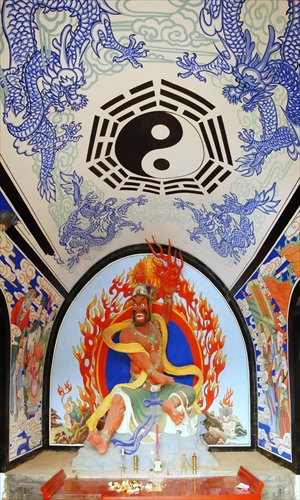
Some think that feng shui, also known as Chinese geomancy, is merely a superstition. But it has deep roots in China's history and is heavily integrated in many people's lives. In feng shui, one's environment is closely related to personal fortune.
Feng shui masters help individuals create an auspicious environment in their homes to optimize the quality of their lives.
Thriving industry
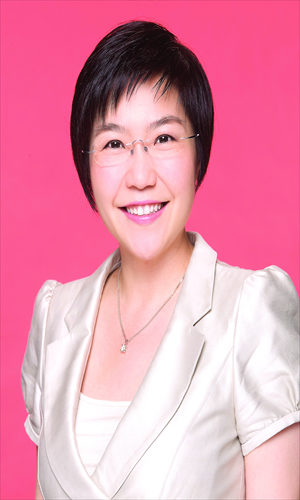
When the Global Times got in touch with Mak Lingling, one of the top 10 feng shui masters in Hong Kong, she was about to board her flight to Shenzhen to meet her clients. Mak gives lectures almost every week in the Chinese mainland, and was just in Harbin, Heilongjiang Province early this week.
"Feng shui is thriving in the Chinese mainland, as more educated people are thinking about the science behind feng shui," she said.
Mak was interested in feng shui at an early age, but she did not do further research until middle school, after her mother passed away.
"Before that, a fortune teller had told my mother, who had always been healthy, that she would encounter trouble in one or two years," said Mak. The reality that soon hit spurred Mak's interest in Yi-ology (the study on divination, based on The Book of Changes) and Chinese geomancy.
"I wanted to know how people predicted the future and if I can also do it, myself, to help others." Mak told the Global Times. She learned from several masters including the acclaimed Lin Zhen and become a full-time geomancer in 1996. Mak now travels around the country, doing business while giving lessons in feng shui.
"Feng shui cannot change a person's fate. Our work is like the weather forecast. We can just tell you if it's going to rain or not and advise you to bring an umbrella or stay at home. But we can't change circumstances and turn it into a fine day," said Mak.
Mak is reasonable when it comes to her own personal life. She cares about small details but is not neurotic enough to let it overrun her life.
"My home is not like what many people imagine, filled by things that are obviously 'geomantic,' such as the Eight Diagrams (a series of symbols used in fortunetelling) or crystal balls," she said. "There are common decorations in my home that are also are great for feng shui, like scenic pictures."
Private interests
Ma Jun is a public official working for the government in Yichun, Jiangxi Province, but also has a private practice as a feng shui master. Ma studied feng shui by himself, out of interest in Chinese traditional culture. It then became his part-time job.
In 2009, Ma opened a shop on the Internet for fortunetelling. It did well, and he started his own website this year.
"I always pay attention to numerology and geomancy in my daily life," said Ma.
According to the analysis of his Ba Zi (Chinese horoscope), Ma found that water is not good for his fortune, so he drinks as little as possible. The earth supposedly benefits him. As yellow is the representative color of earth, Ma often wears yellow clothes, and goes by the online username "Huangshang Yuanji" (auspicious in yellow clothes).
"I adopt as many beneficial elements as possible. This year, southeast and north are the least auspicious directions for me, so I will not move employees to these two orientations. I will also not travel to Southeast China or Northern China," Ma told the Global Times.
In Ma's opinion, a superstitious person is someone addicted to fortune telling or feng shui but ignores reality.
"We should have active lives guided by things like feng shui and horoscopes. Then it is beneficial for our lives," he said. "But don't have blind faith in us, as we are humans. Just take our advice as reference. Never believe that anyone can tell the color of your car through your Ba Zi."
Yi-ology curing hearts
A geomancer, numerologist, and vice-chairman of the China Association for the Book of Changes, Wei Ziyuan is now learning psychology and is confident in getting certified in the US as a hypnotherapist this year.
"In the future, feng shui and numerology should combine with psychology," Wei told the Global Times.
Wei's grandfather is a veteran doctor of traditional Chinese medicine. As TCM and Yi-ology have similar origins, Wei was interested in Yi-ology from early childhood and later researched feng shui.
"There's an old saying that 'Medicine cures illnesses and Yi-ology heals the heart,'" he said. "Yi-ology and geomancy are ancient versions of Chinese psychology."
"Your character decides your fate. I help people realize disadvantages they were given versus the circumstances they create for themselves. I advise people to be who they were born to be, and create an environment that suits their nature."
Wei bought his house in 2009. Throughout the decorating process, he strictly followed feng shui principles, creating an ideal environment.
"People in my house feel comfortable." he said. "My personal life and career flowed smoothly, after moving in."
While it's difficult to explain if feng shui works, a pleasant environment is never bad, and it can never hurt to practice practical feng shui.