Face time
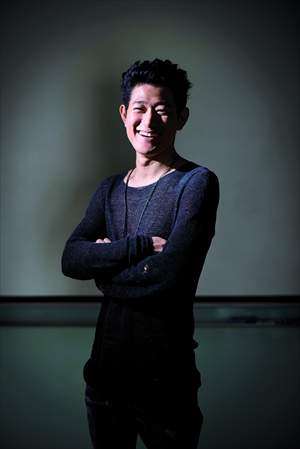
After 11 years in China, the Osaka-born Japanese actor Koji Yano has finally seen one of his greatest dreams come true. He has landed the role of a Chinese, an unswerving communist solider, in a new television spy drama called Sheng Yan (Feast).
"When I was starring in roles as the 'Japanese devil' years ago, I never had the opportunity to play such a heroic role. I really appreciate it," Yano wrote on his official Weibo account, which now has over one million followers.
Leap of faith
After landing a leading role as an overseas Japanese student in the Chinese TV drama Eternal Lover in 2000, Yano set foot in China for the first time, with little knowledge of the country.
However, the three-month shoot in Beijing changed Yano's life. In 2001, with a total savings of 60,000 yuan ($9,540), Yano, then 30 years old, moved to China, leaving behind his family in Osaka and an eight-year struggle in Tokyo, during which he mostly played minor roles in Japanese films and TV dramas.
"My friends told me I would become a huge star because of Eternal Lover, and persuaded me to chase my dreams in China. But unfortunately, the show wasn't that popular," the 41-year-old Yano said of his early years in China in an interview with the Global Times in his Beijing office. Sitting at ease in jeans, Yano spoke in fluent Chinese, though his tones and manner of speaking betrayed his Japanese identity.
He had little luck at first, and led a spartan life in his rented apartment in Beijing. "I felt very lonely, but I had to keep going because I liked China," he said. "It was my dream to pursue my career in this country."
Typecast as the devil
In 2002, Yano finally landed the part of the Mikado in the TV series Towards the Republic, the first of many Japanese devils, the term commonly used in China to refer to World War II Japanese soldiers, that he would play. In the following four years, Yano played the token Japanese devil in a total of eight Chinese TV dramas.
"At the time, I never cared about what kind of role I would get, as long as I got the chance to show up," said Yano, who now admits that if he'd known that he'd get his start by being the face of the Japanese devil, he might have had second thoughts on moving to China. "I never knew there were so many 'red-classic' series on the War of Resistance against Japanese Aggression (1937-45), nor did I know about Chinese people's feelings toward Japan," he said.
Gradually, Yano became well known among a wide Chinese audience as the face of Japanese soldiers in TV dramas. Soon, he felt lost again.
"I was sick of always playing mask-like Japanese soldiers who were all the same - cruel, indifferent and lascivious, and they'd all die disgracefully. Such roles lack depth," said Yano.
Moments to shine
Change finally came in September 2006, when Yano appeared on a popular talk show on the Hong Kong-based Phoenix TV. In the studio interview, Yano's mastery of Chinese and sense of humor, even when describing the toughest moments of his life in China, immediately won the hearts of Chinese viewers.
Soon after, in another TV drama, Jade Phoenix, Yano played a Japanese man who was brought up in China. "The story's about my character and his two Chinese friends. It was definitely a breakthrough role after my past experiences," Yano told the Global Times, noting that the part led to better jobs. In recent Chinese TV drama Fu Chen (Emerge and Sink), Yano starred as the CEO of a Japanese-owned company in China.
Successful as he is now, Yano experienced many hard times on the road to fame, describing the journey as "a mix of joy and sorrow." In addition to being recognized on the street as a Japanese devil, Yano has been harshly criticized online, even threatened, by his own countrymen for taking roles they feel bring humiliation to Japan.
"I am just an actor who is trying out different roles," said Yano. Though the actor has always tried to shed the Japanese military uniform, one of his favorite roles was that of a Japanese soldier in the TV drama entitled Sniper, a role for which he won great praise.
"During his performance, he totally changed the image of the Japanese solider in people's perceptions. He brought emotion into the role, so as to portray a 'devil' with flesh and blood," according to a review of the show posted on the Phoenix TV website.
Linking new home with homeland
Despite the current conflict over the Diaoyu Islands and the escalating tension between China and Japan, Yano says China is still the place he likes to call home. It is where his career took off, and where he will continue to work and chase his dreams.
"Maybe I am more open and simpler in this regard. Actually, I've never tried to tag myself as a Japanese in China, neither do I impose political ideologies on myself as I try to thrive in this country," said Yano, who answered the Global Times' questions about the current situation in a relaxed manner.
After playing a variety of Japanese roles on Chinese TV, Yano is well known not only in China, but also back home. Several extensive reports have been produced in his homeland, including a documentary on his pursuit and struggles in China.
Yano believes that his persistence in China has allowed him to become a link for people from both countries. "I just hope more Japanese can glimpse the history between our two countries through the roles I take on, and develop a better understanding of how we think about each other, especially among young people," said Yano.
So far, he has seen changes occur within his own family. "My parents' perception of China has changed. They are most surprised by the fact that Chinese and Japanese actually share many things in common," he said.
Now settled in Beijing, Yano lives with his Chinese wife and 2-year-old daughter, who holds Chinese nationality. Yano says that having a daughter has made him feel more of a responsibility to help promote friendship between the two countries. "She is the hybrid of Japan and China. I hope she can lead a happy life. Adults from both countries need to think of what they can do for the sake of our children's future," he said.