The A to Z of Beijing in 2012
In a city that never stops, 2012 will be remembered as an eventful year in Beijing. Under a cloud of hazy smog, we stared death in the face daily and proved it takes more than an apocalypse forecast by an ancient Mayan calendar to unnerve Beijingers. From politics to protests, floods to foreigner fury, the Year of the Dragon brought out the best and worst in human and Mother Nature, writes Tom Fearon.
AIDS treatment and the discrimination that people living with the virus face were high on the news agenda in 2012. In July, China lifted its 14-year ban on lesbians donating blood due to previous concerns they were a high-risk group for AIDS transmission. In August, a man was pricked by an HIV-infected syringe needle left in the back of a taxi. An HIV-positive lung cancer patient was denied treatment in November, leading him to falsify his medical records to obtain surgery.
BABY BOOMS come and go, but 2012 was a busy one for hospital staff as couples planned children to be born in the Year of the Dragon. The most auspicious sign of the traditional 12-year zodiac cycle sparked a surge in births and resulted in pregnant women being as common a sight on Beijing streets as traffic wardens.
CATS, of the stray variety, and the Beijing Zoo were involved in one of the biggest feuds to rock the city this year. The zoo came under fire in November when volunteers accused it of tearing down shelters they had built to accommodate stray cats during winter. On December 10, it was reported that dozens of strays had frozen to death or gone missing. The zoo later agreed to rebuild 45 shelters, but has yet to fulfill this promise.
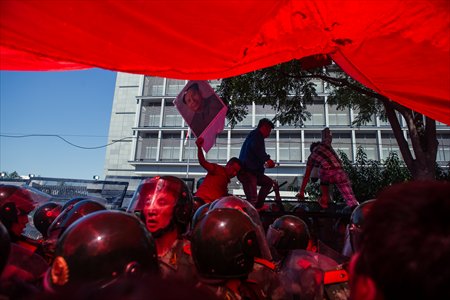
DIAOYU ISLANDS might lie many nautical miles away in the East China Sea, but protesters in Beijing gently reminded Tokyo in September who holds their sovereignty during demonstrations that were forceful, though largely peaceful, outside the Japanese embassy. Despite eggs and plastic bottles being pelted at the embassy, the building was spared any serious damage.
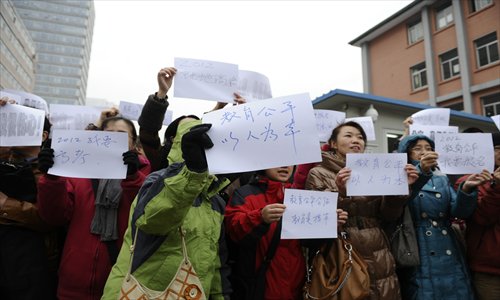
EDUCATION was a hot-button issue for nonlocal parents with children attending Beijing high schools. Migrant workers grew increasingly frustrated as authorities stalled on unveiling their policy for nonlocal students taking the gaokao (national college entrance examinations). Around 30 rallying nonlocal parents clashed with Beijingers staging a counter-protest outside the Municipal Commission of Education headquarters in October. Authorities said at the last minute that nonlocal students can sit the gaokao conditionally in Beijing in 2014.
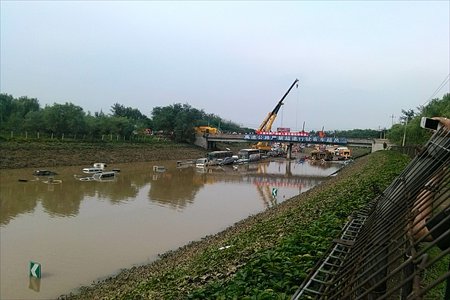
FLASH FLOODS swept Beijing on July 21 after a torrential downpour hit the city. The toll of devastation, including the deaths of 79 people and over 10 billion yuan ($1.6 billion) in damage, came after the city was pounded over 10 hours by its heaviest rain in 60 years. The disaster exposed flaws in the capital's sewer system and sparked debate about the effectiveness of authorities' emergency response.
GUTTER OIL is perhaps the one example of recycling that Beijing restaurants have enthusiastically embraced. Proving that resourcefulness should be at the cornerstone of business, restaurants throughout the city showed no hesitation in using cooking oil scooped from sewers, cooking pots or other unknown sources. A nationwide crackdown in April resulted in over 100 arrests that included members from a ring in Beijing.
HOT POT might be one of the best forms of cuisine in Beijing during winter, but diners had plenty of reason to be nervous at restaurants with alcohol-fueled stoves. On November 18, a customer at a hot pot restaurant near the East Fourth Ring Road suffered severe burns after flames erupted when a waiter improperly topped up fuel.
ILLEGAL FOREIGNERS were targeted in a crackdown launched on May 15. Lasting 100 days, Beijing public security officials sought to ferret out foreigners staying or working illegally in the city. The crackdown appeared to be in response to two viral online videos of foreigners behaving poorly - one a British sex fiend, the other a foul-mouthed Russian cellist.
JAPANESE RESTAURANTS across Beijing took to decorating their windows with the Chinese national flag as anti-Japan protests flared in September over the Diaoyu Islands territorial row. The flag was regarded as a safety talisman, although some went further by hanging banners with pro-China slogans across their storefronts to ward off any would-be vandals.
KIM LEE became an inspiration for domestic violence victims when she went public about the abuse she suffered at the hands of her ex-husband, Crazy English founder Li Yang. Lee filed for divorce last year, but rather than lying low she became an advocate during 2012 for the rights of battered wives in China. She raised public awareness about domestic violence to ensure it is one issue that doesn't remain behind closed doors.
LAOWAI BEHAVING BADLY became a common fixture in the news this year in Beijing, particularly on May 8 when a British man was filmed sexually assaulting a Chinese woman late at night in the Xuanwumen neighborhood. Just as anti-foreigner sentiment was dying down in the city, a drunk Russian man decided on October 12 to stab a hotel employee downtown and then go on a joyride in a minibus he plowed into four parked vehicles.
MARBURY, Stephon or "Commissar Marbury" as he's known among his teammates at the Beijing Ducks, steered the club to its maiden Chinese Basketball Association (CBA) championship in March. Marbury won over local fans with his public displays of love for Beijing and fondness for rubbing shoulders with locals on the subway. If his autobiography in Chinese and 600,000-strong legion of Weibo followers haven't guaranteed his Middle Kingdom legacy, his life-size bronze statue erected shortly after the Ducks' title win ought to seal the deal.
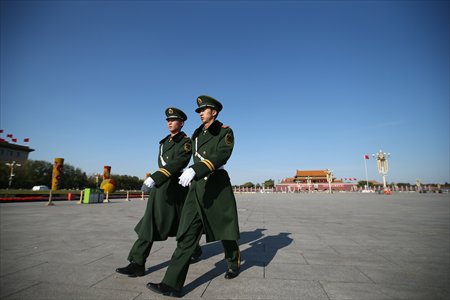
NATIONAL CONGRESS fever gripped Beijing. It was the 18th congress since the Party was founded in 1921. More than 2,000 delegates elected members to the new Standing Committee of the Political Bureau of the Central Committee of the Party. Security was stepped up, Internet was slowed down and a parking lot near the Great Hall of the People resembled a showroom of black Audi sedans during the political gathering.

OGLING scantily clad models became the favorite pastime of visitors at the 2012 Beijing International Automotive Show held in April. Li Yingzhi got male visitors' engines running by donning a barely-there, diamond-encrusted frock worth 100 million yuan. Apparently there were cars at the show, too.
PM2.5 - that's particulate matter smaller than 2.5 micrometers for you clean-air breathing folk - is a daily part of life in Beijing. It gives the eyes a ruby glow and lungs a sexy, wheezy gust. The US embassy, which via its Twitter feed issues daily updates on the city's PM2.5 levels, lost its monopoly on air quality reporting in the city in January when the Beijing Municipal Environmental Monitoring Center entered the fray. Its reports on air quality weren't quite as catchy as "crazy bad," as the US embassy famously described air one hazy November day in 2010, but they did ramp up pressure on environmental authorities to do more to tackle pollution.
"QIANMENIZATION" is a term one Metro Beijing editor coined for a headline accompanying a November 9 story about a renovation project in Dashilan, west of historic commercial area Qianmen in Xicheng district. The term stuck and has even been borrowed by other media outlets to describe the conversion of historical Beijing sites into faux "heritage" copies.
REPTILE plagues in Beijing offered further evidence that an apocalypse loomed in 2012. An outbreak of over 1,000 snakes caused panic in a village in Hebei Province after they were released June 1 by a group of Beijing Buddhists eager to show their compassion for living creatures - and possible contempt for natives in neighboring Hebei. In August, a property management staffer found a baby crocodile in a pool of water inside a residential complex. Whether it was someone's dumped pet or a lizard mutant that arose from the sewers after ingesting too much gutter oil remains unknown.
SINKHOLES plagued Beijing in 2012, devouring vehicles, people and the city's attention as they struck after periods of heavy rain. A 10-meter sinkhole formed in June in the Lido neighborhood in Chaoyang district, while in August a sinkhole opened on a footpath in Xicheng district swallowing an unsuspecting male pedestrian, who was later rescued unscathed. The moral of the story? Never text and walk on Beijing streets.
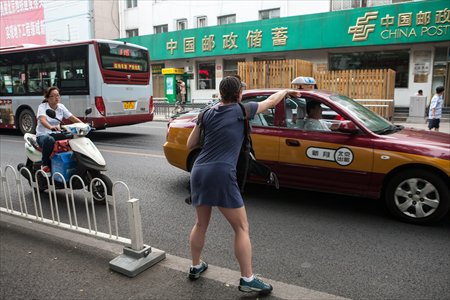
TAXI COMPANIES thought they could avoid being condemned in our year-end review by reducing their fuel surcharge to 2 yuan ($0.30) from 3 yuan in December, but they remain despised for continually refusing to take passengers during inclement weather. In October, a cunning Beijing cabbie managed to charge a French businessman a whopping 491 yuan ($78.70) for a 39-minute ride. Later that same month, taxi windows were locked citywide as a security measure ahead of the 18th National Congress, condemning passengers to the stench of garlic clove-eating drivers' body odor.
ULTRACONSERVATIVE newscast directors at China Central Television (CCTV) were ridiculed by viewers in July when they blurred out the penis of Michelangelo's statue David-Apollo. The statue sans manhood appeared in a report about the opening of a major Renaissance exhibition at the National Museum of China in Beijing. The station tried to reconcile its cock-up in later reports, showing David-Apollo in all his uncensored glory.
VIOLENT SPORTS FANS showed that, contrary to the misguided advice offered by parents to kids at sporting grounds worldwide, winning is everything. Beijing Guoan fans went on a rampage outside the Workers' Stadium after a June 16 scoreless draw with Chinese Super League rivals Qingdao Jonoon. Guoan fans proved graciously accepting a stalemate is for losers, proceeding to vandalize a luxury sports car with Tianjin license plates. Meanwhile, the Beijing Ducks were rebuked by the CBA in March after its fans threw litter onto the court and chanted profanity-laced taunts directed at players from the Guangdong Southern Tigers. It seemed to work though, helping the Ducks clinch the championship.
WEIBO continued to prove its power in 2012, revealing it can juggle its role of being a watchdog and a platform to share annoying yet catchy memes. Despite being only three years old, China's Twitter-equivalent boasts a quarter of a billion users who have helped expose abuses of power and other scandals. Following the July 21 storms, many Beijingers took to Weibo to point out the inadequacy of the city's drainage system. Rumors also abounded on Weibo, however, with former Peking University professor Zou Hengfu confessing he exaggerated in posts made in June that implicated deans and professors from the university in an on-campus sex scandal.
XI JINPING becomes the first person born in Beijing to lead the Communist Party of China (CPC). Despite his brief 2007 stint as Party chief of Beijing’s rival city Shanghai, Beijingers have forgiven Xi and welcomed his return to his roots. He is the first CPC leader to speak standard Chinese without a regional accent. Workers across the capital have heaved a sigh of relief because of his example of making meetings shorter, without tedious speeches.
YANG RUI, everybody's favorite host of CCTV News talk show Dialogue, entered a war of words on Weibo when he described Beijing's 100-day crackdown on expats illegally in the country as "cleaning up foreign trash" in a May 16 post. In the same post he attacked Al-Jazeera's expelled China correspondent Melissa Chan, who he labeled a "shrew." American blogger Charlie Custer led the backlash against Yang, calling for him to be fired and urging a boycott of foreign guests on his program.
ZOO stories filled Metro Beijing's news pages frequently throughout 2012, from spats over stray cat shelters to animals dying in their enclosures. In April, a golden snub-nosed monkey, an endangered species native to China, was poisoned after being fed by zoo visitors. A group of young children visiting the zoo unwittingly claimed further animal fatalities in August, when they fed a swan and its young cygnets cooked corn.