Port of charm
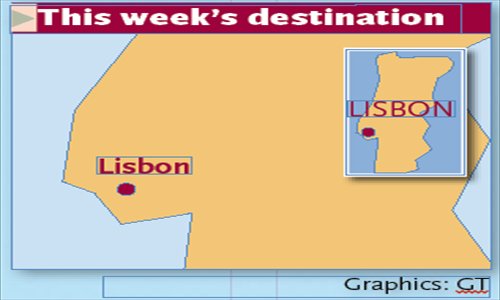
I secretly believe that the world would be a happier place if everybody had a river and sunny blue skies like those that embrace Lisbon, and anyone who's visited the Portuguese capital can understand this sentiment. Tucked away in the westernmost point in Europe, between the Atlantic Ocean and Spain, Lisbon is often neglected by trotting tours of Europe's most hallowed cities. But those who venture as far as Lisbon are often conquered by the charm typical of a small town with all the perks of a big city.
Lisbon is compact and intimate - best seen in a series of long, rambling strolls, rather than with a map and a tourist's agenda. Get lost on its cobblestone paths and you'll find reverie in every small corner of the only European capital with sunsets on the sea. Shall we get started?
The lady is a tram
Let's follow the tinkling bell to hop aboard the city's legendary cable car, Tram 28 (Eléctrico 28), for an all-in-one tour of Lisbon's old town attractions and beautiful views of the Tagus River. It's a 45-minute, 30-stop tour snaking up the hills and narrow streets of the city. The tram sets off from Martim Moniz, a multicultural cluster in the city that leads to Lisbon's Chinatown, and heads high up toward the old neighborhood of Gra?a and the S?o Vincente de Fora church. Behind the church is the popular flea market Feira da Ladra ("thieves' market") in Campo de Santa Clara. "It's cool! It's cheap! It's for you!" shout the throngs of vendors as shoppers hunt and bargain for all sorts of trinkets and antiques.
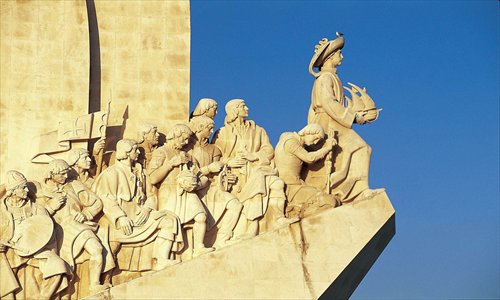
The tram then takes us through Alfama, the city's oldest district, which boasts the notable Moorish Castle of St George. Time to hop off, grab a seat at the cafe on the stone walls and look out over the city. Red roofs color the hillsides around the castle while the Tagus River shimmers blue below. If this river could talk, it would tell of a history of sailing anchored at the heart of Lisbon, where the Tagus meets the Atlantic Ocean. Portugal was once home to the world's greatest explorers, like Vasco da Gama and Magellan, making Lisbon the first true world city and capital of an empire spreading over all continents, from South America (Brazil) to Asia (Macao, China; Goa, India).
Our tour continues on toward Baixa, the elegant downtown area, passing by the eminent Se Cathedral before rising again to Chiado's trendy shopping district and Bairro Alto, Lisbon's Bohemian haunt of artists and writers, famous for its nightlife scene. The trip ends in Campo de Ourique, a traditional Lisbon neighborhood.
Feast for the eyes
Now that you've got the overview, it's time to ramble around town. From the Eduardo VII Park, a cobblestone slope that stands proudly atop a hill, you'll get a lovely panorama. The statue of Marquis of Pombal - who ordered the reconstruction of Lisbon after the devastating earthquake and tsunami that engulfed the city in 1755 - leads to the Avenida da Liberdade, Lisbon's main boulevard. Watch your step, literally: We're walking on cal?ada Portuguesa, the famed Portuguese black-and-white stone mosaics that cover sidewalks, plazas and promenades that can only be found in old colonies such as Brazil and Macao. The tree-lined Liberdade is flanked by 18th- and 19th-century buildings, many of which have their facades dotted with colorful tiles. This decorative feature is unique to Lisbon - no wonder the likes of Louis Vuitton and Armani decided to set up shop there.
Liberdade opens onto the Baixa neighborhood, a crossroads where the two main squares, Rossio and Pra?a do Comércio, compete to entice us into Lisbon's old, untidy cluster, or the allure of its modern side. For a taste of ancient Lisbon, we shall enter the old street maze of Alfama and Mouraria, on the poorer side of town. Prepare to be charmed by the old ladies gossiping at their windows, flowers decorating every porch, and the area's beautiful streetlamps.
Local restaurant Mesa de Frades is the real deal when it comes to celebrating the mournful lamentations of Fado, Portugal's famous, sentimental genre of music. This place comes alive at dusk when Fado singers arrive and visitors gather to listen to their songs of joy and pain, love and jealousy, accompanied by Portuguese guitar players. You may get a lump in your throat, or shed a tear or two when they start singing of saudade, an untranslatable Portuguese word that harks to a deep feeling of longing and nostalgia.
Food for the soul
Time to turn to the elegance of Chiado for a taste of glamorous Lisbon. Take a seat in the sun next to the famous bronze statue of Fernando Pessoa, one of Portugal's greatest poets, at A Brasileira, a famous Art Nouveau bakery and coffee shop. It's also a great people-watching spot, with musicians and jugglers performing on the street. Chiado is equally great for shopping. A Vida Portuguesa is the best place to shop for vintage and traditional Portuguese gifts, and the green, old-fashioned car stationed in the middle of the street is a great spot to pick up Fado CDs.
Nearby, the statue of Luís Vaz de Cam?es, Portugal's bard, will point us toward Bairro Alto, a cluster of little bars, designer shops and restaurants that liven up Lisbon's nightlife - a great spot to catch some jazz, food and dancing. Put some fire in your belly like a local and order a Ginjinha, an old-time Portuguese traditional liqueur made of morello cherries and brandy, at Ginjinha das Gaveas. Skip down the road to Cais do Sodré, the city's former red-light district whose bars were named after northern European capitals to attract the sailors who docked in Lisbon. The once-seedy quarter has been recovered and is now bustling with trendy bars and clubs. The five-story Pens?o Amor, located in an old 18th-century building where rooms were rented to prostitutes by the hour, now boasts a pole dancing room, burlesque decor, and an erotic library as well as frescoes and mirrors on the walls.
Now it's on to nearby Alcantara, a neighborhood known for books and bacalhau (cod), one of the staples of Portuguese gastronomy. It is said cod can be cooked 1,001 different ways, and here, you're bound to find one that suits you.
Even if you don't read a word of Portuguese, you won't regret visiting Ler Devagar ("To Read Slowly"), thought to be one of the most beautiful bookstores in the world. Set inside a section of an old printing factory, the shop has bookshelves sprouting all the way up to the ceiling - every bookworm's dream.
Creative flair
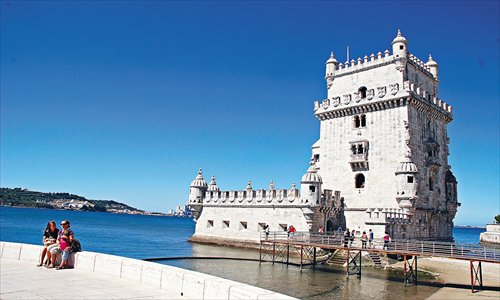
Following the railway along the river, we can wrap up our virtual visit at Belém. The large river promenade is the brightest zone in Lisbon, flanked by the Jerónimos Monastery and Belém Tower, two of the city's most iconic representations of Portugal's golden era and its Manuelino architectural style. After tasting a traditional Portuguese egg tart pastry at Pastéis de Belém bakery, we can stroll through the gardens on the way to the Belém Cultural Centre, a complex of strikingly modern architecture standing next to the centuries-old monuments.
If all this walking has tired you out, worry not. No matter which of Lisbon's seven hills you lose your steam on, you're bound to find a lovely little cafe with a view of the city and the river. This is the perfect time to sit with a glass of exquisite wine and enjoy the sunset. Look around … much of Lisbon's magic rests in its varied mix of old and new, river and sea, sun and that feeling of saudade that defines Portugal and its people.
Lisbon as never been a sweeter deal. Alongside its southern neighbors of Spain and Greece, Portugal is under a strict plan of austerity measures, which will make any trip to Lisbon quite a bargain - sprinkled with wonder - in comparison to Europe's major capitals.
Additionally, the current economy has sparked the creativity of the Portuguese, resulting in a wave of innovation. The lack of job prospects has led many young professionals to take matters into their own hands and open personally meaningful projects. One of my favorite such alternative enterprises is Lisbonlovers, a small shop that sells Lisbon-branded products. Lisbonlovers infuses the perky soul of the city into cool souvenirs such as postcards of graffiti from around town, and inspired designs for agendas, aprons, pens and magnets. Take a little token of the seaside capital home with you, and when saudade hits, you know you'll always have Lisbon.
Rules of Thumb
What to say: "Olá" means "hello" and "obrigado" means "thank you" in Portuguese. Most young people and staff at iconic sites speak English, and Portuguese people are known for their hospitality and communication skills.
When to go: Portugal is warm year-round. Winter can be windy and rainy, but temperatures rarely go below 5 C. Summer days are balmy with an average temperature of 30 C. June is the best month to visit Lisbon. The city celebrates its patron saint Santo Antonio in June (13) with an all-night party that includes singing, eating grilled sardines and drinking red wine.
Where to stay: Comfortable, clean and quirky, Lisbon hostels are among the best in the world, collecting awards every year. Hostel owners are known for taking their guests out for the evening and guiding them through the best bars. Prices range between 18 and 30 euros a night (roughly $25 to $41). Great service is a trademark of the city's tourism, so a stay at a 5-star hotel will likely be worth it.
Transportation: Getting around Lisbon is quite easy and affordable. Tram 28 is a must, but walking and renting a bicycle are great ways to get to know the city, so long as you're prepared for the hills. You can rent a scooter or take a Segway tour with wine tasting and shopping included. The city's metro system is safe and efficient, with one-way fares starting at 1.5 euros. Taxis are the best way to get around town at night and are the fastest way to get to any of the airports (located seven kilometers north from the city center); taxi rides start at 2.5 euros.
Excursions: Sintra and Cascais make for great day trips to the beach or mountains around Lisbon, and they're located about 30 minutes away by train. Between the two towns, stop at Cabo da Roca. Embraced by the fog and chilly breezes from the sea, this 140-meter-tall cliff is the westernmost point in Europe.