Tighter airport security inevitable
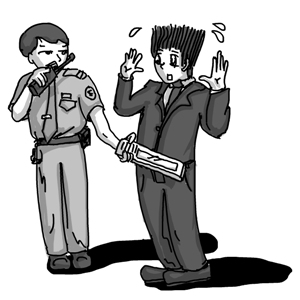
Illustration: Lu Ting/GT
Awheelchair bound man named Ji Zhongxing detonated a small bomb at Beijing Capital International Airport on July 20. The blast wasn't deadly and reports indicate that he only injured himself and a staff member. It has since transpired that the Shangdong native was protesting against ill treatment he received at the hands of chengguan, or urban management officers, in 2005. He claims he was beaten so badly it left him paralyzed, and he has been petitioning the government ever since. In the days since the bomb, other people have been arrested over hoax bomb threats and acts of violence in Beijing.
After the initial chaos, Beijing airport speedily handled the situation, but the bomb prompted Pudong and Hongqiao airports to shut some entrance gates at terminal buildings, and the airports are to impose tougher security measures. Passengers have been advised to arrive two to three hours earlier for their flights, and stricter measures include removing shoes and belts to be checked.
The West is no stranger to bombs. No one will have forgotten the attacks of 9/11, or the 7/7 bombings in the UK. Even before then, the IRA in the UK blew up a number of buildings, even targeting the then prime minister. Life in the West fundamentally changed after those attacks and using public transport has never been the same. While this attack was nowhere near the scale of the ones experienced in the West, its effects have spread.
Airport security checks are now governed by myriad regulations. Along with the standard rules of no guns, knives or any sharp objects, even liquids are not permitted in carry-on baggage. Liquids in quantities over 100 milliliters are binned, and smaller quantities must be bagged and declared. This even extends to makeup, such as mascara. Any baby formula taken on board must first be tested, and whoever is carrying it is forced to take a sip to prove it's not a harmful chemical. It was only in 2006 that the liquid rule was imposed, after liquid explosives were attempted to be used on an aircraft.
Reports show that Ji wasn't intentionally trying to hurt anyone else, as he purportedly shouted at other people to keep away. This hasn't stopped fear of future incidents from prompting airports to introduce new regulations. But will they stay in force? Does this incident represent a milestone where the overall security on public transport, notably planes, is reviewed?
Increased security and longer queues as a result seem inevitable. The government has denied that the heightened security is in response to the blast, but they seem undeniably linked, with multiple explosive detectors deployed at airports. Reports state that a puffer explosive detection machine was used for the first time at Nanchang Changbei International Airport.
While this was no terrorist attack, perhaps the bomber identified a weak link in security, prompting stricter measures, which some may argue are overdue. China is now part of the global stage; is it time for China to be on par with the West in terms of security? It appears the heightened security checks will remain at major airports, at least for the time being. It seems China has landed at destination security.