Shanghai residential
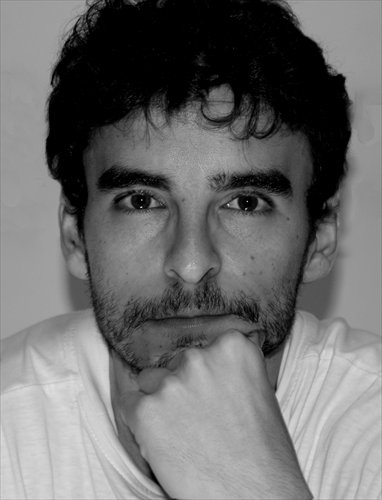
José Remón from the Polytechnic University of Catalonia (Universitat Politècnica de Catalunya) has spent the last four years in Shanghai researching the buildings here for his PhD thesis. Recently, Remón gave a lecture at the Miguel de Cervantes Library on Anfu Road titled "Mass Housing in Shanghai from 1840 to 2012 - The Survival of the Modern Movement in Contemporary China."
Remón summarized four types of residential housing in the city from 1840 to 2012: shikumen/linong from 1843 to 1937; Soviet-style housing blocks from 1949 to 1976; the first high-rise housing blocks from 1978 to 1995; and contemporary housing blocks from 1995 to 2012.
"Before 1840, the types of housing in Shanghai were essentially no different from any other surrounding areas in the Yangtze River Delta," Remón said. "However, since the 1840s, because of the appearance of different foreign concessions in Shanghai, great changes took place in this city, including the residential housing."
Through four years of research and investigation, Remón concluded that the general models of residential housing in contemporary Shanghai have obvious historical continuity with those from the 1840s.
"And what made me more excited is that all of them are still lived in," he said. "When I was visiting some of these houses, I found that the structures of the houses were actually different from the original building's structural drawings that I had studied in advance."
"The residents had reformed their houses by themselves to have a more convenient life, especially the old Shanghainese who are still living in the relatively narrow shikumen," Remón added.
"However, for the general models of housing in Shanghai now, there are few new breakthroughs any more. They seem still stagnated before the era of postmodernism, which appeared in the West in the early 1970s."
Through his research, Remón also found that most local people preferred houses with an internal structure that has a strong "centripetal force." He noted that in China it is common to see the doors of the bedrooms open on to the living room, so that the bedrooms circle the living room.
In the past four years, Remón also visited many residential houses in Shanghai where once he entered the door, he could generally get a panoramic view of the whole layout of the house.
"It is probably closely related to Chinese people's strong family values," Remón explained, "but houses with this structure are very rare in our country because they are difficult to sell."
Remón cited his parents' house in Spain as an example, where the bedrooms are completely separated from the living room by a long corridor of empty space.
"But I found that many Chinese people don't like to leave much empty or free space in their house," Remón said.