Short shooters
Making one film per month until the end of a year was the initial challenge set by Canadian Christian Laurence and the goal for the Kino movement that just launched in Shanghai.
Kino is a global nonprofit platform for young filmmakers and anyone who is passionate about cinema. It has become a means of providing both amateur and professional filmmakers with a place to create and screen their short films.
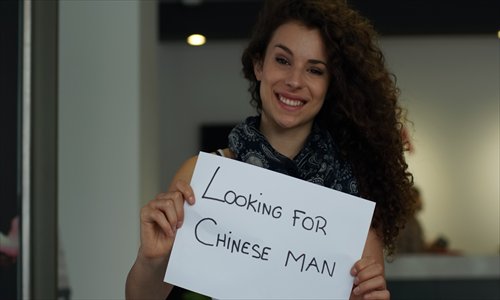
Both amateur and professional filmmakers gathered in Shanghai to participate in Asia's first Kino Kabaret. Photos: Courtesy of the organizers
The Kino movement was founded in 1999 in Montreal, Canada, by Laurence and his friends and was inspired by "kine," the Greek word for "movement." "It all started when I challenged my friends to make one film per month for one year," Laurence said. After a year, 12 short movies had been created. "It was supposed to only last one year but we had so many people interested in it that we decided to go on," he said.
In 2001 Laurence and his friends were invited to the Festival du Nouveau Cinéma in Montreal where they were challenged to make one film every day for 10 days. "That was the start of Kino Kabaret," Laurence said. It has quickly spread worldwide and is now composed of over 70 Kino cells on four continents. Shanghai Kino is the first Kino group in Asia.
Kino Kabaret is one of the main events during the year for Kino members around the world. Kabaret is a filmmaking workshop lasting several days, which gathers filmmakers from all over the world to create short, low budget, or no budget, films. Generally Kino groups hold a Kino Kabaret once a year.
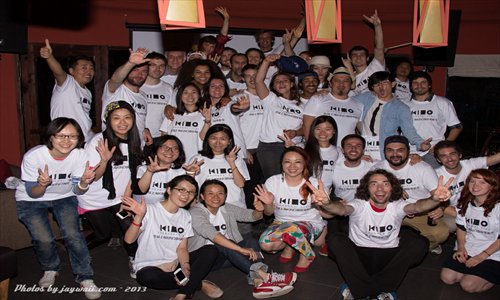
Both amateur and professional filmmakers gathered in Shanghai to participate in Asia's first Kino Kabaret. Photos: Courtesy of the organizers
"I wanted to bring Kino to Shanghai because there are so many young, and at least slightly experienced, Chinese filmmakers out there who completely lack the knowledge," said Vivienne Wei, the founder of Shanghai Kino. "They need an organized framework. They need a sense of leadership and security, the ambition to group together and experiment with film techniques and emotions. I want to bring a better platform for independent filmmakers in China," she said.
The films are made with a minimal budget and only the most necessary equipment. "Kino's mission is to gather all artists who believe that the importance of a cinematographic work does not rest solely on the amount of its production budget," said Laurence. Its motto is: "Do well with nothing, do better with little and do it now!"
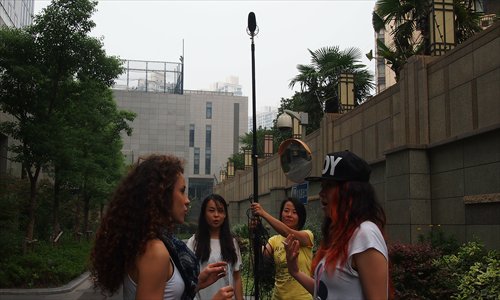
Both amateur and professional filmmakers gathered in Shanghai to participate in Asia's first Kino Kabaret. Photos: Courtesy of the organizers
The first Shanghai Kino Kabaret drew around 50 participants in its two sessions, both locals and foreigners with a different range of experience. "Some people who attended had some experience in filmmaking before and some of them had this dream but never had a chance to do something about it," said Wei.
The groups had 60 hours to shoot their films and at the end all the films were screened to a public audience. "The great thing about making movies in such a short period of time is that you always have to go back to your first impressions and your first idea," said Laurence. "You don't have many hours to wonder, you need to focus on whatever goes through your mind first," he said. Each movie, according to the rules, didn't exceed 12 minutes.
"The way the Kino Kabaret works is all the participants present their ideas in front of the others announcing their requirements for the film crew they need," said Laurence. "The crews are formed after all the ideas are presented. If you don't have your own script, you can always join another team. Having your own project and your own equipment is a big plus," he added. In the evening of the last day, the finished films are screened for the public.
Kino Kabaret is open to everyone interested in film - actors, directors, musicians, editors, technicians and cinematographers.
The films made in Shanghai ranged from comedies to mysteries, movies about the cultural gap and impressions of Shanghai.
"It's not a competitive event. It's about sharing and caring and helping each other," said Laurence. "We're not doing films to pick out which one is the best one. The best thing is the films' diversity. We try to invite everyone and anyone from professionals to first timers, with diverse professions, nationalities, ages and genders to create films in a friendly and welcoming atmosphere."
For more information about Shanghai Kino and its next events, contact Vivienne Wei at 138-1654-4297 or shanghai.kino@gmail.com or visit www.shanghaikino.com.