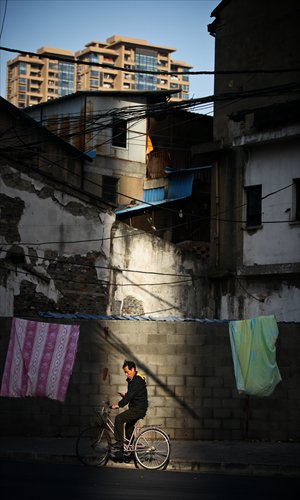
Wiping the slate clean
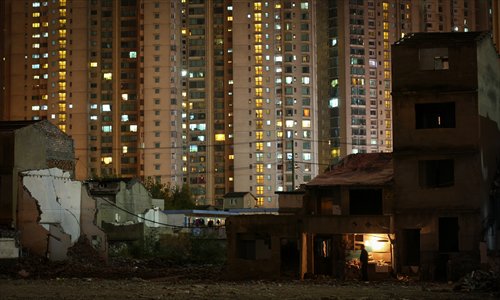
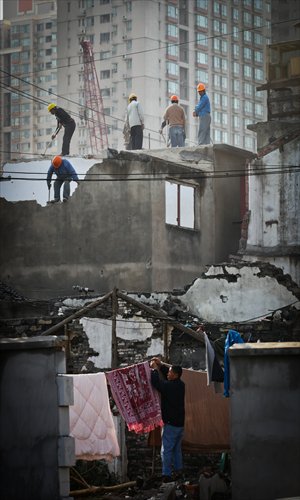
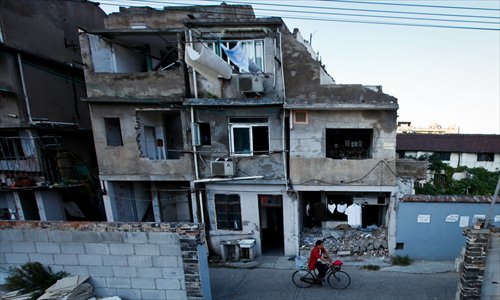
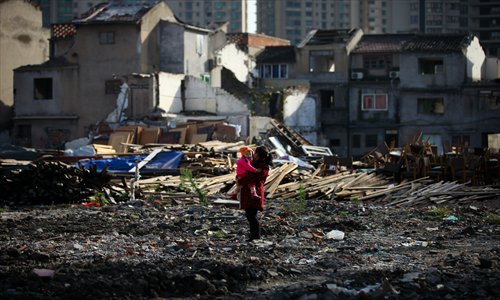
Shanghai will soon bid farewell to Hongzhen Old Street in Hongkou district, once the largest shantytown in the city.
By October 7, more than 87 percent of the residents in the last two occupied areas of the old street had agreed to be relocated - over the past weeks more than 4,350 households have moved to new homes.
During the late Qing Dynasty (1644-1911), the Hongzhen Old Street area was a major market area called Hong'an Town. During the 1930s fields, cottages, dairy farms and silk factories thrived there.
During the War of Resistance against Japanese Aggression (1937-45), the area was devastated and occupied by Japanese forces who fortified the area, digging trenches and surrounding it with barbed wire.
After the war, farmers from Jiangsu Province and other people started to move to Hongzhen Old Street, building makeshift homes there. Most of them were lowly-paid laborers and were employed nearby as dock workers, rickshaw runners, hawkers and painters. That was the birth of the shantytown which, at its peak, spread over 90 hectares.
In the 1980s, the area became a hotbed for crime and was notorious for the hooligans who lived in the street. It hit the headlines in 1987 when one of the residents, Yu Shuangge, a bus conductor and gambler, attempted to rob a bank killing a female cashier with a stolen pistol. The criminal fled without any money and, helped by his girlfriend, traveled to Ningbo, Jiangsu Province, where he was eventually captured and arrested.
The robbery was the first armed bank holdup in Shanghai after the founding of the People's Republic of China and his trial was recorded and broadcast on television, the first time ever that a trial in China had been broadcast. He was sentenced to death and executed.
In the mid-1990s, the local government launched a reconstruction plan for the old town. From 1996 to 2007, 12,000 households were relocated, and part of the area made way for the campus of a high school, the first and second phases of Rainbow City, a modern residential complex, and other new apartment complexes.