Does every picture still tell a story?
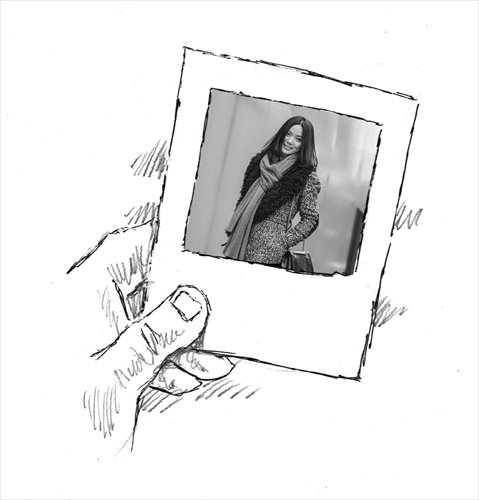
Illustration: Peter C. Espina/GT
A few weeks ago I did something I swore that I would never do. I sold some of my old camera equipment to a used camera store. It broke my heart to let it go.
In the '70s, every household in America had a Kodak Instamatic camera of some kind. In many of those houses, there are still shoeboxes and albums filled with old photos on thick paper stock - photographs of weddings and birthdays, graduations and family vacations - maybe a little faded and yellowed but somehow becoming more real and precious for just that reason. These are the pictures that people run into burning buildings to retrieve.
My father was an avid amateur photographer. When he was put into his coffin and lowered into his grave, resting on his chest was his first Argos camera, the one he'd used to take his honeymoon photos 50 years before. In fact, my father kept every negative of every photo and slide, indexed and catalogued to the very end.
My first real camera was a Pentax K-1000, a simple and sturdy SLR that taught me how to see the world. In high school, we learned to take and develop our own photographs. Film was expensive, which meant you had to be disciplined and press the shutter only when you were sure of what you wanted. You were forced to consider, in advance, all the factors: Was it sunny, overcast, hazy, raining? Were you taking pictures of still-lifes, portraits, sporting events, sunsets? Even after you set the focus and framed the shot and pressed the shutter, you still didn't know if you had gotten it right. Patience was called for.
The film had to be unloaded first from the camera, and then inside a lightproof bag, your hands would guide the film off the roll, slowly threading it onto a reel and then into a special canister where it would be developed with chemicals. All this produced a negative to be placed into an enlarger, where the image would be applied to photographic paper and developed with more chemicals. Only then, maybe weeks after the fact, did you know if you had gotten all the elements and the timing just right. It didn't always work, but when it did, it was magic.
Over the years, I invested in better cameras and lenses, which I brought on all my travels. But film has all but disappeared from the world. Nowadays, people all over the planet point their mobile phones at every object in front of them without discrimination or forethought. Or worse, they point the camera at themselves. Billions of photos taken every day, the vast majority to be looked at once, maybe shared on a website, and then quickly forgotten. Instant gratification without effort, context or lasting quality. Will you plunge into a burning building to save the digital photos from your iPhone? Somehow I doubt it. The machine has done all the work for you, and in so doing, has taken away all the pleasure. If you put nothing into it, you get nothing out of it. And that is what I was mourning, when I said farewell to those old, trusted friends of mine for whom I could no longer feed the film they craved. Maybe out there in the world, they will find a new purpose in a different set of hands. I hope so. When you touch something, it touches you back.
This article was published on the Global Times Metropolitan section Two Cents page, a space for reader submissions, including opinion, humor and satire. The ideas expressed are those of the author alone, and do not represent the position of the Global Times.