HOME >> CHINA
Coal train
Source:Global Times Published: 2013-11-26 19:23:01
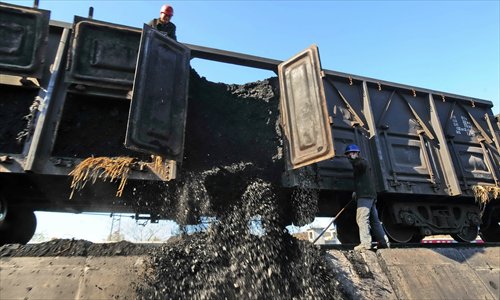
Above: Workers rush to unload a train of coal within two hours. Photo: CFP
While many Chinese cities have started upgrading their heating facilities and begun using cleaner energy, most of the furnaces in northern cities still run on coal, the conventional source of energy.
Located at the northwest point of Jinan, capital of Shandong Province, is the city's largest coal-burning heating plant. Every year, it is fed more than 400,000 tons of coal, transported via a section of railway connecting the plant to the collieries of Shanxi and Shaanxi provinces.
The work of unloading this colossal amount of black gold is done by only 30 or so workers.
Cities in Shandong and adjacent provinces usually start turning on the central heating for homes and offices from early November, but months before that date, this group of people enter their busiest period of the year.
The coal that will be used throughout the winter has to start being prepared and stockpiled at the heating plant as early as summer.
Whenever a train arrives, during the day or at night, they rush to unload 50 carriages, each holding about 60 tons of coal, within two hours or face a fine. They use bulldozers as well as brooms. During the winter when the coal is consumed quickly, two or three trains arrive each day.
Jinan is among the 10 most polluted cities in China in terms of air quality, yet the process of moving from coal to natural gas has been slow due to higher costs. There are 331 coal-burning furnaces around the city, and authorities aim to upgrade all of them before winter comes next year.
Global Times
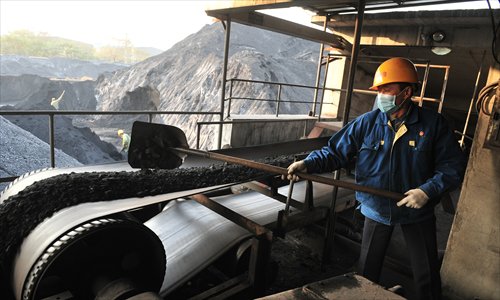
A loader shovels coal onto a conveyor belt. Photo: CFP
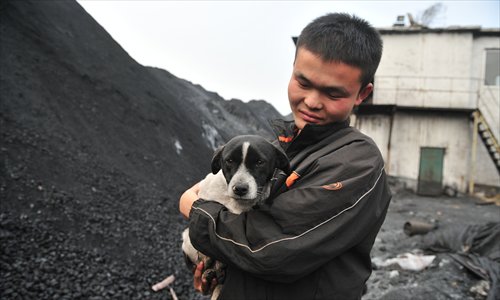
The youngest worker, surnamed Li, tends to a dog he rescued. Photo: CFP
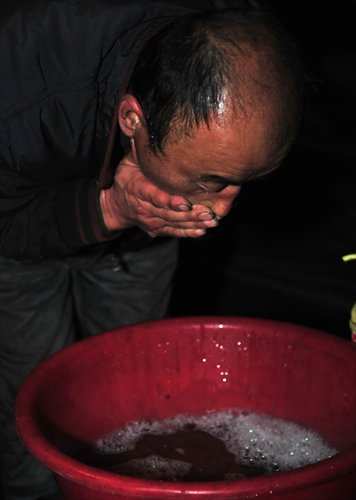
A worker washes a thick mask of coal dust off his face at the end of the day with dish-washing liquid. Photo: CFP
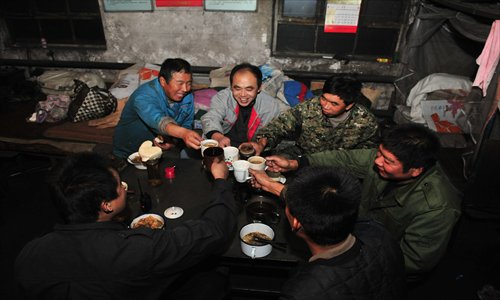
Eating and drinking after a day of hard physical labor is the happiest moment for the workers. Photo: CFP
Posted in: In-Depth