HOME >> METRO SHANGHAI
Huqiu Road
By Lu Chen Source:Global Times Published: 2014-2-19 17:53:01
Walking alongside the west bank of the Huangpu River, most visitors to Shanghai are dazzled by the grandeur of the buildings, hotels and exclusive clubs. But the beauty of Shanghai lies in the subtle charms of small streets as well as the Bund's iconic architecture. For example, Huqiu Road, which runs parallel to the northern end of the Bund, is a quiet block a short walk from the busy tourist spot.
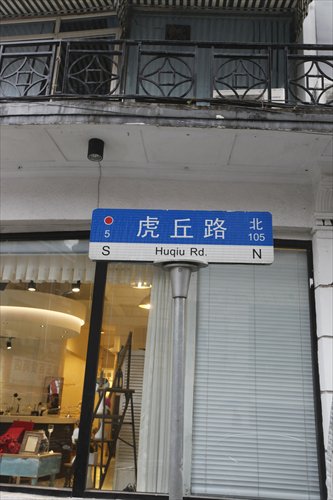
The 300-meter-long Huqiu Road runs north to south from Nansuzhou Road to Beijing Road East. Like the streets nearby, such as Dianchi Road and Yuanmingyuan Road, which are named after well-known scenic spots in China, the road takes its name from Huqiu (Tiger Hill), in Suzhou, Jiangsu Province.
Previously, it was known as Museum Road, hinting at the street's history. The building that now houses the Rockbund Art Museum (20 Huqiu Road, 3310-9985) used to be the site of the North China Branch of the Royal Asiatic Society, which was established by a group of British and Americans seeking intellectual engagement in 1857.
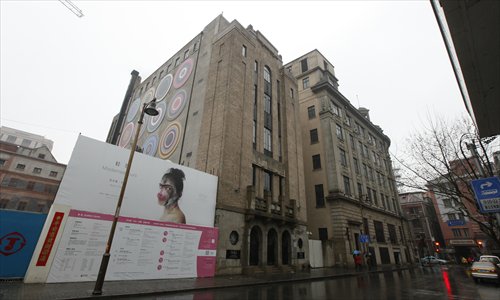
On the ground floor of the building, there was a reading room, a library and a lecture hall. The second floor was opened as a museum in 1874, making it one of the earliest museums in China and an influential institution thanks to its abundant collection of Chinese exhibits and cultural relics from the Far East.
Supported by generous public donations both in funding and exhibits, the museum was open free to the public. During its heyday, the museum attracted around 7,000 visitors a month. But after almost a century of operation, the society was closed in 1952 and the collections went to the Shanghai Library, Shanghai Museum and Shanghai Natural History Museum.
After a three-year renovation led by architect David Chipperfield, the building opened as the Rockbund Art Museum in 2010, devoted to supporting contemporary Chinese art.
Currently, the museum is displaying works by contemporary painter and sculptor Bharti Kher. The solo exhibition Misdemeanours, which occupies all six floors of the museum's galleries, runs until March 30.
Opposite the museum is a friendly and unpretentious café named after its business hours, 6am9pm (45 Huqiu Road). The café is part of a chain, but it is the only branch that serves Western food, including pasta, sandwiches, coffee and juice.
"This café is located at the Bund, where there are a lot of foreigners who are either tourists or employees working in nearby offices, so we thought it would be a good idea to provide simple and fast meals for them," an employee of the café told the Global Times. The pasta and sandwiches cost around 20 ($3.29) to 30 yuan, which attracts a lot of office workers during lunchtime, she added.
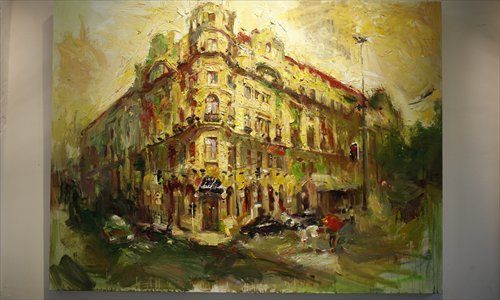
If you continue to walk north, you will find the Master Art Space (45 Huqiu Road) just next to the café. It is the studio and gallery of Wang Fuqiang, an oil painter. He moved his studio here from Duolun Road in June 2012 to be close to Rockbund Art Museum. "This not only gives the road an artistic atmosphere, but it brings flocks of visitors to my place," Wang told the Global Times.
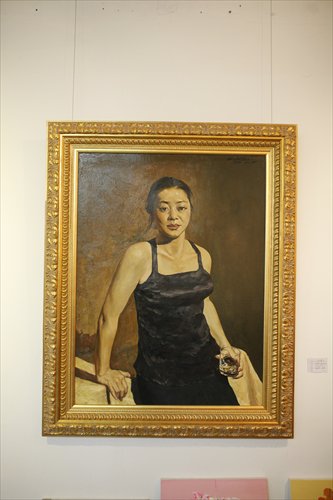
Wang displays around 40 paintings in his studio, which he sells starting from about 5,000 yuan. The paintings are mostly portraits and impressionistic landscapes, featuring the Bund and other Western-style architecture in the city.
"My painting style has changed over the years. In my early days, I thought painting could be a way of expressing strong emotions, such as anger or dissatisfaction, being detached from life. But now, I believe that art is rooted in the lives of common people. It should be more relevant to them and give them thought and pleasure," Wang said.
He paints in the studio and also has a small workshop where he tutors several art students on the weekends.
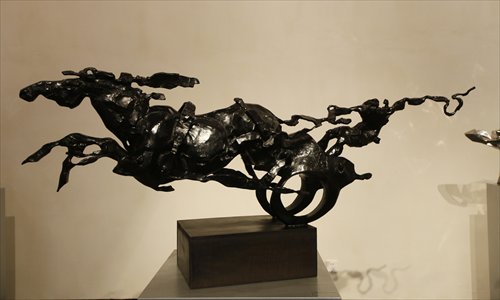
At the intersection of Xianggang Road and Huqiu Road is the Levant Art Gallery (107 Huqiu Road, 5213-5366). Until March 15, the gallery is hosting the solo exhibition of South Korean sculptor Kim Seon-gu, who has about 20 artworks displayed on the ground floor of the gallery.
Held to mark the Chinese Year of the Horse, the exhibition features bronze sculptures of varying sizes of human figures and horses. His works give the viewer a strong impression of the animal's combination of speed and power.
Huqiu Road
The 300-meter-long Huqiu Road runs north to south from Nansuzhou Road to Beijing Road East. Like the streets nearby, such as Dianchi Road and Yuanmingyuan Road, which are named after well-known scenic spots in China, the road takes its name from Huqiu (Tiger Hill), in Suzhou, Jiangsu Province.
Previously, it was known as Museum Road, hinting at the street's history. The building that now houses the Rockbund Art Museum (20 Huqiu Road, 3310-9985) used to be the site of the North China Branch of the Royal Asiatic Society, which was established by a group of British and Americans seeking intellectual engagement in 1857.
Rockbund Art Museum Photos: Cai Xianmin/GT
On the ground floor of the building, there was a reading room, a library and a lecture hall. The second floor was opened as a museum in 1874, making it one of the earliest museums in China and an influential institution thanks to its abundant collection of Chinese exhibits and cultural relics from the Far East.
Supported by generous public donations both in funding and exhibits, the museum was open free to the public. During its heyday, the museum attracted around 7,000 visitors a month. But after almost a century of operation, the society was closed in 1952 and the collections went to the Shanghai Library, Shanghai Museum and Shanghai Natural History Museum.
Artworks on display at the museums and galleries dotted along Huqiu Road
After a three-year renovation led by architect David Chipperfield, the building opened as the Rockbund Art Museum in 2010, devoted to supporting contemporary Chinese art.
Currently, the museum is displaying works by contemporary painter and sculptor Bharti Kher. The solo exhibition Misdemeanours, which occupies all six floors of the museum's galleries, runs until March 30.
Opposite the museum is a friendly and unpretentious café named after its business hours, 6am9pm (45 Huqiu Road). The café is part of a chain, but it is the only branch that serves Western food, including pasta, sandwiches, coffee and juice.
"This café is located at the Bund, where there are a lot of foreigners who are either tourists or employees working in nearby offices, so we thought it would be a good idea to provide simple and fast meals for them," an employee of the café told the Global Times. The pasta and sandwiches cost around 20 ($3.29) to 30 yuan, which attracts a lot of office workers during lunchtime, she added.
Artworks on display at the museums and galleries dotted along Huqiu Road
If you continue to walk north, you will find the Master Art Space (45 Huqiu Road) just next to the café. It is the studio and gallery of Wang Fuqiang, an oil painter. He moved his studio here from Duolun Road in June 2012 to be close to Rockbund Art Museum. "This not only gives the road an artistic atmosphere, but it brings flocks of visitors to my place," Wang told the Global Times.
Wang displays around 40 paintings in his studio, which he sells starting from about 5,000 yuan. The paintings are mostly portraits and impressionistic landscapes, featuring the Bund and other Western-style architecture in the city.
"My painting style has changed over the years. In my early days, I thought painting could be a way of expressing strong emotions, such as anger or dissatisfaction, being detached from life. But now, I believe that art is rooted in the lives of common people. It should be more relevant to them and give them thought and pleasure," Wang said.
Artworks on display at the museums and galleries dotted along Huqiu Road
He paints in the studio and also has a small workshop where he tutors several art students on the weekends.
At the intersection of Xianggang Road and Huqiu Road is the Levant Art Gallery (107 Huqiu Road, 5213-5366). Until March 15, the gallery is hosting the solo exhibition of South Korean sculptor Kim Seon-gu, who has about 20 artworks displayed on the ground floor of the gallery.
Held to mark the Chinese Year of the Horse, the exhibition features bronze sculptures of varying sizes of human figures and horses. His works give the viewer a strong impression of the animal's combination of speed and power.
Posted in: Metro Shanghai