HOME >> CHINA
Salt in their wounds
Source:Xinhua-Global Times Published: 2014-4-28 19:33:01
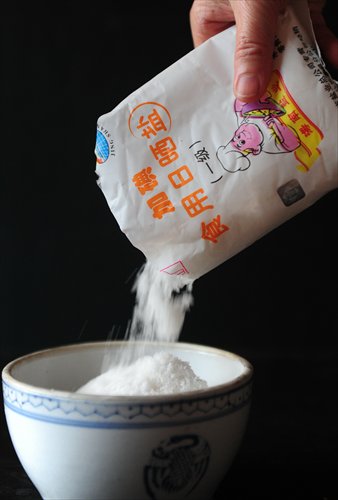
Photo:CFP
Iodized table salt, which Chinese people have used as a condiment for over 20 years as part of an effort to combat iodine deficiences, is now facing severe doubts over whether iodization is still needed to bolster people's diet.
However, iodized salt is still a common sight on the dinner tables of most Chinese families and the non-iodized alternative remains a rarity.
Both iodine deficiency and excessive intake can lead to thyroid diseases, meaning that a balance is crucial. But now many people have started to ask whether having iodized table salt for so many years has made Chinese people have excessive levels of iodine and the accompanying health problems.
The National Development and Reform Commission (NDRC) on Monday announced it would abolish its administration rules for salt sales with immediate effect.
Provincial governments now have the right to examine and approve which companies produce, wholesale and transport table salt.
It is part of the commission's latest effort to simplify procedures and hand over more powers to local governments, said Gu Xiaoming, a social science professor at Fudan University.
The new step will mean a wider selection of table salt on offer, regardless of whether it is iodized.
Scarcity and necessity
China used to have a scarcity of iodine, with 720 million people living in iodine deficient areas.
The country in 1994 started to implement regulations that added iodine into salt to eliminate the deficiency.
The average standard of iodine in table salt ranges from 20 to 30 milligrams per kilo, with a 30 percent fluctuation range, said a national standard on iodine content in table salt in March 2013.
As the benefits of having iodized salt have been widely promoted across the country, the sales of salt without iodine decreased dramatically and eventually people found it hard to find non-iodized salt, China Business News reported.
"We do not stock a large volume of non-iodized salt in the market, as very few people will buy it. This happens in most places in China," a Beijing-based salesman for a salt company told China Business News.
Changing minds
Li Xiujuan, a Shanghai housewife, started to buy non-iodized salt in 2009. She used to buy bay salt from rural areas in neighboring regions. Non-iodized table salt is also more common in supermarkets.
There are more than 1,000 places where non-iodized table salt can be bought, including supermarkets, stores, pharmacies and hospitals in Shanghai, according to the Shanghai Salt Authority.
But non-iodized table salt is still not readily available in some second- and third-tier cities.
"We are no longer in need of iodine supplements thanks to improved diets. In some regions, pure table salt is more expensive than iodized salt," said a Net user "Xiaoshasha ss" on China's Twitter-like Weibo service.
"I can not have iodized salt due to my hypothyroidism condition, while my 10-year-old daughter is growing up and I was unsure whether she may lack iodine," said a Beijing white-collar surnamed Cheng.
Cheng's daughter underwent medical tests, which confirmed that the girl does not lack iodine.
"I am now at ease using non-iodized salt for the family," said Cheng.
If a shop wants to sell non-iodized salt, it previously needed to apply for a special certificate in advance.
Following the NDRC's announcement, various regions in China could produce or stock different types of salt at various prices depending on the local diet, thus loosening the centralized standard requirements.
Decentralized control
Health authorities adjusted standards for volume of iodine contained in salt in 2010. It allowed provincial health departments to adjust the proportion of iodine according to the needs of the local people. In addition, China will not provide iodized salt for iodine-excessive areas or for populations with thyroid gland diseases.
It represents progress of the country's "compulsory iodine supplementation" into a tailored formula based on local conditions, said Cheng Yiyong, director general with the Chinese Nutrition Society.
The median level of urinary iodine of Chinese people is higher than the appropriate standard provided by the World Health Organization (WHO), but not excessive, according to a Ministry of Health report.
Chinese people are at very low health risk of iodine excess, said the report.
The "higher than appropriate" level identified is being attributed to excessive salt intake, about double the level of the recommended volume by the WHO, said Cheng.
China is in need of tailored scientific indicators on iodine supplementation in table salt based on each city and township, for classified and different guidance, said Xie Huamin, a researcher with the Standards and Quality Center of the State Administration of Grain.
A broadened distribution channel for both iodine and non-iodine salt is needed to meet the country's diverse demands, he said.
The health authorities in China also mentioned before that some 5 to 10 percent of the Chinese population are still not covered by standard iodized salt and is suffering from iodine deficiencies.
Iodine deficiency is the main cause of preventable brain damage and reduced IQ in children worldwide. It also negatively affects women's health, as well as economic productivity and quality of life, according to the WHO.
Posted in: Society