Chinese tempo of life not uniformly fast
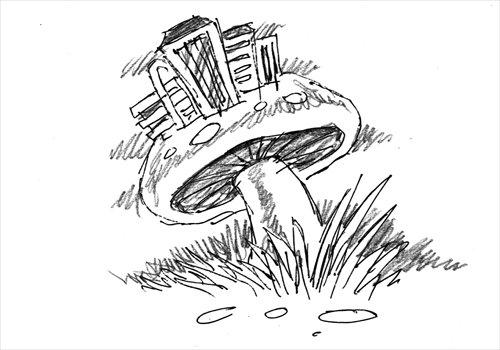
Illustration: Peter C. Espina/GT
What is the ideal pace of life? In the pressured frenzy of the modern world, many people long for a slower, quieter, more peaceful lifestyle. This concern becomes more and more relevant as societies develop and employees' personal lives are impacted by extended working hours and lengthy commutes.
Rapidly developing China appears to be a country that races along at hyper-speed, leaving others - including Europe and the USA - trailing in its wake. Buildings pop up like mushrooms after a rainstorm, and thousands of kilometers of roads and railways appear in a flash, seemingly out of thin air, while in Western countries stakeholders debate and dither about whether even to begin construction. In Chinese restaurants the world over, meals are cooked and served almost before the startled diner can finish ordering.
In short, China is everywhere associated with a breakneck rapidity of action that is regarded as bordering on the reckless. Such, at least, was the image I had in mind when I came to live in Beijing. Thus, it was much to my surprise to discover that there are two important aspects of Chinese daily life that do not conform to the global stereotype of speed, speed and more speed.
The first of these is the Chinese lunch hour, which is often far longer than the northern European or North American norm. For instance, a two-hour break in the middle of the day is standard practice at Chinese universities. While this is also common in Mediterranean countries such as Italy or Spain, in the British, German or US workplace one often has to be satisfied with gobbling sandwiches at one's desk in a matter of minutes before getting one's nose back to the grindstone.
Chinese pedestrians are also very slow as far as the Western observer is concerned. Rarely does anybody seem to be in a hurry. Even when a train or bus is arriving it is rare to see somebody run to catch it. People dawdle when transferring in the subway, apparently having no urgent need to get anywhere. The fastest walkers I have seen are older people exercising in parks, whose pace almost reaches that of a Western commuter.
There are several potential explanations for this lack of hustle in daily life. One is that Chinese temperatures, just like in southern Europe, are generally far higher than in northern Europe or air-conditioned America, persuading people of the inadvisability of haste. Another possibility is that the Taoist philosophy of preserving one's qi, or bodily energy, to ensure longevity persuades people not to waste energy unnecessarily. A third idea is simply that it is not considered dignified to hurry, so that the Chinese avoid being seen to rush in order not to lose face.
Whatever the reason - and readers are welcome to write in with their own suggestions - what is certain is that China is far more of a slow-quick-quick-slow culture than most non-Chinese realize. Yes, Chinese can work incredibly fast; but at the same time there is a surprisingly prevalent emphasis on taking life at a leisurely tempo outside the workplace.
Ultimately it is probably better to think of Chinese society as being two-paced, like a car with two gears: one for work and one for play. This revised image can give the world a more nuanced understanding of Chinese culture than the "hurry-up" stereotype of Chinese work practices that prevails internationally.
This article was published on the Global Times Metropolitan section Two Cents page, a space for reader submissions, including opinion, humor and satire. The ideas expressed are those of the author alone, and do not represent the position of the Global Times.