Architectural sculptures preserved in historical sites of Henan
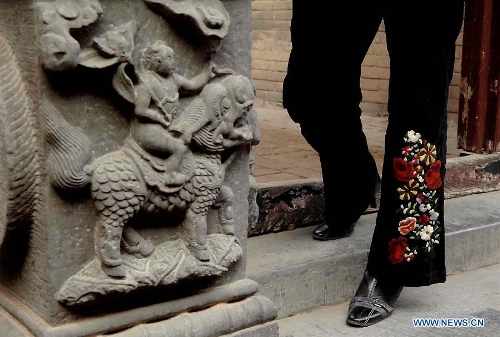
A tourist walks past a sculpted stone column base at Kang Baiwan's Mansion, a 17th-century residential complex, in Gongyi, central China's Henan Province, Dec. 14, 2007. A large number of architectural sculptures have been preserved in historical sites of Henan, which is one of the cradles of the Chinese civilization. Many of the sculptures, created from stones, bricks, or wood, were used as building parts of residences, shrines and memorial archways, among other architecture types. Underlining both the mood and the details, these sculptures have themes including daily life, legends, myths and opera scenes. (Xinhua/Wang Song)
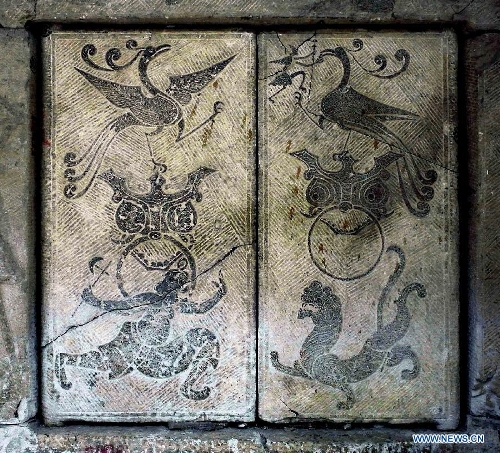
Photo taken on Sept. 22, 2012 shows carvings on the stone gates of an East Han Dynasty (25-220 AD) mausoleum displayed in a museum in Nanyang, central China's Henan Province. A large number of architectural sculptures have been preserved in historical sites of Henan, which is one of the cradles of the Chinese civilization. Many of the sculptures, created from stones, bricks, or wood, were used as building parts of residences, shrines and memorial archways, among other architecture types. Underlining both the mood and the details, these sculptures have themes including daily life, legends, myths and opera scenes. (Xinhua/Wang Song)
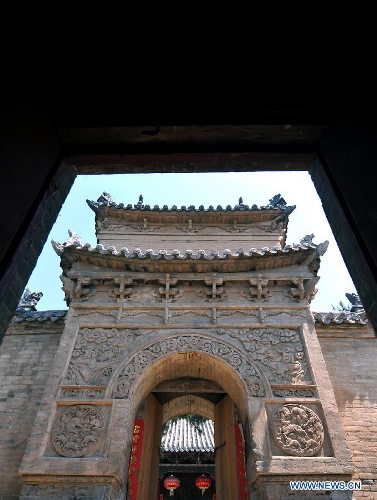
Photo taken on May 24, 2010 shows the stone relief on the main gate of the Anguo Temple, which was first established during the Sui Dynasty (581-618 AD), in Licun Township of Shanxian County, central China's Henan Province. A large number of architectural sculptures have been preserved in historical sites of Henan, which is one of the cradles of the Chinese civilization. Many of the sculptures, created from stones, bricks, or wood, were used as building parts of residences, shrines and memorial archways, among other architecture types. Underlining both the mood and the details, these sculptures have themes including daily life, legends, myths and opera scenes. (Xinhua/Wang Song)
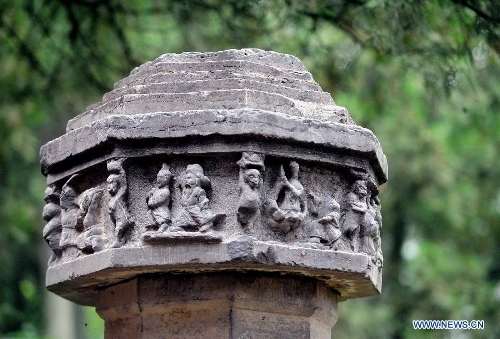
Photo taken on July 29, 2010 shows a Tang Dynasty (618-907 AD) sculpted stone tower inside the Huishan Temple on the Songshan Mountain, central China's Henan Province. A large number of architectural sculptures have been preserved in historical sites of Henan, which is one of the cradles of the Chinese civilization. Many of the sculptures, created from stones, bricks, or wood, were used as building parts of residences, shrines and memorial archways, among other architecture types. Underlining both the mood and the details, these sculptures have themes including daily life, legends, myths and opera scenes. (Xinhua/Wang Song)
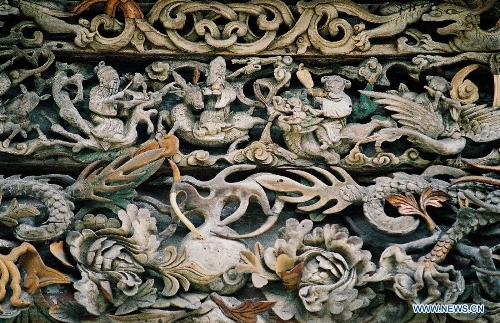
Photo taken on March 6, 2006 shows wood sculptures under the eaves of the main hall of the Shanxi-Shaanxi-Gansu Guild in Kaifeng, central China's Henan Province. A large number of architectural sculptures have been preserved in historical sites of Henan, which is one of the cradles of the Chinese civilization. Many of the sculptures, created from stones, bricks, or wood, were used as building parts of residences, shrines and memorial archways, among other architecture types. Underlining both the mood and the details, these sculptures have themes including daily life, legends, myths and opera scenes. (Xinhua/Wang Song)
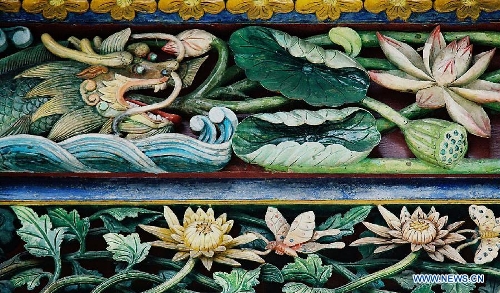
Photo taken on March 6, 2006 shows coloured wood sculptures under the eaves of a hall at the Shanxi-Shaanxi-Gansu Guild in Kaifeng, central China's Henan Province. A large number of architectural sculptures have been preserved in historical sites of Henan, which is one of the cradles of the Chinese civilization. Many of the sculptures, created from stones, bricks, or wood, were used as building parts of residences, shrines and memorial archways, among other architecture types. Underlining both the mood and the details, these sculptures have themes including daily life, legends, myths and opera scenes. (Xinhua/Wang Song)
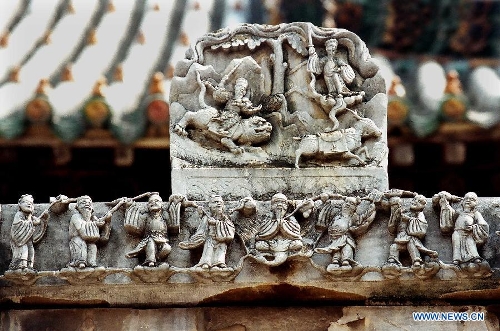
Photo taken on July 18, 2001 shows human sculptures on a stone archway at the Shanxi-Shaanxi Guild in Sheqi County, central China's Henan Province. A large number of architectural sculptures have been preserved in historical sites of Henan, which is one of the cradles of the Chinese civilization. Many of the sculptures, created from stones, bricks, or wood, were used as building parts of residences, shrines and memorial archways, among other architecture types. Underlining both the mood and the details, these sculptures have themes including daily life, legends, myths and opera scenes. (Xinhua/Wang Song)
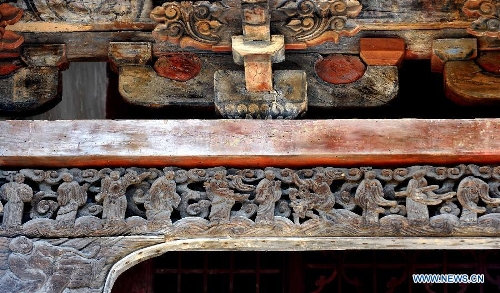
Photo taken on May 24, 2010 shows wood sculptures under the eaves of the main hall of the Anguo Temple in Licun Township of Shanxian County, central China's Henan Province. A large number of architectural sculptures have been preserved in historical sites of Henan, which is one of the cradles of the Chinese civilization. Many of the sculptures, created from stones, bricks, or wood, were used as building parts of residences, shrines and memorial archways, among other architecture types. Underlining both the mood and the details, these sculptures have themes including daily life, legends, myths and opera scenes. (Xinhua/Wang Song)
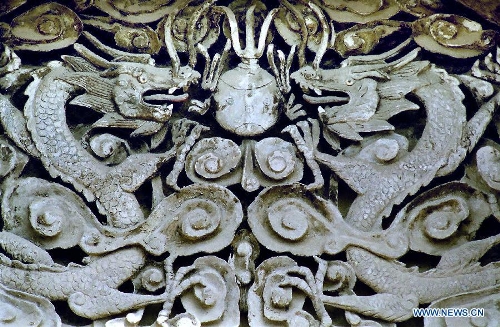
Photo taken on March 6, 2006 shows a brick sculpture at the Shanxi-Shaanxi Guild in Sheqi County, central China's Henan Province. A large number of architectural sculptures have been preserved in historical sites of Henan, which is one of the cradles of the Chinese civilization. Many of the sculptures, created from stones, bricks, or wood, were used as building parts of residences, shrines and memorial archways, among other architecture types. Underlining both the mood and the details, these sculptures have themes including daily life, legends, myths and opera scenes. (Xinhua/Wang Song)
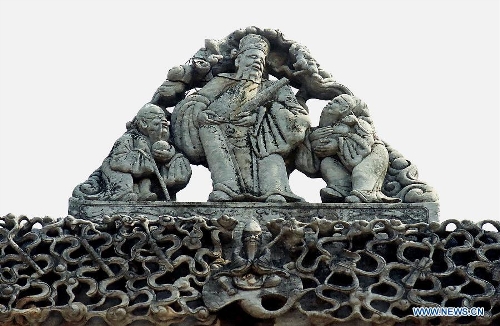
Photo taken on July 18, 2001 shows a sculpture of the fortune, wealth and longevity gods on a stone archway at the Shanxi-Shaanxi Guild in Sheqi County, central China's Henan Province. A large number of architectural sculptures have been preserved in historical sites of Henan, which is one of the cradles of the Chinese civilization. Many of the sculptures, created from stones, bricks, or wood, were used as building parts of residences, shrines and memorial archways, among other architecture types. Underlining both the mood and the details, these sculptures have themes including daily life, legends, myths and opera scenes. (Xinhua/Wang Song)
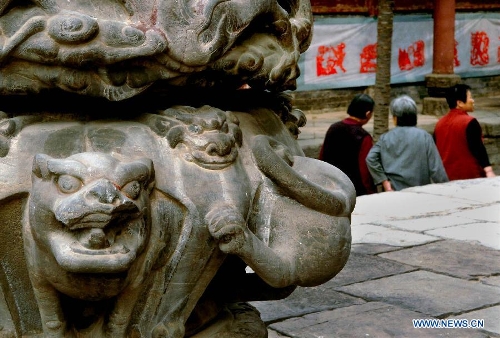
Photo taken on April 11, 2012 shows a sculpted stone column base at the Luoyang Folklore Museum in Luoyang, central China's Henan Province. A large number of architectural sculptures have been preserved in historical sites of Henan, which is one of the cradles of the Chinese civilization. Many of the sculptures, created from stones, bricks, or wood, were used as building parts of residences, shrines and memorial archways, among other architecture types. Underlining both the mood and the details, these sculptures have themes including daily life, legends, myths and opera scenes. (Xinhua/Wang Song)
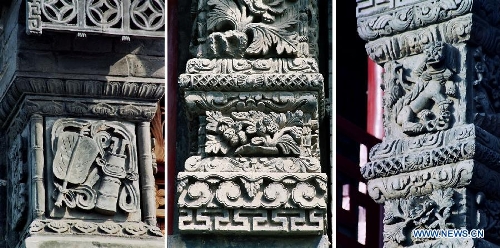
This photo combination shows roof sculptures at the Shanxi-Shaanxi-Gansu Guild in Kaifeng, central China's Henan Province, March 6, 2006. A large number of architectural sculptures have been preserved in historical sites of Henan, which is one of the cradles of the Chinese civilization. Many of the sculptures, created from stones, bricks, or wood, were used as building parts of residences, shrines and memorial archways, among other architecture types. Underlining both the mood and the details, these sculptures have themes including daily life, legends, myths and opera scenes. (Xinhua/Wang Song)
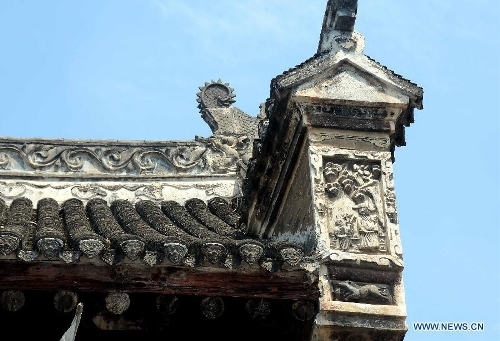
Photo taken on Aug. 5, 2013 shows a brick relief on a residence roof in Jingziguan Town of Xichuan County, central China's Henan Province. A large number of architectural sculptures have been preserved in historical sites of Henan, which is one of the cradles of the Chinese civilization. Many of the sculptures, created from stones, bricks, or wood, were used as building parts of residences, shrines and memorial archways, among other architecture types. Underlining both the mood and the details, these sculptures have themes including daily life, legends, myths and opera scenes. (Xinhua/Wang Song)
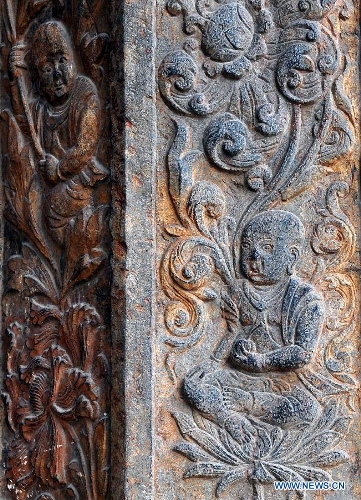
Photo taken on July 30, 2010 shows a Song Dynasty (960-1279 AD) stone relief inside the Chuzu Buddhist Convent in Songshan Mountain, central China's Henan Province. A large number of architectural sculptures have been preserved in historical sites of Henan, which is one of the cradles of the Chinese civilization. Many of the sculptures, created from stones, bricks, or wood, were used as building parts of residences, shrines and memorial archways, among other architecture types. Underlining both the mood and the details, these sculptures have themes including daily life, legends, myths and opera scenes. (Xinhua/Wang Song)
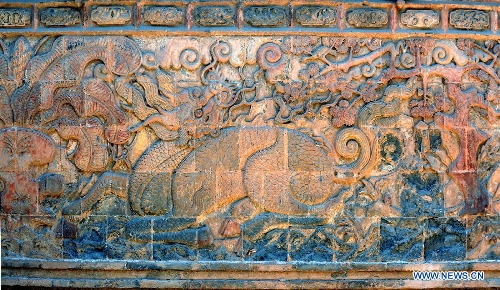
Photo taken on May 24, 2010 shows the brick relief of a Qilin, an auspicious beast in Chinese mythology, at the Anguo Temple in Licun Township of Shanxian County, central China's Henan Province. A large number of architectural sculptures have been preserved in historical sites of Henan, which is one of the cradles of the Chinese civilization. Many of the sculptures, created from stones, bricks, or wood, were used as building parts of residences, shrines and memorial archways, among other architecture types. Underlining both the mood and the details, these sculptures have themes including daily life, legends, myths and opera scenes. (Xinhua/Wang Song)
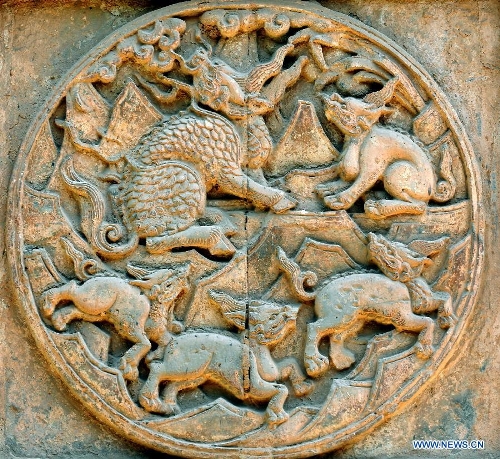
Photo taken on May 24, 2010 shows a brick relief of auspicious beasts on a gate tower of the Anguo Temple in Licun Township of Shanxian County, central China's Henan Province. A large number of architectural sculptures have been preserved in historical sites of Henan, which is one of the cradles of the Chinese civilization. Many of the sculptures, created from stones, bricks, or wood, were used as building parts of residences, shrines and memorial archways, among other architecture types. Underlining both the mood and the details, these sculptures have themes including daily life, legends, myths and opera scenes. (Xinhua/Wang Song)
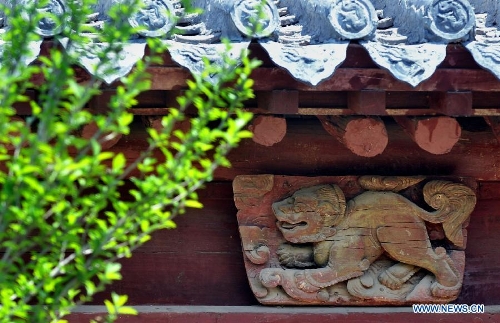
Photo taken on May 24, 2010 shows a Qilin-shaped wood sculpture under the eaves of the main hall of the Anguo Temple in Licun Township of Shanxian County, central China's Henan Province. A large number of architectural sculptures have been preserved in historical sites of Henan, which is one of the cradles of the Chinese civilization. Many of the sculptures, created from stones, bricks, or wood, were used as building parts of residences, shrines and memorial archways, among other architecture types. Underlining both the mood and the details, these sculptures have themes including daily life, legends, myths and opera scenes. (Xinhua/Wang Song)
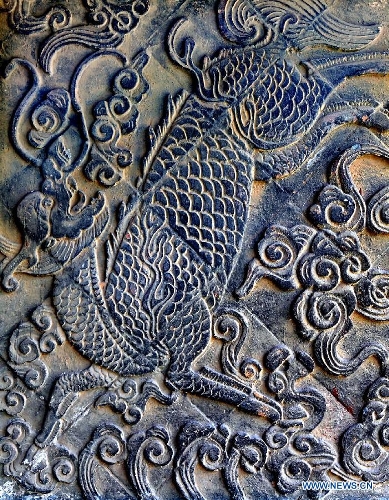
Photo taken on May 24, 2010 shows the stone relief of a Qilin, an auspicious beast in Chinese mythology, at the Anguo Temple in Licun Township of Shanxian County, central China's Henan Province. A large number of architectural sculptures have been preserved in historical sites of Henan, which is one of the cradles of the Chinese civilization. Many of the sculptures, created from stones, bricks, or wood, were used as building parts of residences, shrines and memorial archways, among other architecture types. Underlining both the mood and the details, these sculptures have themes including daily life, legends, myths and opera scenes. (Xinhua/Wang Song)
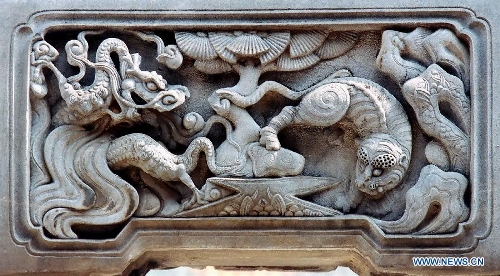
Photo taken on July 18, 2001 shows a stone wall sculpture at the Shanxi-Shaanxi Guild in Sheqi County, central China's Henan Province. A large number of architectural sculptures have been preserved in historical sites of Henan, which is one of the cradles of the Chinese civilization. Many of the sculptures, created from stones, bricks, or wood, were used as building parts of residences, shrines and memorial archways, among other architecture types. Underlining both the mood and the details, these sculptures have themes including daily life, legends, myths and opera scenes. (Xinhua/Wang Song)
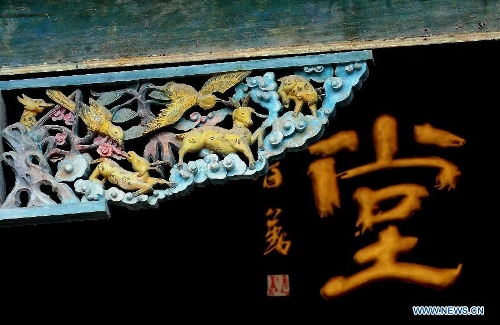
Photo taken on July 15, 2009 shows a coloured wood sculpture under the eaves of a passageway at Ma Piyao's Mansion, a 19th-century residential complex, in Jiangcun Township of Anyang County, central China's Henan Province. A large number of architectural sculptures have been preserved in historical sites of Henan, which is one of the cradles of the Chinese civilization. Many of the sculptures, created from stones, bricks, or wood, were used as building parts of residences, shrines and memorial archways, among other architecture types. Underlining both the mood and the details, these sculptures have themes including daily life, legends, myths and opera scenes. (Xinhua/Wang Song)