HOME >> CHINA, METRO SHANGHAI
Italy’s mark on Shanghai
By Zhang Yu Source:Global Times Published: 2014-6-3 19:43:01
A group of Italians and Chinese spent Sunday walking in the historical footsteps of Shanghai's once vibrant Italian community, which dates back as far as 1608.
The walking tour, joined by about 50 Italian expatriates and 30 Chinese, was part of a series of events held for Festa della Repubblica, Italy's National Day.
"We are celebrating on June 2 the National Day of Italy. In order to make this event known to the Chinese population, we organized this tour to highlight the presence of Italians in Shanghai over time," said Stefano Beltrame, consul general of Italy in Shanghai, as he took the tour.
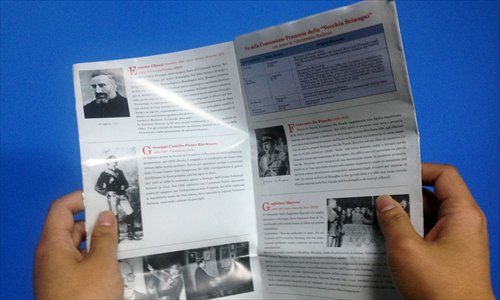
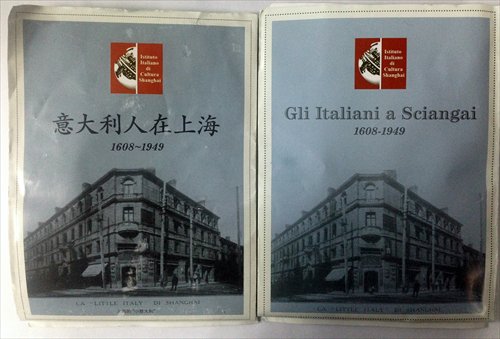
The tour group followed a map called "Italians in Shanghai." The map was compiled in 2012 by the Italian Institute of Culture in Shanghai with the help of Stefano Piastra and Sara Ovidi, experts in that period of the city's history.
The map shows 82 locations, including many former theaters, hospitals, houses and other buildings where Italians lived and worked from 1608 to 1949.
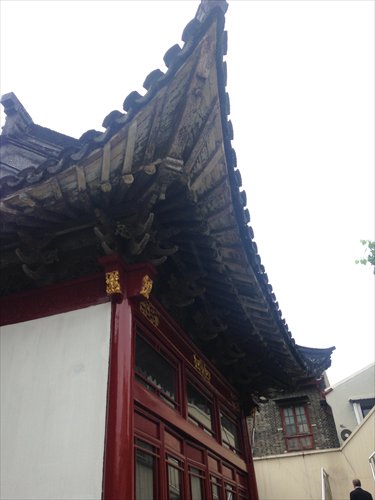
The group first visited Ever-spring Hall, a former nunnery on Wutong Road near Yuyuan Garden, which the Sicilian missionary Francesco Brancati built in 1640. Brancati renovated the interior of the nunnery into a Catholic church and gave it the name Jingyi Church, which means "respect to the one and only God." Local officials later turned the church into a Guan Yu Temple in 1739. French missionaries transformed it back into a church in 1862. In 1938, it became the site of a primary school. The building now stands vacant, but has recently undergone renovations.
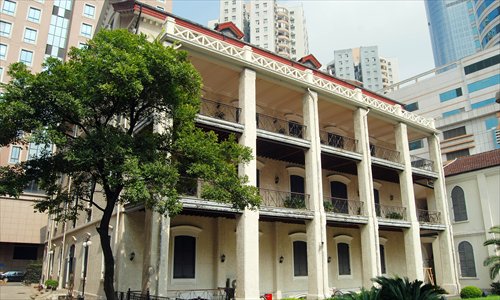
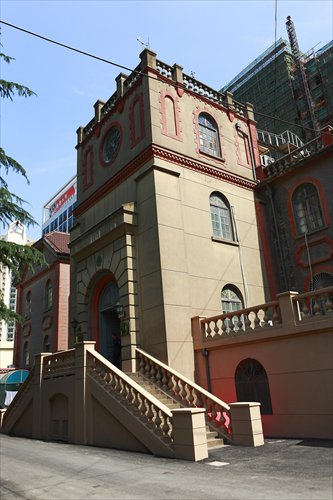
The group also visited the Bibliotheca Zi-Ka-Wei, where a Jesuit missionary from Naples, Italy, Angelo Zottoli, served as director from 1862 to 1868, and the Zikawei Observatory on Puxi Road, where physicist Ernesto Gherzi was the director from 1930 to 1949.
"In the 1930s and 40s, the Italian community was very strong in Shanghai," Beltrame told the Global Times.
At that time, the Italians mainly lived in the international settlement, especially in the area around what is now Nanjing Road East and Sichuan Road. They opened grocery stores and delis that gave the area the nickname "Little Italy."
Notably, Mario Paci was the director of the Shanghai Symphony Orchestra from 1919 to 1942. The orchestra performed in what today is the Grand Theatre.
The number of Italians living in Shanghai plunged after 1949. Today, about 2,000 Italians live in Shanghai. "The community is a bit small compared with the size of the city, but they are very well integrated with the Chinese community here. We are trying to make sure we continue making a contribution to this wonderful city," Beltrame said.
The majority of Italians in Shanghai work in the industrial machinery industry, highlighting a strong business connection between the Mediterranean country and Shanghai. "There are also about 40 Italian professors teaching at Fudan and other universities, many students and architects working at over 40 Italian or joint architectural firms here," Beltrame said.
Although he has only been in Shanghai for three months, Beltrame has already found the Shanghainese and Italians have a lot in common. "We both have a strong commitment to the family, and we share the same passion for food," he said. "And I really like Chinese characters. I'm hoping I can learn to write them during my stay here."
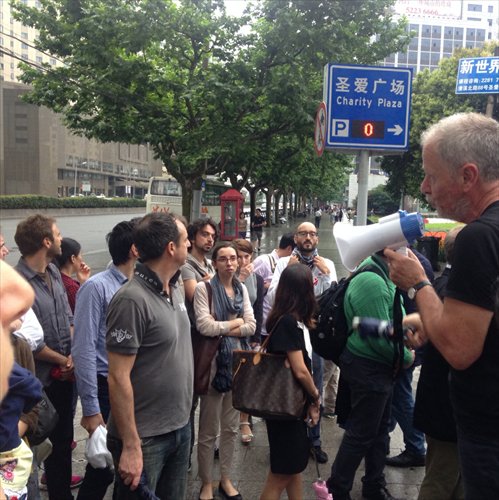
The walking tour, joined by about 50 Italian expatriates and 30 Chinese, was part of a series of events held for Festa della Repubblica, Italy's National Day.
"We are celebrating on June 2 the National Day of Italy. In order to make this event known to the Chinese population, we organized this tour to highlight the presence of Italians in Shanghai over time," said Stefano Beltrame, consul general of Italy in Shanghai, as he took the tour.
The tour group followed a map called "Italians in Shanghai." The map was compiled in 2012 by the Italian Institute of Culture in Shanghai with the help of Stefano Piastra and Sara Ovidi, experts in that period of the city's history.
The map shows 82 locations, including many former theaters, hospitals, houses and other buildings where Italians lived and worked from 1608 to 1949.
The group first visited Ever-spring Hall, a former nunnery on Wutong Road near Yuyuan Garden, which the Sicilian missionary Francesco Brancati built in 1640. Brancati renovated the interior of the nunnery into a Catholic church and gave it the name Jingyi Church, which means "respect to the one and only God." Local officials later turned the church into a Guan Yu Temple in 1739. French missionaries transformed it back into a church in 1862. In 1938, it became the site of a primary school. The building now stands vacant, but has recently undergone renovations.
The group also visited the Bibliotheca Zi-Ka-Wei, where a Jesuit missionary from Naples, Italy, Angelo Zottoli, served as director from 1862 to 1868, and the Zikawei Observatory on Puxi Road, where physicist Ernesto Gherzi was the director from 1930 to 1949.
"In the 1930s and 40s, the Italian community was very strong in Shanghai," Beltrame told the Global Times.
At that time, the Italians mainly lived in the international settlement, especially in the area around what is now Nanjing Road East and Sichuan Road. They opened grocery stores and delis that gave the area the nickname "Little Italy."
Notably, Mario Paci was the director of the Shanghai Symphony Orchestra from 1919 to 1942. The orchestra performed in what today is the Grand Theatre.
The number of Italians living in Shanghai plunged after 1949. Today, about 2,000 Italians live in Shanghai. "The community is a bit small compared with the size of the city, but they are very well integrated with the Chinese community here. We are trying to make sure we continue making a contribution to this wonderful city," Beltrame said.
The majority of Italians in Shanghai work in the industrial machinery industry, highlighting a strong business connection between the Mediterranean country and Shanghai. "There are also about 40 Italian professors teaching at Fudan and other universities, many students and architects working at over 40 Italian or joint architectural firms here," Beltrame said.
Although he has only been in Shanghai for three months, Beltrame has already found the Shanghainese and Italians have a lot in common. "We both have a strong commitment to the family, and we share the same passion for food," he said. "And I really like Chinese characters. I'm hoping I can learn to write them during my stay here."
Ever-spring Hall Photo: Zhang Yu/GT
Bibliotheca Zi-Ka-Wei Photo: CFP
Zikawei Observatory Photo: CFP
Participants at a walking tour Sunday Photo: Zhang Yu/GT
"Italians in Shanghai" map Photos: Yang Hui/GT
Posted in: Society, Metro Shanghai