The keys to life
"For someone else, classical music can be like a piece of cake or a glass of wine, but for me, it is my whole life," the 86-year-old Austrian pianist, Jörg Demus, told the Global Times before his solo concert at the Sennheiser Shanghai Concert Hall on Saturday night. "Until now, nothing has really impacted my life except music."
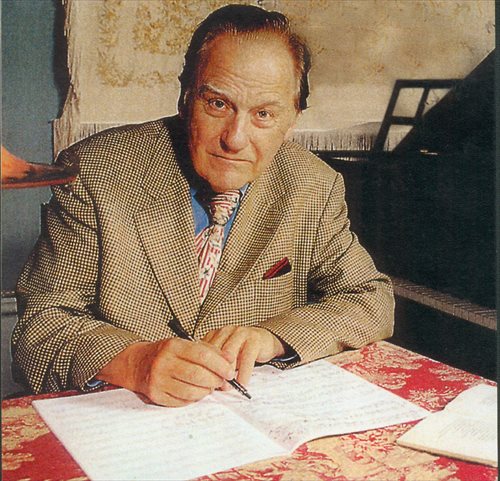
Austrian Pianist Jörg Demus Photo: Courtesy of Sennheiser Shanghai Concert Hall
Demus said sometimes he likes to compare himself with Schubert. "Schumann used to write about Schubert that 'Schubert sometimes is floating above the earth at about the height of a flower,'" Demus said. "I think of myself as also always like that, even much higher than Schubert. Because I don't do many other things except music, I even don't know how to open a computer."
Music tradition
Demus received his first piano lesson at the age of 6 and entered the Vienna State Academy of Music when he was 11. He is well regarded for his place in the main line of German and Austrian piano music.
At Saturday night's concert in Shanghai, Demus performed Franz Schubert's Impromptu in B-Flat Major, D. 935 No.3, Sonata in B-Flat Major, D. 960 and also Bach's Goldberg Variations.
While his age was apparent in his slow walk to and from the piano, his fingers remained agile and sprightly as they danced across the keyboard.
According to Demus, Schubert's Sonata in B-Flat Major and Bach's Goldberg Variations are both long works that demand the full attention of the player and the audience.
Schubert's Sonata in B-Flat Major was written in 1828, close to the composer's death, and is regarded by some as his farewell to life.
Bach's Goldberg Variations was commissioned by a former Russian ambassador to the electoral court of Saxony, Count Kaiserling, in 1741. It was named after the ambassador's personal pianist, Johann Gottlieb Goldberg, who was also one of Bach's students at that time.
Opening with an aria followed by a set of 30 variations, it contains a complicated structure and changes in emotion.
Demus performed the variations in around 45 minutes, in a clear, straight forward interpretation.
"I always try to present the work with little change," Demus said. He said he sees the composers as still being present in their work. "When I'm playing their music, what I do is just to 'revive' them."
Return to the city
It was Demus' second time performing in Shanghai. His first time was 14 years ago. "At that time, the piano I played on needed to be dusted before I could play it, and the room I performed in was very cold," Demus said. "The audience at that time probably couldn't be regarded as real classical music fans."
However, now Demus believes the fan base for classical music in China has expanded widely, with many young people and children among his audience. "They came to my concert and kept quiet, looking like they were really absorbed."
"Also, classical music education has improved a lot here," Demus added. Earlier last week, in Shenzhen, Demus met with teachers at a music school. He said their teaching methods, particularly in terms of playing technique, were sound. He was unexpectedly asked to give a lecture at the school. "I had not prepared anything, but I didn't want to talk about technique or musicology, which they have probably heard enough of," Demus said.
He opted to talk about the meaning of music, and took three works as example: Beethoven's Moonlight Sonata, Debussy's The Sunken Cathedral and Schumann's Fantasia.
"However, I founded that the students couldn't tell the meaning inside those pieces and how to understand them, but only the musical notes," Demus said.
Newspaper headline: Jörg Demus displays his dedication to music