Tree-rific treats
Bonsai desserts and milk teas take root in Beijing cafés, restaurants
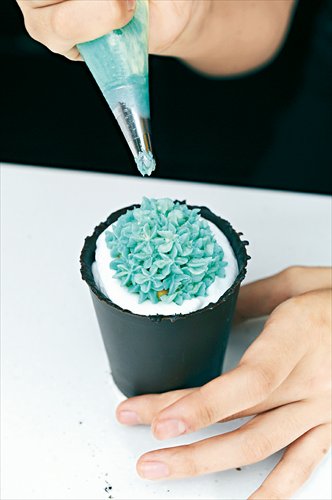
Bonsai desserts might not seem very manly with their intricate floral designs, but the treats are a hit with many men. Photo: IC
If you have a sweet tooth and appreciate the beauty of bonsai, Beijing's latest confectionery trend might be just what you've been waiting for. Popularity of bonsai desserts, including cakes and milk tea, is gradually growing much like the miniature trees themselves. Dianping.com, the largest consumer rating site in China, lists about 20 Beijing cafés and restaurants that serve desserts resembling bonsai.
Bonsai desserts started to take off in China last year as a novelty, but they are now branching out the menus of a number of businesses. "The desserts are easy to make and look eye-catching, which lures a lot of female customers," said Wu Qing, manager of the First Station Café in the 798 Art Zone, Chaoyang district. "We believe [the trend] originated from Japan because the name is Japanese and dessert designs are exquisite."
On average, Wu sells 20 to 30 cups of bonsai milk tea per day. "Sometimes men are reluctant to order certain desserts or beverages because they look too colorful with their flowery ornaments," said Wu. "But surprisingly most of our bonsai milk tea lovers are men."
The drink is garnished with two or three sprigs of mint leaves planted into "soil" made of crushed chocolate cookies, giving it the appearance of a bonsai.
Gong Mingchun, curator of the C Place gallery nearby Wu's store, is a regular customer who often starts his day with a bonsai milk tea. "I love the drink not because of its cute appearance, but because I like to splurge on a 16-yuan ($2.60) beverage I can drink over several hours. Unlike soft drinks, the appearance [of bonsai milk tea] makes me feel peaceful," said Gong, 37. "I know it sounds a bit silly, but the design gives me inspiration and a sense of tranquility."
Lavagna, a fusion cuisine restaurant at the Solana Mall in Chaoyang district, started selling bonsai cakes in 2012. Chen Lili, a manager of the restaurant, said the cakes are among its "best-selling items" thanks to loyal regulars and curious diners.
"During lunch and dinner, around 90 percent of diners order our flowerpot dessert," she said of the 28-yuan delicacy. Like its milk tea cousin, the flowerpot dessert uses mint for its "leaves" but almond and edible bamboo charcoal powders instead of crushed cookies to give its four-layered "soil" an earthier, more organic taste.
Similar to First Station Café, the bonsai dessert is a big hit with male diners at Lavagna.
"Although we tend to believe women love sweet foods more than men, the fact is men love our flowerpot dessert because of its refreshing taste," Chen said.
Hou Yongping, a female diner at Lavagna who has eaten the flowerpot dessert three times, said it was one of the restaurant's unique selling points.
"I've tasted several kinds of bonsai desserts before and even made bonsai cakes myself," said Hou, who teaches baking at Jianwai SOHO, Chaoyang district. "There is a café that sells bonsai cakes near my studio. It's easy to tell they use chocolate chips, cream and chiffon cake."
Chen said the recipe and ingredients for Lavagna's flowerpot dessert are "commercial secrets," but Hou guessed it is made of pudding, low-fat cream and passion fruit jelly.
"I don't think that restaurants like Lavagna have to worry about their competitors," Hou said. "If there are other pastry chefs willing to search for so-called irreplaceable recipes, the dessert could become a regular fixture at high-end restaurant."
In an age of customized desserts inspired by plants, video game characters and buildings, Hou said "creativity is the secret to standing out from the competition."