Heavenly designs
Architect behind Xintiandi talks about his vision
After the Xintiandi redevelopment was completed in Shanghai in 2006, "Xintiandi" became a verb among real estate developers, who would ask architects to "Xintiandi" their projects, leading to dozens of duplicates springing up across the country. Hangzhou, Chongqing and Wuhan each have their own Xintiandi.
While Xintiandi has become a landmark thanks to its renovation of old Shanghai shikumen (stone-gated lane houses) and its range of bars, restaurants, cafés and shops, it also has its detractors. Critics argue that Xintiandi is little more than a pastiche. Architecture critic Paul Goldberger described Xintiandi as "a stage set of an idyllic past, created so that people in China can experience the same finely wrought balance of theme park and shopping mall that increasingly passes for upscale urban life in the US."
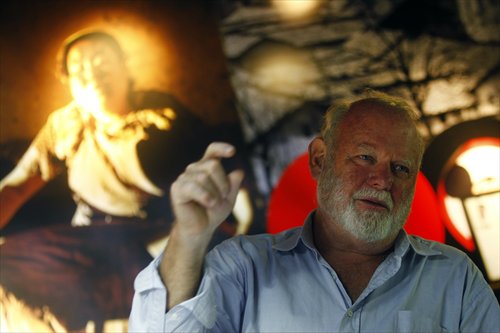
US architect Benjamin Wood, designer of Xintiandi in Shanghai Photos: Yang Hui/GT and CFP
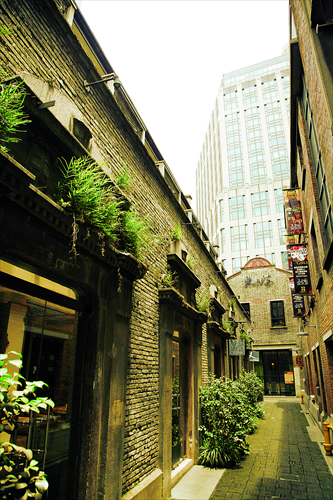
Xintiandi
However, the man behind the project - US architect Benjamin Wood - brushes off such criticism. "It is not the issue between old and new, but between the freedom of expression given to each successive generation of responsible architects and urban form givers. Along with the new, keep some of the old," Wood said in a recent interview with the Global Times.
Wood believes that Xintiandi brought a new form of lifestyle to Shanghai, and it is where he has his studio as well as a bar. Wood just finished designing an eco-resort in Yunnan Province, just a few miles from the foothills of the southern Himalayas, made from mostly recycled materials.
Wood came to China in 1998 after working at the firm of architect Ben Thompson for a decade. He went on to become one of the few foreign architects in the country allowed to act as lead designer in building large-scale neighborhood projects.
But it wasn't an easy journey. When he started out on the Xintiandi project, people were skeptical, telling him that Chinese don't like alfresco dining. "But how about now?" he asks, rhetorically.
Wood sees his bar as a place to come to understand the diversity of people enjoying his design. Following the ethos of Xintiandi to reinvigorate the old, the bar's walls are made from brick and roof tiles taken from demolition sites around Shanghai. Grey granite and jet-black stone from local quarries pave the floor and back of the bar; while the bar top of Tibetan silver was made by villagers from Yunnan Province. The ceiling is covered in shoe leather from Guangdong Province.
However, Wood emphasized that collecting old things and preserving them is not his goal, and he also thinks not all old things are necessarily worth being kept in themselves. "What is more important is how to bring new life into an old place that people love," he said.
In Wood's opinion, most outdoor locations in Chinese cities have traditionally been used for transport and commerce, not for social encounters or sauntering. He sees the traditional user of Chinese streets as "the woman who bargains in the open-air street market."
One area Wood says is in need of renovation in Shanghai is Xujiahui, which he believes is "clumsily conceived and dominated by shopping malls and street stores with little green space. It is difficult for people to find an outdoor space to have a rest there." He added that people need fewer elevator lobbies and more doorways to nature.
"In my childhood in America, I spent every daylight hour that I was not in school exploring the rural environs of our family farm," Wood said. "Growing up with nature and the land around us was my family's promise of a better life. Another thing we always did was to entertain friends on a long outdoor table near the house."
He added that recapturing such a notion of happiness seems a distant dream in the city.
Outside China, Wood is also well-known, with his credits including chief designer for Soldier Field in Chicago, home of the Chicago Bears football team, which was named as one of the 10 best buildings of 2003 by the New York Times.
Wood said there is no great difference between doing buildings in China and in the West, although there are some aspects of working in China that he enjoys more, such as having more freedom to talk to workers on construction sites.
"In the US, you usually can't say anything at all without having a lawyer beside you," he said.