HOME >> OP-ED
Keeping a calm, peaceful mind helps solve entangled social problems
Source:Global Times Published: 2014-9-4 19:13:01
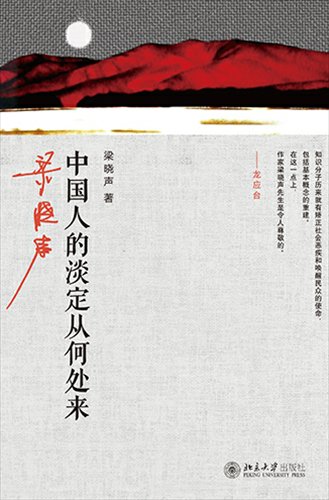
Liang Xiaosheng, How can Chinese people be calm?, Peking University Press, Agust 2014
Most of the time, "calm" refers to tranquility, serenity and freedom from agitation. It should have been a word with positive energy. But in modern China "staying calm" is often a self-comforting euphemism for helplessness in dealing with a problem.
How can Chinese people be calm? is a new book from Liang Xiaosheng, a Chinese novelist, screenwriter, member of the China Writers Association, and professor at Beijing Language and Culture University. In this book, Liang talks about how to calmly face the national moment of confusion and choices.
Liang holds that most Chinese people are not calm currently, since most of them have grown up alongside two forces: increasing rights awareness and the lack of civic awareness.
The majority of Chinese people, according to Liang, aren't morally educated until they go to college. Chinese parents always pay more attention on whether their children suffer losses than whether the children are kindhearted.
As a result, contemporary college students are still like children to some extent. They have high intelligence but low social skills. They may easily become emotionally overwhelmed and frustrated when encountering obstacles.
In such a case, culture should play a role in appeasing problems, but the reality in modern China is just the opposite.
In China, culture is used to create a warm atmosphere with the hope of covering over contradictions. It is just a head-in-the-sand policy which creates only a false picture of peace.
Given the fact that culture cannot resolve conflicts and calm the public, many Chinese people tend to resolve conflicts with their own methods. And this may generate more problems at times.
Liang believes that concealing the truth can only lead up to illusion. And resorting to an alienated culture will only make the situation worse.
To improve the situation, Liang suggests that reality has to be faced.
Chinese should have the courage to expose their cultural drawbacks and disadvantages in society. Only by this can culture really play a role in calming the society.
As for individuals, Liang suggests that calm lives come from individuals' clear understanding of the reality. He admits that there are many problems in transforming China currently, but he also said that these problems cannot simply be resolved by the choice of individual lifestyles.
In Liang's eyes, anger cannot improve the situation, and Chinese might as well choose to be calm and deal with the status quo.
It should be noted that Liang focuses more on the problems and the reasons for Chinese frustrations without clearly pointing out how to deal with them specifically.
He repeatedly stresses that Chinese should have a peaceful, positive mind, instead of a desperate or passive attitude. But a positive attitude itself is not enough to solve social problems. More actions should be taken to avoid sticking our heads in the sand. But staying "calm with positive attitude" is the first step.
Posted in: Fresh off the Shelf