Does Buddhist music help crops grow?
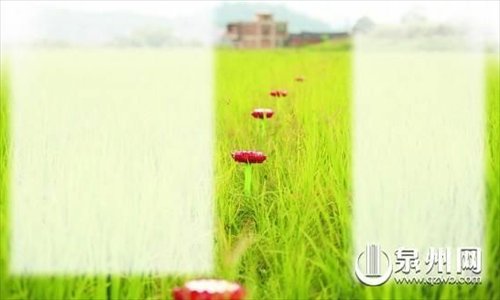
Crops Photo:qzwb.com
Playing music to help a fetus grow is well known in China. But what about playing music to accelerate the growth of paddy rice? Less well known, perhaps.
Paddy rice yields in southeast China’s Fujian Province have reportedly grown 15% after “listening to” Buddhist music, according to local media Southeast Morning Post.
The 400-mu (around 26.7 hectares) crops are also rounder and bigger in size, said the report.
Apparently soft and subtle Buddhist music (Great Compassion Mantra, for instance) was played to the crops through nearly 500 speakers.
But is there any scientific evidence to back this up?
Agricultural experts from China Agricultural University told Southeast Morning Post that music is “beneficial to crops in their absorption of nutrients”, adding that it would help to keep away parasites.
According to the experts, pores on the surface of leaves open wider after receiving the rhythmic sound waves in a certain frequency. But the report didn’t specify what frequencies are the best for plants, just mentioning typically soft and “positive” music.
Research on the influence of sound on plant growth
Research on whether the growth of plants can be influenced by music and sound waves is not uncommon in the academic world.
In 1973, Dorothy Retallack published a book called “The Sound of Music and Plants”. After rigorous studies and observation, she concluded that plants grew abundantly in classical music compared with rock and roll.
French physicist Joel Sternheimer, who discovered protein music, a musical genre created by converting protein sequences into musical notes, agreed in 1992 that soft and subtle melodies would accelerate the growth of plants.