Don’t call it Peking Opera
Director Li Enjie talks tough on rebooting Beijing’s namesake folk art
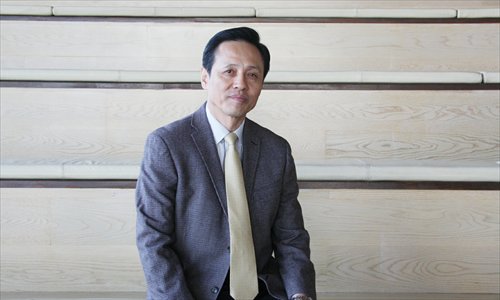
Li Enjie Photo: Courtesy of the Jingju Theater Company of Beijing
Before Li Enjie became director of the Jingju (Peking Opera) Theater Company of Beijing, he was a military man - and it shows.
Li is still a man on a mission today, of sorts. Ever since arriving at the company in 2010 he has sought to revitalize Peking Opera. More accurately, wrench it from the grip of conservative purists and let the market dictate its demands.
"Hardcore fans are very loyal, but their conservative adherence to the past is the negative side of their loyalty," said Li.
So far, Li's reforms include affordable ticket prices, incorporating modern elements and letting go of the past in a very literal sense. He refuses to use the term "Peking Opera," preferring the Chinese name jingju. Even on his business card, the words Peking Opera are nowhere to be found.
Li sat down with Global Times to talk about what it will take to turn around the centuries-old cultural juggernaut.
GT: Why do you call Peking Opera jingju?
Li: It's actually the same argument as that surrounding the "Chinese dragon." Chinese dragons are not dragons at all. They are not the fierce and feared creatures they are in the West. In fact they're the opposite. They are seen as bringers of good fortune.
We use the Chinese name in order to get back to its roots. Jingju has its own artistic characteristics, which are much different from Western opera. Using the term "Peking Opera" to describe jingju is unfair, because it leads people to believe that it is merely a form of opera from Beijing. It has its own cultural and artistic history completely separate from opera. We want to present jingju without any false preconceptions, so we use the word that best expresses its unique roots and true character.
GT: So how is jingju different from other performance arts?
Li: Jingju is a multi-faceted art. Jingju librettos are scenes from literature and possess characteristics originating from the Chinese classics. They strive to bring out the mood of the work. Every movement a performer makes, from hand gestures to eye expressions to paces taken on stage, is fixed and deliberate. Performers must possess a perfect mastery of acting, singing, speech and acrobatics, without exception.
GT: What does jingju need to develop more than anything else?
Li: In order for jingju to develop, it needs to be of its time. Passing on a tradition does not mean simply copying the past.
GT: Folk art is a living art, and ever changing. What, in your opinion, has held back the natural development of jingju as a folk art in recent years?
Li: The greatest limitation jingju faces in its development is this prevailing attitude that "you can't change this or that." The thing is, the great performers from 100 years ago are long gone, along with the audiences that celebrated them.
If jingju is to overcome this slump, its practitioners need to open their minds. Only by changing perceptions can we create a creative and pioneering atmosphere that can revive jingju. Currently there's a lot of controversy and criticism in the community because of the changes that have already been made. For example, stage lighting. Lots of patrons are opposed to using computer controlled lighting, because there was no such thing 100 years ago. But if you want to be a real purist, jingju never used any form of lighting at all. It was only performed during the day. If you never cross that line, you're forfeiting the future of the art form. We should examine jingju from today's outlooks and perspectives. As a person of today, it's necessary to understand our country's culture. One has to be clear about one's roots. Otherwise, China will not be able to stand among the advanced countries of the world.
GT: How do you plan to adapt to and stimulate the market?
Li: Building a brand depends on creating a performance like no other. It must have the perfect marriage of execution and content. In terms of the relationship between tourism and the market, performances should lead the market instead of being subservient to tourism.
But at the same time one must factor in tourism. Most often it is organized tourism that dictates what works become a success. Tour guides tell visitors, who have little understanding of folk art, which performances are considered "must-see." In order to be included on that select list, most theaters and troupes give up 80 to 90 percent of ticket value to tour groups. So if we want to create works that lead the market instead of being subservient to tourism, we need to create a product that packs a punch.
GT: How can we update jingju both musically and dramatically?
Li: Jingju can't just keep continuing down a narrow alleyway. It has to cross paths with other industries and borrow from them. This is also a way of spreading its influence. Film and television use different methods that are able to present details to audiences more effectively than traditional jingju techniques.
GT: What would you say is the largest barrier jingju has to overcome?
Li: It's a matter of perception. How should we pass on jingju? We must keep its foundations, but add modern methods and elements. It needs to touch upon modern life and reflect people's needs. People's values and sense of aesthetic have long since changed.
A jingju theater should be a place of quality works, and not a place that merely attracts audiences with low ticket prices. The reason why people aren't coming is because jingju has no market appeal. A performance is unable to reach audiences not because it has broken with tradition, but because it hasn't kept up with the times. We hope to discover a new creative path, where people are excited when they say, "Let's go see jingju."
Newspaper headline: Director Li Enjie talks tough on rebooting Beijing’s namesake folk art