HOME >> LIFE
The perfect dress
By Sun Wei in London Source:Global Times Published: 2014-11-7 5:03:03
Exhibition journeys through the evolving history of happily ever after
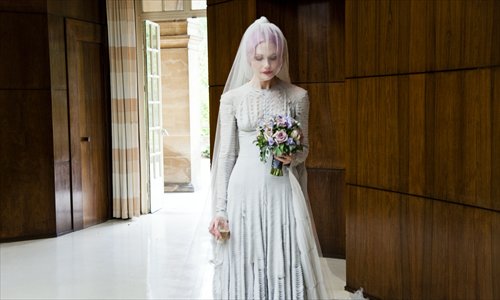
Pale grey slashed chiffon wedding dress designed by Gareth Pugh and veil by Stephen Jones Photo: Courtesy of the V&A Museum
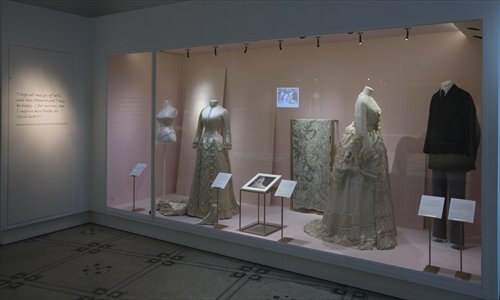
Early 20th century wedding clothing is on display as part of The Wedding Dresses 1775-2014 exhibit at the V&A Museum in London. Photos: Courtesy of the V&A Museum Photo: Courtesy of the V&A Museum
I love attending weddings. Not only because it's a warm way to support people I care about, but also because it's a wonderful opportunity to look at amazing wedding gowns, veils and all the other clothing involved in this ritual packed with meaning.When I heard the Victoria and Albert Museum in London was holding an exhibition titled The Wedding Dresses (1775-2014), I headed over there immediately so I could take in the amazing visual banquet of wedding gowns on display.
The most eye-catching gown I saw was a magnificent Norman Hartnell-designed dress with a 3.6-meter train. Beautiful socialite Margaret Whigham wore this dress when she married Charles Sweeny on February 21, 1933. According to the Daily Mail, around 2,000 people "gate-crashed" the wedding, and when the happy couple emerged from Brompton Oratory with nine adult bridesmaids, crowds of women jostled photographers to catch a glimpse of the bride.
Margaret Whigham's fabulous bridal gown is an early example of a wedding dress made for a single occasion rather than for repeated use. Before the 19th century, most women did not see their wedding dresses as clothing for a once in a lifetime occasion, and it was not uncommon for them to wear them again after the wedding. Another interesting fact, the white wedding dress that is now a universal symbol of the bride, was not necessarily a bride's first choice back then.
I was continually surprised as I wandered around the two-floor collection of wedding gowns displayed in chronological order. The display explained the evolution of the bridal gown in such an inspiring way that I regretted not knowing more about the industry before getting married.
White wedding
The white bridal gown is an essential part of modern weddings. Even in countries where other colors are traditional such as China, young couples have started to hold a western style ceremony involving a white bridal dress before changing to a red dress for the traditional tea ceremony.
However, white was a distinctly uncommon choice for bridal gowns in 18th century Britain. At the time you were more than likely to find brides wearing a dark colored dress. Royal and aristocratic brides favored silk woven with gold and silver. Most women chose colored fabrics, often flowers-dresses they could wear again after the wedding.
It wasn't until the 19th century that white became a fashionable trend. Queen Victoria was a great contributor to the dominance of white. When she married Prince Albert in 1840, she decided to wear a white lace dress with a matching veil in what became a critical moment in wedding gown history.
After the official wedding portrait of Queen Victoria was published, wearing white quickly became fashionable among the wealthy. Not only because white was a symbol of purity and innocence, it was also a popular symbol of family status. Choosing a white gown was a subtle way to show the world that the bride's family was so affluent that the bride could afford an elaborate dress that could be easily ruined by any sort of work.
A burgeoning industry
As the Victorian era drew to a close, bridal gowns inspired by historical clothing became fashionable. These "picturesque" styles remained popular into the early 20th century.
During this same period, the wedding industry became increasingly commercialized. Tradesmen began using newspapers to advertise a range of wedding service providers including dressmakers, tailors, jewelers, florists, stationers, photographers, caterers and confectioners. The first wedding exhibition promoting these trades was held at the Royal Aquarium in London in 1881.
Intense media coverage of socialite weddings fuelled public interest. In the 1930s, gossip columnists and news photographers played important roles in attracting reader interest. This led to large crowds gathering outside churches to catch a glimpse of the bride and groom. This publicity provided valuable exposure for designers.
However, this trend towards luxury was interrupted by two world wars. During war-time, clothing became practical due to commodity shortages. The rising cost of clothes led to rationing in June of 1941. Some brides began borrowing or renting dresses. Others made dresses from non-rationed materials such as upholstery fabric, net curtaining or, at the end of the war, parachute silk.
After the wars, wedding dresses began to draw on day and evening fashions and were offered in a range of lengths to create a "new look." Designers in the 1970s experienced a period of nostalgia, taking their cues from historical vogue. This trend became increasingly exaggerated in the 1980s. Lady Diana Spencer's antique lace wedding dress with its 25-foot train of ivory silk taffeta, designed by David and Elizabeth Emanuel for her 1981 wedding to the Prince of Wales, only encouraged this trend.
In addition to celebrity wedding coverage benefiting the industry, the changing lifestyles of women in the West also played a part. Many women now postpone marriage until their late 20s or 30s so they may establish their careers, therefore couples are now able to spend more money on their dream wedding.
Britons now spend a staggering £7.5 billion ($12 billion) a year getting married. Approximately 234,000 marriages take place in the UK each year with couples spending over £22,000 on average, according to the National Wedding Show.
The exhibit is scheduled to run until March 15, 2015.
Posted in: Fashion