HOME >> METRO SHANGHAI
For the love of fluff
Source: Published: 2014-12-28 16:28:01
Tradesman witnesses the final stages of a once vital craft

Fluffing cotton is hard work and it's impossible to find apprentices these days. Photo: Yang Hui/GT
In a 10-square-meter room in Jiading district stands Xu Liming, in his late 40s and the cotton fluffing machine he bought recently.
Xu, a native of Wenzhou, Zhejiang Province, arrived at Jiading in 1994 and began fluffing cotton and making a living from this ancient skill.

Just by touch alone Xu Liming assesses the weight and quality of the cotton. Photo: Yang Hui/GT
In those days Xu could earn more than 10 yuan ($1.61) a day making or refurbishing fluffed cotton quilts - customers would buy the cotton separately.To save money he refused to turn on electric lights at night or use a fan during the summer.
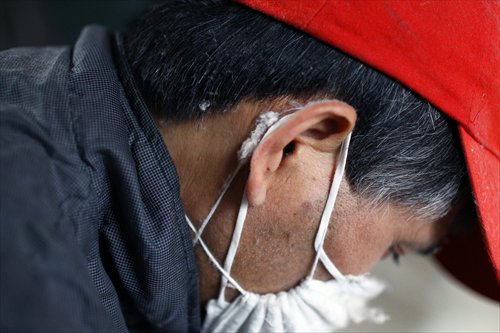
Xu at work with his mask and little pieces of fluff on his hair and ears Photo: Yang Hui/GT
He has spent years fluffing cotton by hand, wearing a mask to stop himself inhaling the fine fibers, and working vigorously with a wooden tool, punching the cotton and the quilts into shape. It's physically demanding and he often ends the day with bruised and sore hands. And because the masks aren't totally effective he does inhale some of the fibers.
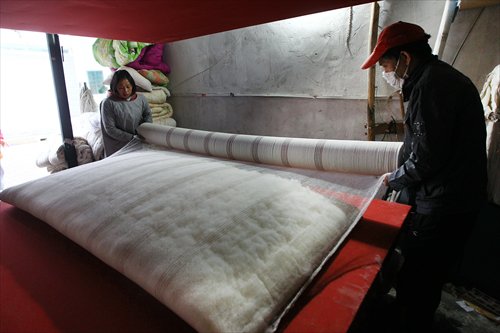
Xu's wife helps with a large quilt. Photo: Yang Hui/GT
He learned his trade from his father and has remained dedicated to this work and committed to always creating fine handmade quilts.
Even when someone brought Xu a tired old quilt that should have been discarded he spent seven hours working on it to restore some of its former glory.
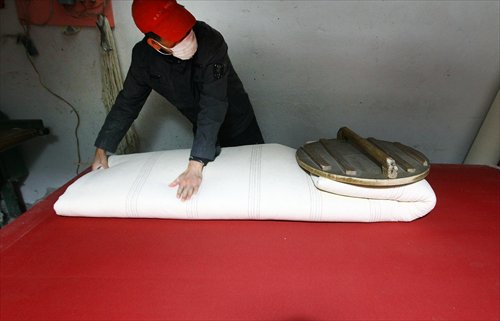
Finally the quilt takes shape. Photo: Yang Hui/GT
He has an excellent reputation but he has not enjoyed the great business he found when he, like many others, first moved from Wenzhou to Beijing after China's reform and opening-up in the late 1970s. In those days a new cotton quilt was a necessity for newlyweds.
Xu could make 10,000 yuan a year in 1990 in Beijing when people could buy a house for just 500 yuan per square meter. His trade was good and, attracted by the potential, many young people applied to be apprentices with him. At one time he had four apprentices working for him.
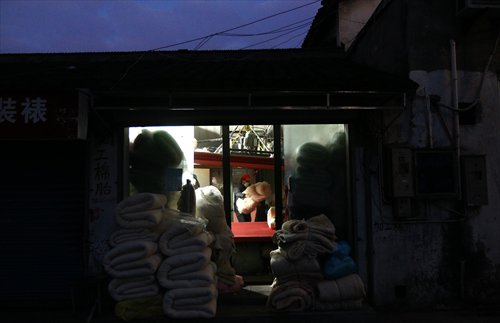
After sunset Xu is still working. Photo: Yang Hui/GT
But mechanization has changed his trade and there are few skilled cotton fluffers left in the country. Machinery has replaced most of the men who were engaged in this business. Now he has a machine in place Xu doesn't see himself passing his skills on to a younger person - these days, he said, people seemed to prefer silk or goose down quilts.
Global Times
Posted in: Metro Shanghai