HOME >> METRO SHANGHAI
The subtler side of spirits
By Liao Fangzhou Source:Global Times Published: 2015-3-8 18:23:01
Often called the Bordeaux of Japan, Yamanashi Prefecture near Mount Fuji is famed for producing a predominant 40 percent share of Japanese wine. On Thursday, 10 companies from the prefecture brought 34 kinds of wine, as well as sake and shochu, to a promotional event at the Residence of the Consul General of Japan in Shanghai.
The region's wine excels in both taste and packaging, said Xu Dimin, secretary general of the Chinese Culture Promotion Society, and the first Chinese grass-roots ambassador appointed by Yamanashi Prefecture.
"Certain kinds of wine are notably spicy, sweet, or bitter, but in general it tends to be subtler than European and American products," said Xu, who lived in Japan for more than 20 years. "The region's white wine is more excellent than red wine, and is made for Japanese food."
The packaging is also exquisite. "The Japanese are very particular about the design of each bottle and each label. They look like works of art," Xu told the Global Times.
Participating wineries include Lumiere, which dates back to 1885 and is one of Japan's oldest wineries, and the international prize-winning Katsunuma Winery. Shirayuri Wine, a family winery established in 1938, touted a white wine called Katsunuma Koshu, which was referred to in a highly popular Japanese animation about a young winemaker.
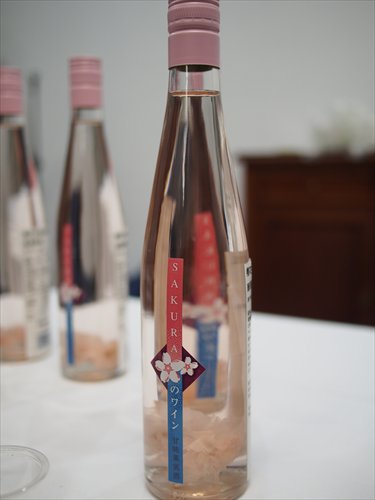
The brand also features Sakura Koshu, reportedly the only Japanese wine made with real flower petals. The pink-colored, sweet liquor looks beautiful with two or three sakura petals floating near the bottom of the bottle. While bottles cost a hefty 500 yuan ($79.81) to 600 yuan in bars and the like, they are sold through local importers for 340 yuan.
For sparkling wine, there is MIGAKI-ICHIGO. It is a 100 percent strawberry wine using top-of-the-line strawberries and natural water from Mount Fuji, and containing no additives. The CEO, Hiroki Iwasa, told the Global Times that the wine is refreshingly sweet, and is particularly ideal as an appetizer or a dessert wine. It is especially suited for women. He said the wine is only sold in Japan and Hong Kong, but the company might introduce it to the Chinese mainland market in the future.
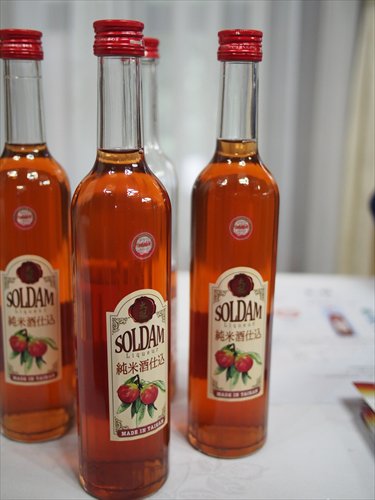
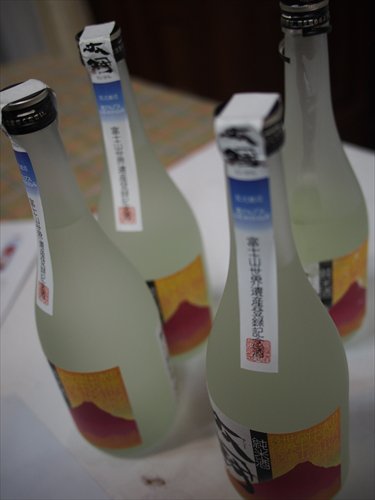
Meanwhile, sake lovers will be happy to see Taikan Shuzou's products, which are the wines to officially celebrate Mount Fuji's World Heritage record. There are six types of rice wine, each with a specific amount of rice grain - from 40 percent to 75 percent, as well as a plum and sake mix.
Xu said many of the wines at the event can be found in premier supermarkets like City Shop, as well as hotels, bars and Japanese restaurants.

The region's wine excels in both taste and packaging, said Xu Dimin, secretary general of the Chinese Culture Promotion Society, and the first Chinese grass-roots ambassador appointed by Yamanashi Prefecture.
"Certain kinds of wine are notably spicy, sweet, or bitter, but in general it tends to be subtler than European and American products," said Xu, who lived in Japan for more than 20 years. "The region's white wine is more excellent than red wine, and is made for Japanese food."
The packaging is also exquisite. "The Japanese are very particular about the design of each bottle and each label. They look like works of art," Xu told the Global Times.
Participating wineries include Lumiere, which dates back to 1885 and is one of Japan's oldest wineries, and the international prize-winning Katsunuma Winery. Shirayuri Wine, a family winery established in 1938, touted a white wine called Katsunuma Koshu, which was referred to in a highly popular Japanese animation about a young winemaker.
The brand also features Sakura Koshu, reportedly the only Japanese wine made with real flower petals. The pink-colored, sweet liquor looks beautiful with two or three sakura petals floating near the bottom of the bottle. While bottles cost a hefty 500 yuan ($79.81) to 600 yuan in bars and the like, they are sold through local importers for 340 yuan.
For sparkling wine, there is MIGAKI-ICHIGO. It is a 100 percent strawberry wine using top-of-the-line strawberries and natural water from Mount Fuji, and containing no additives. The CEO, Hiroki Iwasa, told the Global Times that the wine is refreshingly sweet, and is particularly ideal as an appetizer or a dessert wine. It is especially suited for women. He said the wine is only sold in Japan and Hong Kong, but the company might introduce it to the Chinese mainland market in the future.
Meanwhile, sake lovers will be happy to see Taikan Shuzou's products, which are the wines to officially celebrate Mount Fuji's World Heritage record. There are six types of rice wine, each with a specific amount of rice grain - from 40 percent to 75 percent, as well as a plum and sake mix.
Xu said many of the wines at the event can be found in premier supermarkets like City Shop, as well as hotels, bars and Japanese restaurants.
Representatives from MIGAKI-ICHIGO promote their company's wine.
Wines produced in Yamanashi Prefecture sit on display at a promotional event Thursday.
Photos: Liao Fangzhou/GT
Posted in: Metro Shanghai