HOME >> CHINA
Lacking laborers
Source:Global Times Published: 2015-3-15 17:28:01

Job seekers shop around in front of billboards advertising jobs. Companies print their job adverts on red paper to bring luck. Photo: CFP
Restaurants become networking hubs, streets become jammed with job booths and job fairs are held in many major cities. These are normal scenes in the days following the Spring Festival. But this year the market is a little different. More companies are advertising, many migrant workers are asking for jobs, but fewer people are signing contracts.
Wenzhou, a city in East China's Zhejiang Province, full of labor intensive private enterprises and known for its economic innovation, used to be crowded with job seekers from rural areas and companies could take their pick.
Now, it is the job seekers' turn to choose. For many companies that lack staff are engaged in a "salary war" to ease their labor demand. Some companies have had to increase the salaries they offer three times in one day to attract staff. But the job seekers are more patient than before, and are shopping around and waiting for the best offer.
"It is not only difficult to find staff after Spring Festival, but also from the beginning to the end of the year. During the whole year we have a shortage of staff. My company needs 30% more staff," said a CEO at a garment factory at Wenzhou. "A couple of years ago, enterprises in Zhejiang Province went to Guangxi, Yunnan, Guizhou provinces and regions to recruit staff. However, starting last year, we stopped going there. Local recruitment personnel in these area say they are also facing a shortage of labor," said an official at the Wenzhou human resources bureau.
Labor experts in Zhejiang Province have argued that labor intensive industries are facing difficulties in growing due to rising labor costs. They recommend that enterprises should upgrade their technology and enhance their brand marketing. The government should also provide tax and finance incentives to drive innovation.
According to data from the Ministry of Human Resources and Social Security, the majority of migrant workers in China lack skills - only one third of workers have received training before employment. Workers that have expertise in their field accounted for 19 percent of all those employed nationwide, while highly-skilled talent makes up merely 5 percent.
Global Times

Job seekers carefully read job advertisements. Photo: CFP
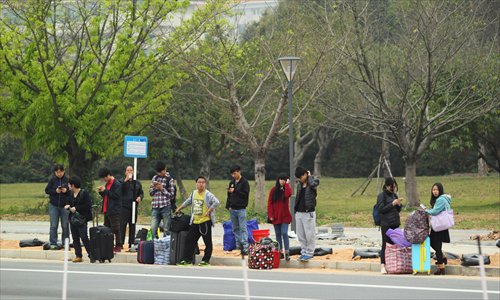
Migrant workers wait for buses after just arriving in a city. Photo: CFP
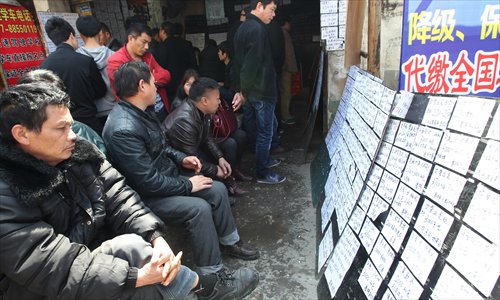
Many workers are looking for jobs, but fewer people are signing contracts recently. Photo: CFP
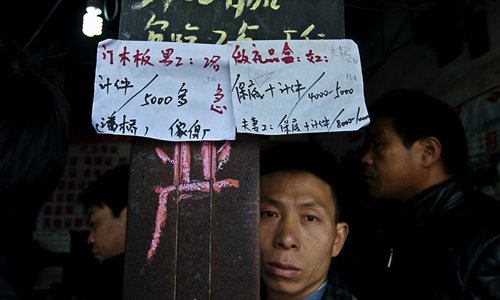
Highly-skilled talents are badly needed in enterprises. Photo: CFP
Posted in: In-Depth