Dedicated followers of fashion
Designers come up with novel accessories of self-expression
While most men can appreciate the virtues of a good suit, the truly stylish know the important role accessories play in completing a look. The Global Times spoke to two designers who are helping men across the city add a little flair to their outfits.
Bow ties by Wang Weixu
The showroom for Wang Weixu's bow ties has a vintage vibe to it, with hundreds of bow ties of different shapes, colors displayed on shelves throughout the converted apartment at 830 Yan'an Road Middle.
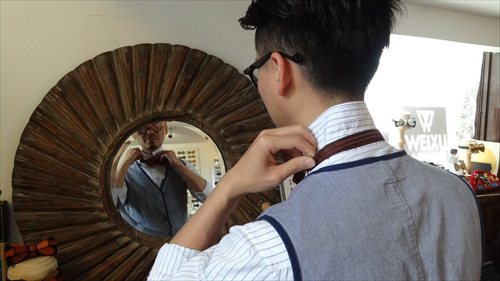
Wang Weixu tries on a bow tie. Photos: Courtesy of the designers
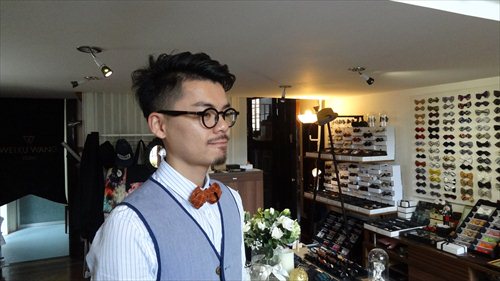
The brand was launched by Wang in 2014 after he quit his job at an architecture firm.
He first made bow ties for the company's annual gala, and they gained a lot of attention. He bought a sewing machine and started selling his bow ties online. They became popular among customers and garnered media attention.
When the sales became enough, he quit his job and opened his showroom. He employs his skills as an architect to create more fully-shaped bow ties that can be appreciated from every angle.
"Traditional bow ties are flat. I think that they are boring. I try to make all my bow ties in three dimensions. I like to look at a bow tie from the side, and see the shape of it," Wang told the Global Times.
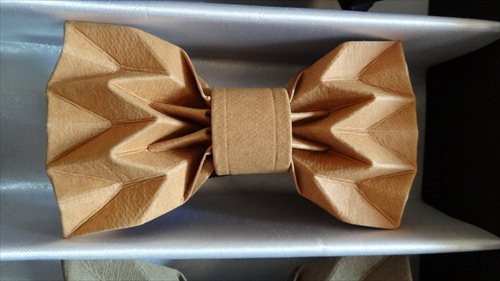
Wang Weixu and his bow ties
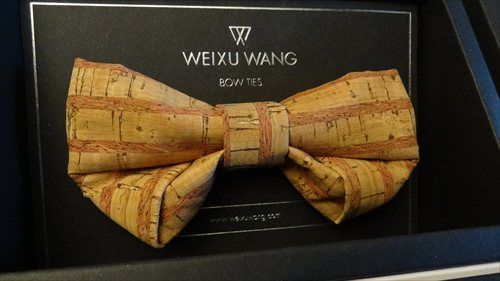
Wang Weixu and his bow ties
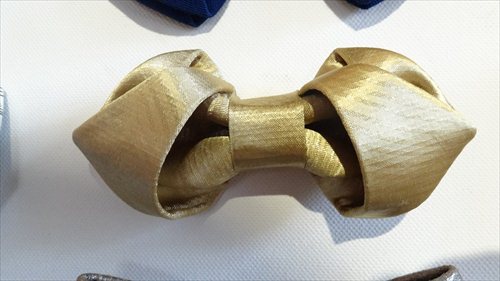
Wang Weixu and his bow ties
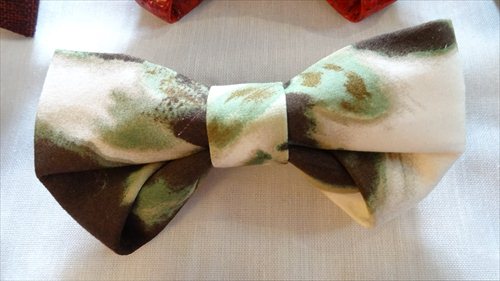
Wang Weixu and his bow ties
His most recent collection, "Geometry," uses white shapes spliced onto the black bow tie bases in the shapes of butterflies, dragonflies, bees and flowers.
Wang also employs materials not normally associated with bow ties, such as wood, plastic, grass, recycled paper and metal.
Ceramics is another material that Wang has been exploring, inspired by Italian brand Cor Sine Lebe Doli. After years of trial and error, this year Wang came out with a ceramic bow tie reminiscent of a soda cracker, which is thin and peppered evenly with small dots.
Wang is even pondering the use of glass, although has yet to come up with a viable design.
He also wants to create build-your-own bow ties, which will allow wearers to mix-and-match different components. "I will provide the parts, and customers can assemble the bow ties as they want. The ribbon, the base and the decoration on top could all be switched around," Wang said.
It is the design rather than the business aspect that excites Wang. "I am not a businessman. I hope to find a good partner to take charge of operations. I love to focus on the design and development," he said.
Cuff links by Zhang Wei
Zhang Wei's Primalist brand designs cuff links, ties and tie clips.
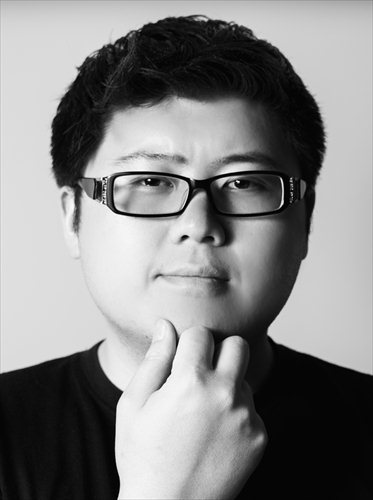
Zhang Wei and his cuff links that feature the clockwork found in watches
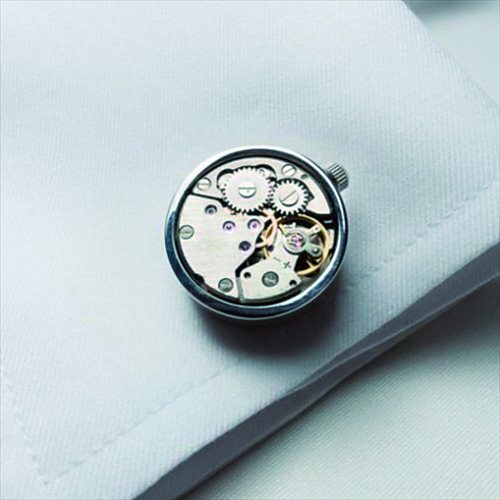
Zhang Wei and his cuff links that feature the clockwork found in watches
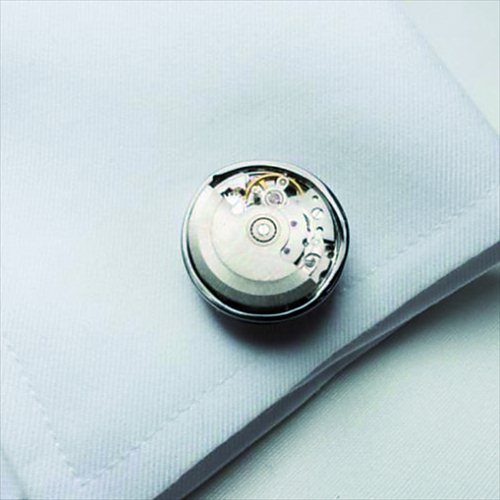
Zhang Wei and his cuff links that feature the clockwork found in watches
Shanghai-born Zhang Wei moved to the US with his family when he was 13. He went on to study product packaging design at Michigan State University. After working in the US for a few years, he joined a finance company and was dispatched to China.
Working in the finance industry, Zhang discovered that many of his colleagues were having trouble finding well-designed accessories.
Zhang likes collecting watches, so he designed a series of cuff links that feature the clockwork found in watches. He also likes photography, and has made cuff links that feature camera motifs. Other designs include light bulbs, bowling pins, Lego pieces and crayons.
"Men need to express their style through details. Even if we are wearing formal clothes, we can still express ourselves through accessories," Zhang told the Global times.
The cuff links come in cases that double as exhibition units, thanks to their flip-top lids.
Zhang also carries through his individualist philosophy in his ties, handkerchiefs and tie clips, using materials such as wool, lace and linen.