Trashing traditional tattoo stereotypes
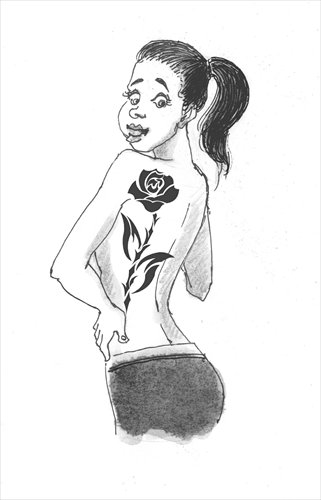
Illustration: Luo Xuan/GT
China is gradually becoming more liberal, from issues of homosexuality to tattoos. The lines are not clearly drawn or defined as of yet though. As a matter of fact, they are quite blurry and confusing at times.
So, where did it all begin for China's controversial feelings about tattoos?
It is one of those negative stereotypes people typically associate with criminals and prostitutes - when people went into seedy back alleys, to secretly get their body work done.
However, by the 1990s things began to change. Tattoos became more of a fashion statement among singers, actors or generally those who were more artistic.
Now what's happening in this traditional society is a wave of rebellion that has engulfed people under 30. Tattoo parlors have been sprouting up like wildfire. It's the new "thing." Some may even call it a fad but I think it's definitely here to stay. But beware, a tattoo is permanent.
Tattoos in China have an ancient history dating back several thousands years. It was a common practice of warriors, and hunters.
People are now beginning to question the negative stereotype attached to tattooing, and thousands of young professionals are bucking the negative connotations and getting inked across China.
Surprisingly, the ones getting more tattoos in Nanjing, Jiangsu Province are women. The numbers are unconfirmed, but tattoo parlor owners say at least six out of 10 customers are young women, ranging in age from 18 to 30. Popular tattoos for young ladies are butterflies and flowers, typically placed on the upper back, shoulder or ankle. For males over 18 (the consenting age for a tattoo in China) a dragon tattoo on their back or upper arm is the popular choice.
Piercings are also a growing trend in a traditionally modest society. People are increasingly showing off their bodies more and want to look sexier.
For some, tattoos are about love, while for others it's more about attraction and desire. A tattoo can be a symbol of spiritual change in a person's life. The skin becomes a canvas for occurrences that have happened in a person's life, a timeline of momentous events, if you will.
Tattoos can also be a form of remembrance for those whom we love or have lost.
It's a personal choice of adulthood, expression, freedom and independence.
But tattoos don't come cheap. They can cost as little as 500 yuan for around three centimeters to as much as 20,000 yuan for a tattoo covering the body from the neck to the bottom of the back.
It's also not for the faint-hearted. The stinging sensations can be very painful, depending on the artist's talent and body positioning of the tattoo.
My advice however is that if you are contemplating getting one, to make sure you keep it hidden. A tattoo is best placed along the back, upper arms or places where they cannot easily be seen, even at a company picnic while wearing shorts or a T-shirt. Chinese bosses are still very conservative, some frown upon tattoos. It could even affect your chances of being hired.
You could also find yourself ostracized if you come from a traditional city, family or group. Times are changing, but it can take months or even years to change people's opinions. However, if you can handle the pressure, what are you waiting for? Go get yourself inked!
This article was published on the Global Times Metropolitan section Two Cents page, a space for reader submissions, including opinion, humor and satire. The ideas expressed are those of the author alone, and do not represent the position of the Global Times.