Culture and the creek
After a century of abuse and neglect, Shanghai’s Wusong River is making a comeback
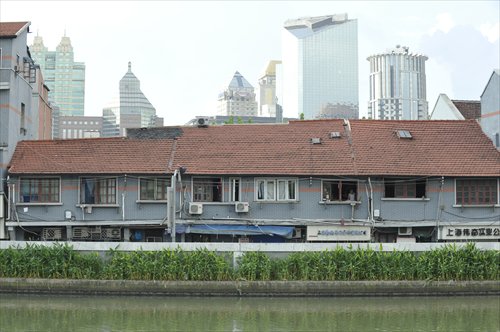
Traditional lilong (lanehouse) residents in downtown Shanghai coexist with Suzhou Creek. Photo: Tom Carter/GT
If the Huangpu is considered Shanghai's queen river, then Suzhou Creek is the city's scorned former lover. Dark and serpentine, the disused waterway slithers broodingly through the city like a betrayed wife who has been spurned for a younger, prettier paramour.
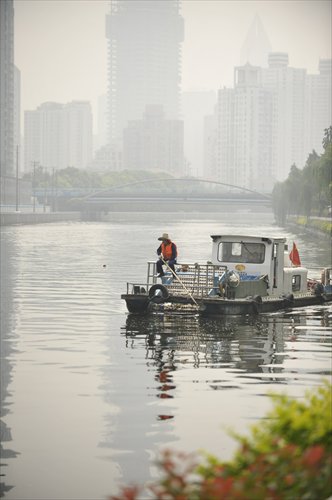
A Shanghai port authority cleaning barge patrols the river's greenbelts. Photo: Tom Carter/GT
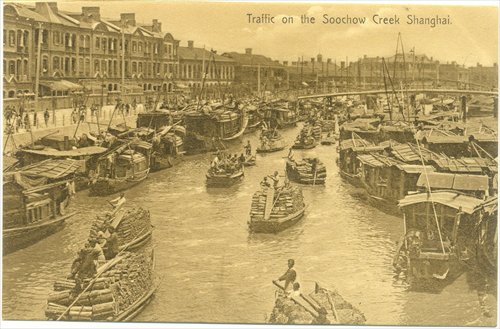
Houseboats along 1900s-era Soochow Creek on an old postcard Photo: China Rhyming
Known locally as the Wusong River, the waterway was for many millennia the region's primary transportation artery to the East China Sea, flowing 54 kilometers from Taihu Lake in neighboring Jiangsu Province's Suzhou, her namesake. A thriving fishing trade at the convergence of the Huangpu River resulted in the establishment of Shanghai during the Southern Song Dynasty (1127-1279).
Over the following dynasties, however, as Shanghai's stature began to rival Suzhou's, so too did the Huangpu River rise as the waters of the Wusong receded. By the 1800s, with the Huangpu revelling in its glamorous role as an international trade port, the newly renamed Soochow Creek was relegated to mistress status, shamefully servicing the city's unsightly factories and warehouses. Urbanization and rampant industrialization throughout the 20th century left her misused and polluted.
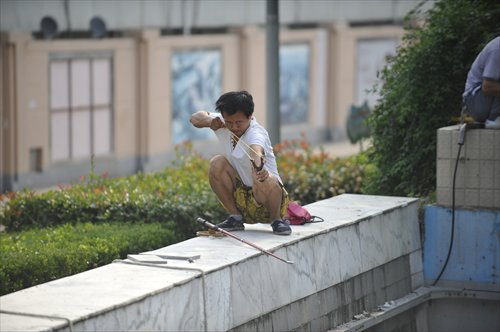
A fisherman perches along the Wusong River opts to use a slingshot instead of his fishing pole. Photo: Tom Carter/GT
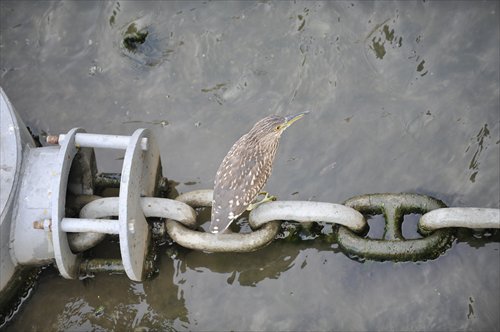
Wildlife, including several species of birds, now thrives in the revitalized Wusong River. Photo: Tom Carter/GT
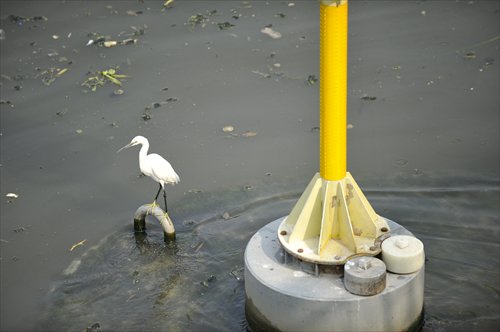
Wildlife, including several species of birds, now thrives in the revitalized Wusong River. Photo: Tom Carter/GT
Shanghai Municipality invested billions of yuan in an 11-year rehabilitation project, launched in 1998, that sought to introduce sewage treatment to the Wusong's waters while revitalizing her natural habitat with greenbelts where wildlife could thrive. Modern high-rises and trendy art galleries replaced the urban decay that once blighted the Wusong's banks, and several historical sites such as the Sihang Warehouse have ensured her protection as a culture heritage.
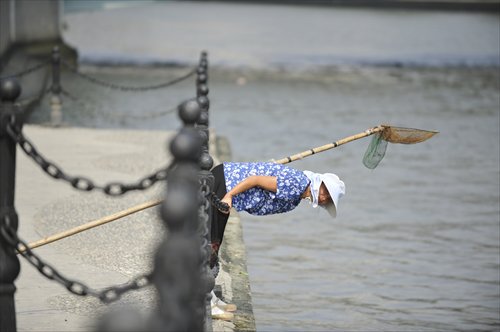
A local woman trawls for fish in Suzhou Creek with a bamboo fishing net. Photo: Tom Carter/GT
Today's shallow Suzhou Creek is a trickle of her former self, but there is a deep respect from blue-collar locals who have come to recognize her as Shanghai's true symbol of its working class. The creek is no longer used as a shipping route, and commercial barges and private houseboats are restricted, but residents from the lilong (traditional lane homes) along her reedy banks continue to coexist with the Wusong, trawling the water with nets or fishing from her numerous bridges.
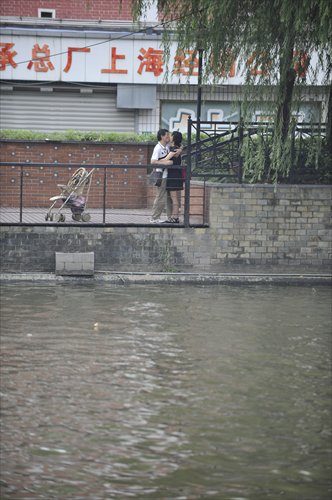
Lovers overlooking the Wusong's waters steal a kiss beneath a willow tree. Photo: Tom Carter/GT
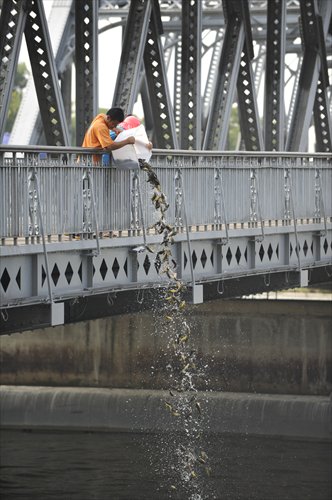
Buddhist practitioners on the landmark Waibaidu Bridge release dozens of live catfish back into Suzhou Creek while praying for "fangsheng" (giving back life). Photo: Tom Carter/GT
A stroll along any of the new waterfront walking paths constructed at intervals starting at the Bund provides a glimpse into the creek culture that still thrives along the Wusong. To quote from Lou Ye's gritty 1990s noir film Suzhou River: "There's a century worth of stories here. If you watch it long enough, the river will show you everything. It will show you people working, it will show you friendship, families, love, and loneliness as well."