HOME >> BUSINESS
Can homegrown NeoKylin take on Windows?
Source:Global Times Published: 2015-9-24 21:08:01
Operating system will need to emphasize security to gain more users
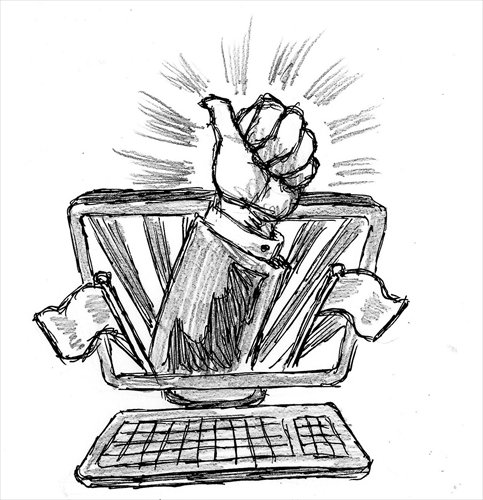
Illustration: Peter C. Espina/GT
The rising clout of Chinese tech companies has extended to operating systems, with US computer giant Dell Inc opting to pre-load more than 40 percent of commercial PCs that it sells in the domestic market with a Chinese alternative to Microsoft's Windows.
Dell's partnership with NeoKylin, a five-year-old operating system developed by Shanghai-based China Standard Software Co, has turned more attention toward the homegrown software.
The operating system - which is considered to have been inspired by Windows XP, for which Microsoft has ended support - has already gained favor with government agencies and State-owned enterprises. NeoKylin has also been pre-installed in some of Hewlett-Packard Co's devices shipped in China, serving to increase its profile as a rival for Windows.
NeoKylin is also reportedly being eyed by Chinese handset maker Huawei Technologies Co for development of an indigenously designed mobile operating system for phones. Although Microsoft has secured dominance in PC operating systems, the company has not built the same influence in the area of mobile operating systems.
Coupled with a renewed buzz recently around China's homebred Loongson processors, which are aiming for a position in the chip making market alongside the likes of Intel and AMD, this undeniably draws greater attention to a seeming shift toward domestic technologies in the world's second-largest economy, as the nation moves to wean itself off dependence on Western technologies in key areas.
It's true that a host of Chinese tech firms such as Baidu Inc, Alibaba Group and Tencent Holdings have already risen to fame globally, but in terms of the influence in either chip making or operating systems, the nation has yet to produce any world-renowned players.
However, with increased hype around NeoKylin - named after qilin, the auspicious ancient Chinese mythical beast - and Loongson - named after long, or dragon, the most revered symbol in China - the nation's efforts to boost its technological sophistication appear to be bearing fruit, at least to some extent.
That said, the push for adoption of indigenous alternatives to famed Western counterparts has remained mainly a government initiative so far. Ordinary users in the country, where Windows remains the predominant PC operating system, have shown little interest yet in shifting toward use of the homegrown variant.
A blog post by the Wall Street Journal earlier this month said that "it isn't clear how many people are buying computers loaded with NeoKylin only to replace the software with Microsoft OS."
Similar skepticism has been voiced by some of the nation's Web users, who have posted messages on social media saying they would replace NeoKylin with Windows immediately after getting a Dell computer pre-installed with the Chinese operating system.
NeoKylin will need to offer clear advantages over Windows to achieve commercial success in the mass consumer market. The interface looks somewhat similar to that of Windows, so NeoKylin will have to emphasize its claims of offering greater security than its rival. Otherwise, however auspicious its brand name may be, NeoKylin will find it hard to win over users in its home market.
In the case of mobile operating systems, NeoKylin has even further to go before being commercially successful, given that Apple Inc's iOS and Google Inc's Android platforms have developed an almost unbeatable position, having fended off competition from Windows.
The author is a reporter with the Global Times. bizopinion@globaltimes.com.cn
Posted in: It's Your Business