HOME >> METRO SHANGHAI
Big battles, little beasts
Source:Global Times Published: 2015-10-21 16:38:01
Enthusiasts keep the cricket fighting tradition alive in Shanghai
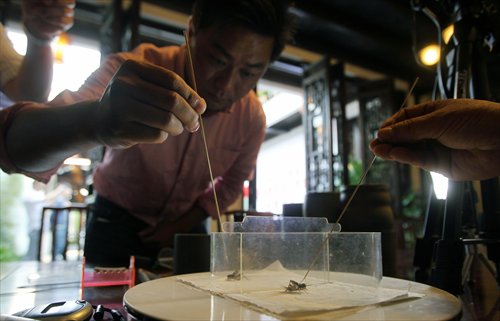
Owners use straw to stir crickets up before they fight. Photo: Yang Hui/GT
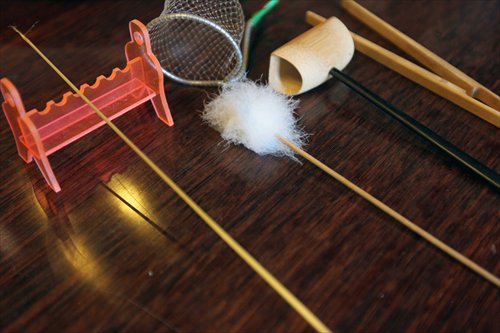
Some of the implements used in cricket fighting. Photo: Yang Hui/GT
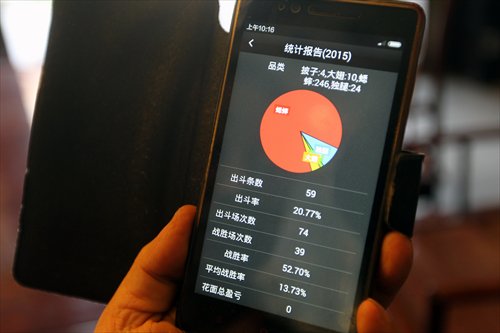
Cricket fighting even has phone apps to keep owners informed and supplied with data. Photo: Yang Hui/GT
Late autumn is the best time for one of China's most unique sports - cricket fighting. According to xishuai001.com, one of the biggest online forums for cricket fight enthusiasts, about 300,000 to 400,000 people in Shanghai raise crickets as a hobby, and 30 percent of them are office workers.
Keeping crickets as pets started in the Tang Dynasty (618-907) when imperial concubines liked the singing of the crickets they kept in golden cages. The common folk then began to follow suit and kept crickets as pets for their vocal prowess and for their ability to fight. Cricket fighting reached its peak in the Song Dynasty (960-1279), when huge camps were set up in the capital to cater for gamblers and the fights.
The sport still flourished through the Qing Dynasty (1644-1911) but in the 1950s and the 1960s, it was regarded as "old culture" alongside mahjong and was banned. Nowadays, even though the ban has been lifted, only a few souls still gather for cricket fights. The Global Times recently visited Qibao Ancient Town to talk to cricket enthusiasts.

Straw encourages the crickets to be more aggressive. Photo: Yang Hui/GT
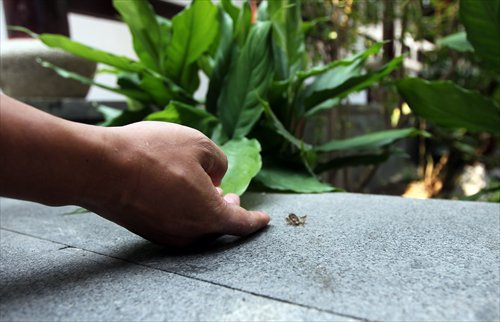
Losing crickets are released into the wild. Photo: Yang Hui/GT
These are very small combatants and at this venue the fights are televised so that spectators can see the action on a big screen.
Mr Chi is the organizer of the fights for the evening. He followed his father and grandfather who were cricket fight enthusiasts and has been keeping crickets since he was a small boy.
"I travel to other provinces every year buying crickets. This year alone I spent over 50,000 yuan ($7,865) buying crickets," Chi said. He also collects antique cricket jars and one of these, a Qing Dynasty example, is worth several hundred thousand yuan.
A tireless advocate for the sport, Chi pushed for having cricket fighting listed as an intangible cultural heritage of Minhang district.
"There were not many entertainment options when I was small, but many people played with crickets. Cricket fighting reminds me of the old times. It is part of my childhood memories and they are rare in city life now," the recently retired 60-year-old Yin said. He formed a cricket lovers' society and he and other enthusiasts use this to discuss aspects of cricket life.
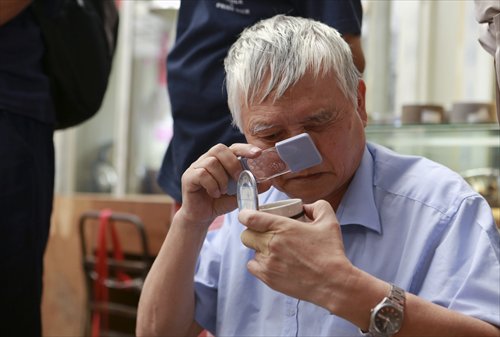
An enthusiast uses a magnifying glass to check out a cricket's potential at the Dongtai Road Bird and Flower Market. Photo: Yang Hui/GT
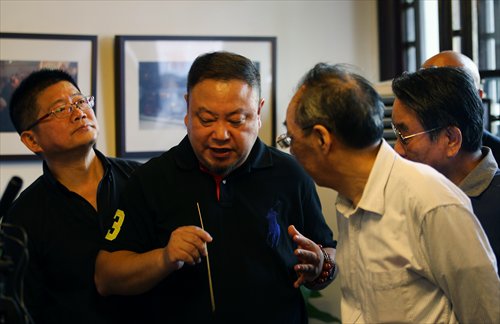
Spectators exchange stories between fights. Photo: Yang Hui/GT
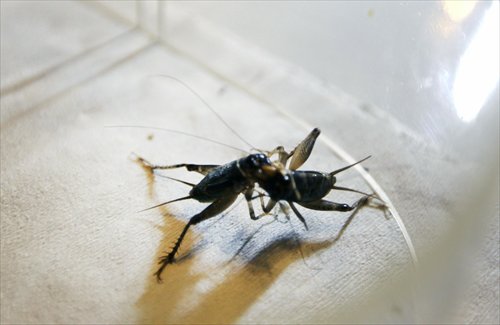
Two of the combatants get to grips with each other. Photo: Yang Hui/GT
This year, Yin is looking after 100 crickets and it takes him several hours every day to feed and care for them. He's even got a phone app that gives him the up-to-date information on his crickets, how much they cost and if they won.
There is a problem with cricket fighting and that is the gambling that has been associated with it. In days of yore a cricket owner would accept a piece of mooncake or another cricket if he won. Nowadays thousands of yuan are being wagered secretly on cricket fights and last year a man was stabbed to death over a cricket fight, the Xinmin Evening News reported.
Global Times
Posted in: Metro Shanghai, City Panorama