HOME >> METRO SHANGHAI
The material girl
Source:Global Times Published: 2015-12-20 16:48:01
Collector preserves unique and beautiful Chongming Island hand-woven cloths
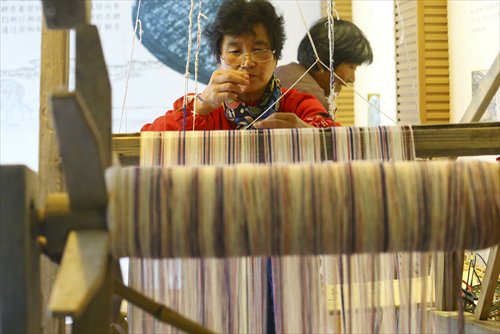
To make beautiful cloth you have to be skilled and diligent at the loom. Photo: Yang Hui/GT
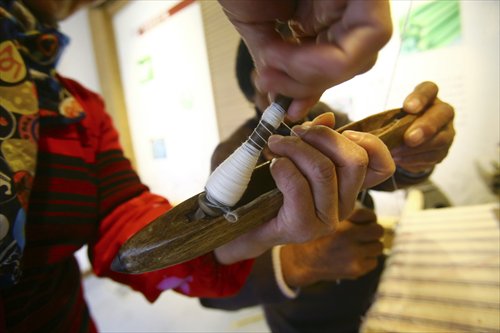
A weaver threads a shuttle on a loom. Photo: Yang Hui/GT
There are 2,000 bolts of hand-woven cloth stacked in He Yongdi's two-story house in Chongming Island. Over the past 15 years, the 46-year-old woman has been collecting the unique hand-woven materials made on the island.
Chongming cloth dates back some six centuries, to a time when it was regarded as the "seed of all materials" and when agriculture dominated the land.
Until early last century Chongming hand-woven cloth was still very much in demand. In those days about 600,000 people lived on the island but it boasted 100,000 looms and produced 2.5 million bolts of hand-woven cloth annually.
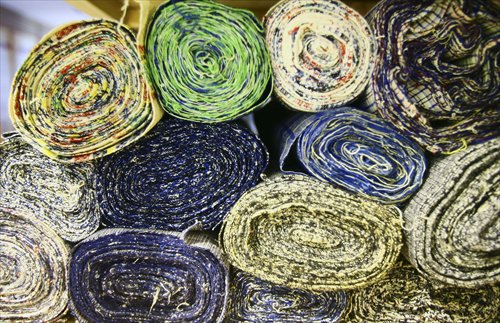
Some of the different patterns of the Chongming hand-woven cloth in He Yongdi's home. Photo: Yang Hui/GT
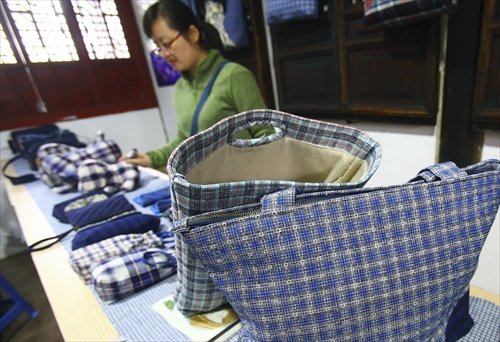
Products made from Chongming hand-woven cloth on sale at a local store. Photo: Yang Hui/GT
He Yongdi said people in Chongming were still spinning and weaving cloth in the 1990s. "Most women over 45 have the skill," He said, adding that she learned how to weave when she was 7. "Back then it wasn't a big deal how a young woman being considered for marriage looked or how tall she was - it was more important that she was good at spinning and weaving. The more beautiful cloths a young woman had in her cupboard, the better a wife she was considered."
But with industrialization and assembly lines taking over, fewer and fewer people learned how to work a loom and make textiles and the industry died out on the island. Because of her love and passion for the traditional handcraft, He started to collect hand-woven materials more than a decade ago and now she has more than 2,800 bolts of cloth in 476 styles, each with its own colors and patterns.
One of the most treasured examples in He's collection came from Wang Meili. Wang, now in her 80s, worked very hard when she was young to save money for a trip to Beijing. She got there on October 2 one year and then met her future husband. Before they were married, Wang spent seven months spinning and weaving a special bolt of cloth.
Into this she wove characters like "xi" (happiness), "qingchun" (youth), "qu Beijing" (travelling to Beijing) and their names, a unique picture of their life and love together. It took He nearly three years before she could persuade Wang to sell her that cloth.
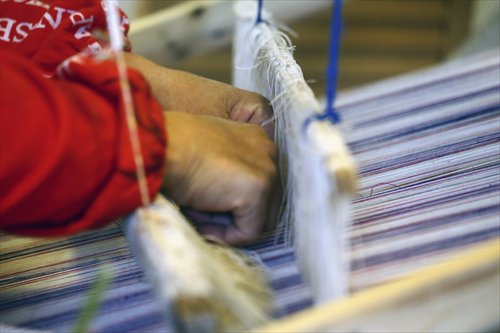
It's intricate work turning yarn into cloth on a loom. Photo: Yang Hui/GT
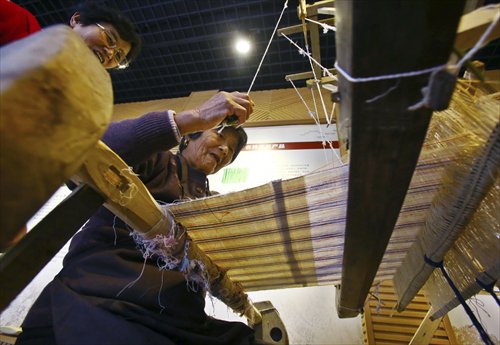
Nowadays only middle-aged and elderly people know how to make cloth on a loom. Photo: Yang Hui/GT
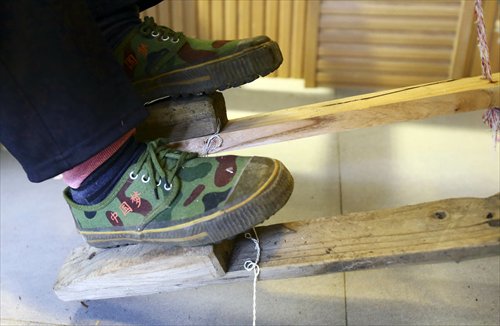
You have to be very adept to work a traditional loom properly. Photo: Yang Hui/GT
"It wasn't so hard when I first started collecting hand-woven cloths. Many local residents were being relocated and didn't want to take their cloths with them. But now there are very few left," He said. She said she hoped the traditional hand-woven cloths could be passed down from generation to generation, but the expense is quite prohibitive.
"It takes one person up to seven month to make a bolt of cloth, which costs between 2,000 yuan ($308) and 10,000 yuan. Who's willing to pay this much?" She dreams of opening a private hand-woven cloth museum.
In 2013 Jiangnan Sanmin village on Chongming Island opened a Hand-woven Cloth Museum where visitors can see how cotton is ginned, prepared, spun into yarn on a spinning wheel and turned into material on a loom and, in April this year, Chongming hand-woven cloth was listed as an intangible cultural heritage.
Global Times
Posted in: Metro Shanghai, City Panorama