HOME >> METRO SHANGHAI
Making of a monster
By Yang Lan Source:Global Times Published: 2015-12-20 17:53:01
Director of box office smash talks about creating immersive fantasy films with a Chinese twist
Despite its deep and rich well of mythology from which to draw, China has produced relatively few fantasy films, and only a few of these have been well received.
This could be about to change, thanks to the example set by this summer's Chinese blockbuster, Monster Hunt.
The film took over 2.4 billion yuan ($373 million) at the box office, putting it ahead of the big Hollywood release of the summer, Furious 7.
The film starts out with a war between humans and monsters in ancient China. This is followed by a civil war between monster factions.
Stumbling upon the dying monster queen in the course of this conflict is Tianyin (Jing Boran), a young man whom the queen impregnates. He then gives birth to a monster-human hybrid - the little monster king Huba (pictured below right) - which he must raise.
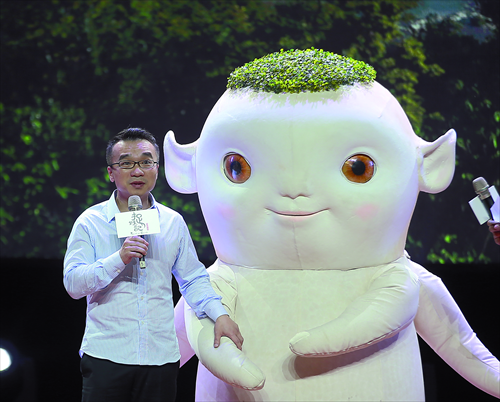
One of the highlights in the movie was the cute Chinese monsters designed by director Raman Hui and his team.
In the course of coming up with his designs, Hui read the classic Mountains and Seas, a compilation of ancient Chinese myths. The book had detailed descriptions of ancient gods and monsters, such as the nine-tailed fox.
Although there were no pictures, Hui based the appearances of their monsters on these descriptions.
To make Huba look real, Hui and his team used elements from the real world, basing his facial features on those of human infants, and his feet on those of elephants.
While in early designs, Huba had horns on his head, these were later substituted for grass shoots to make him seem more cute.
In the movie, female monsters have two hands and four legs, while male monsters such as Huba have four legs and two hands.
"Why? They are like Hong Kong people, because males need to work with hands, and females need to go shopping with legs," Hui joked.
The team also designed many small monsters to add more fun to the story. These include a chair monster, which follows its master around, and is always on hand in case his master needs to sit.
While there were many different versions for each monster, the final choice was based on how expressive the monster design could be.
"It is essential that a monster could perform in the movie," said Hui.
To make the structure and movements of the monsters seem natural, the designers also drew out the bone structure and musculature for each monster.
For example, the hand of the monster queen is like the tail of a snake, with bones that can twist 360 degrees.
Many of the special monster effects were made at the Beijing-based visual effects and animation studio Base FX. "I learned many tricks from Chinese animators and artists," said Hui.
Convincing the audience
One challenge the film faced where many previous productions had failed was coming up with a convincing combination of an ancient Chinese story line and fantasy elements.
The Promise, directed by renowned Chinese director Chen Kaige, was widely scorned by Chinese viewers when it was released in 2005.
The most common complaint was that the absurd plot failed to support the exaggerated special effects.
Fantasy-themed Zhongkui: Snow Girl and the Dark Crystal released this year had flashy special effects, but audience did not buy the story.
When asked about what makes a great story, Hui said he believes the most important thing is to make people feel connected to it.
"The story does not have to be complicated. Simple stories that move viewers are also good stories," said the director.
When asked about what makes a great animation, Hui said, "when people do not think that they are watching an animation, that is a good animation."
In other Chinese fantasy films, the monsters usually look like humans.
For example, Chinese movies often feature a snake spirit or a fox spirit as an ancient beauty. When she shows her monster appearance, she merely grows a tail.
"I think they were like Chinese TV series. Monster Hunt needed something different. So I put a lot of personality into the appearances of the monsters. Sometimes you need to take a risk," Hui said.
"If our monsters looked the same as in other movies, maybe not so many people would go to see the film."
Hui was born in Hong Kong. Graduating from Hong Kong Polytechnic University in 1984 with a degree in graphic design, he then went to California to work at DreamWorks Animation.
He worked there for over 20 years, participating in all the Shrek movies and co-directing Shrek the Third. In 2012, he came to Shanghai to help set up Oriental DreamWorks.
"When I was working in the US, I always thought about one day coming back to do something in China. But it was not that easy because, if you look at 10 years ago, the film market in China was really small," said Hui.
"But it is amazing how in the last 10 years, the film market has grown so much that it has allowed me to work on movies like Monster Hunt."
This could be about to change, thanks to the example set by this summer's Chinese blockbuster, Monster Hunt.
The film took over 2.4 billion yuan ($373 million) at the box office, putting it ahead of the big Hollywood release of the summer, Furious 7.
The film starts out with a war between humans and monsters in ancient China. This is followed by a civil war between monster factions.
Stumbling upon the dying monster queen in the course of this conflict is Tianyin (Jing Boran), a young man whom the queen impregnates. He then gives birth to a monster-human hybrid - the little monster king Huba (pictured below right) - which he must raise.
One of the highlights in Monster Hunt is the cute Chinese monsters designed by director Raman Hui (above left) and his team. Photo: CFP
Monster designsOne of the highlights in the movie was the cute Chinese monsters designed by director Raman Hui and his team.
In the course of coming up with his designs, Hui read the classic Mountains and Seas, a compilation of ancient Chinese myths. The book had detailed descriptions of ancient gods and monsters, such as the nine-tailed fox.
Although there were no pictures, Hui based the appearances of their monsters on these descriptions.
To make Huba look real, Hui and his team used elements from the real world, basing his facial features on those of human infants, and his feet on those of elephants.
While in early designs, Huba had horns on his head, these were later substituted for grass shoots to make him seem more cute.
In the movie, female monsters have two hands and four legs, while male monsters such as Huba have four legs and two hands.
"Why? They are like Hong Kong people, because males need to work with hands, and females need to go shopping with legs," Hui joked.
The team also designed many small monsters to add more fun to the story. These include a chair monster, which follows its master around, and is always on hand in case his master needs to sit.
While there were many different versions for each monster, the final choice was based on how expressive the monster design could be.
"It is essential that a monster could perform in the movie," said Hui.
To make the structure and movements of the monsters seem natural, the designers also drew out the bone structure and musculature for each monster.
For example, the hand of the monster queen is like the tail of a snake, with bones that can twist 360 degrees.
Many of the special monster effects were made at the Beijing-based visual effects and animation studio Base FX. "I learned many tricks from Chinese animators and artists," said Hui.
Convincing the audience
One challenge the film faced where many previous productions had failed was coming up with a convincing combination of an ancient Chinese story line and fantasy elements.
The Promise, directed by renowned Chinese director Chen Kaige, was widely scorned by Chinese viewers when it was released in 2005.
The most common complaint was that the absurd plot failed to support the exaggerated special effects.
Fantasy-themed Zhongkui: Snow Girl and the Dark Crystal released this year had flashy special effects, but audience did not buy the story.
When asked about what makes a great story, Hui said he believes the most important thing is to make people feel connected to it.
"The story does not have to be complicated. Simple stories that move viewers are also good stories," said the director.
When asked about what makes a great animation, Hui said, "when people do not think that they are watching an animation, that is a good animation."
In other Chinese fantasy films, the monsters usually look like humans.
For example, Chinese movies often feature a snake spirit or a fox spirit as an ancient beauty. When she shows her monster appearance, she merely grows a tail.
"I think they were like Chinese TV series. Monster Hunt needed something different. So I put a lot of personality into the appearances of the monsters. Sometimes you need to take a risk," Hui said.
"If our monsters looked the same as in other movies, maybe not so many people would go to see the film."
Hui was born in Hong Kong. Graduating from Hong Kong Polytechnic University in 1984 with a degree in graphic design, he then went to California to work at DreamWorks Animation.
He worked there for over 20 years, participating in all the Shrek movies and co-directing Shrek the Third. In 2012, he came to Shanghai to help set up Oriental DreamWorks.
"When I was working in the US, I always thought about one day coming back to do something in China. But it was not that easy because, if you look at 10 years ago, the film market in China was really small," said Hui.
"But it is amazing how in the last 10 years, the film market has grown so much that it has allowed me to work on movies like Monster Hunt."
Posted in: Metro Shanghai, About Town