Writer Jiang Nan sees VR as an opportunity for Chinese fantasy
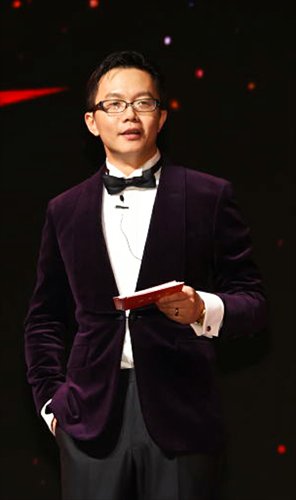
Author Yang Zhi (pen name: Jiang Nan) Photo: Courtesy of Smart Dragon
China's younger generation of authors need to be more than just talented writers nowadays. Some have gone out and established their own personal media studios, like Tangjiasanshao; some of them have become scriptwriters for the movie or TV adaptations of their work, like Gu Man and Jiang Shengnan; while some have become directors, like Han Han and Zhang Jiajia. And at least one of them, Yang Zhi (known by his pen name, Jiang Nan) formed his own company, Smart Dragon, to expand his IPs into other fields, including the hotly debated virtual reality realm.
Jiang, author of the hit series Dragon Raja and Eagle Flag, topped the 2013 China Rich Writers List released by Star List Media and West China Metropolis Daily. Once writing in different genres, he is one of the most representative Chinese fantasy novelists in the country.
Cooperative creation
Many readers know the author because of his role in creating the world of Jiuzhou, or Novoland, with six other writers in 2003. This first group of authors became known as the seven gods of Novoland. It was the first time that a group of talented Chinese writers gathered together to create a shared world. Two of the most famous writers in the group, Jiang Nan wrote the Eagle Flag series for Novoland and another, Jin Hezai, wrote Yuchuanshuo.
Although the team finally split into two in 2007 it remains famous. Even now, when talking about the success that Marvel has had creating a world of superheroes, people are reminded of the world of Novoland.
At a press conference for the establishment of Smart Dragon on Monday, Jiang recalled the early history of the Novoland, mentioning that its creation was actually nothing like Marvel.
"In Marvel, there were many authors creating stories and a successful publishing company connecting them together into a world, but Novoland was different," Jiang told the Global Times, adding that Novoland was originally the name of his own series that was then developed into the basic concept of the latter fictional world.
One of the founding members of the group came up with the rules of this fictional world: When creating a character, an author would have to write their own story about that character; if mentioning a previously unknown country, the author would have to come up with the history of this place.
"To tell the truth, creating a world with different people is something that sounds beautiful, but when it came to actually doing it, we lacked a powerful guiding hand and effective management," he concluded.
Learning this lesson, he decided to form his own company dedicated to managing IPs and cooperating with other authors.
Jiang said he feels that Marvel's success is largely due to their control over their adaptations.
"If you need to say that something is closer to Marvel, I think it is this company Smart Dragon."
Shift to business
Jiang talked about how he started out as a writer. While studying abroad, he once dreamed of a black cliff with skeletons standing at the top. He started to create stories based on that scene. Working two hours a day, three days a week, it took him half a year to finish his novel.
"Every novelist might have a story hidden inside. Maybe not one for sale or that could be sold, but they are stories full of our dreams from youth."
Apart from three months spend looking for financing for his company, Jiang writes every day. However, the establishment of his business means things are changing. "I used to be someone who only offered resources and advice, but now I also have to act as a mediator and manager of my own projects. I need to make some adjustments."
Virtual opportunities
The press conference also hosted a VR experience for visitors. Wearing special equipment, visitors could enter a scene set in the world of Novaland, where they could view men with feathered wings and armed soldiers.
"It's a short experience and a possible pitfall we could fall into. It took about two months to produce this short VR experience," Jiang told the Global Times, explaining that he is confident that the technology has potential especially when it comes to movie production and creating offline experiences for theme parks.
Jiang predicts that VR technology will most likely be used by large companies instead of individuals.
"I know that some companies have already started planning stores where people can experience VR. We might not see any great works this year, but we will see some soon," Jiang said, pointing out that currently most companies don't have enough experience with VR.
He also talked about the lack of material companies can call upon to create VR experiences.
"Most of companies are not developing VR to make money, but because they want to explore something new. I want to offer my works like Dragon Raja or Eagle Flag for a VR project," said Jiang.
Newspaper headline: Old lands, new world