For Chinese diners, eating at a buffet restaurant is an art
Illustrations: Lu Ting/GT
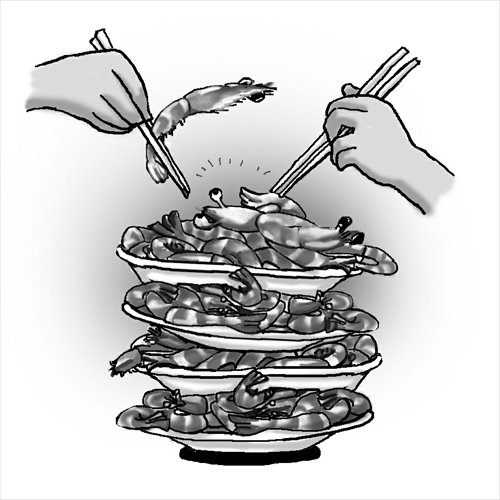
Chinese tourists have, in recent years, given themselves quite a bad reputation when traveling overseas. One video, of a Chinese tour group at a buffet restaurant in Thailand, went viral last week resulting in international headlines about their "feeding frenzy" and "gluttonous greed."
The mockery was well-warranted, as it was hard for anyone to defend the appalling behavior of the tourists in the video, who were seen literally climbing over each other to get at the buffet, shoveling huge amounts of prawns onto their plates, then leaving piles of uneaten food on their tables once it was time for their bus to leave.
Even though the restaurant in Thailand where the video was shot released a statement saying that the video was from two years ago and that they have since put up signs asking customers not to waste food, some bloggers compared those tourists to locusts while other netizens were quick to point out that, as a matter of fact, locusts do not waste food.
Other more-patriotic netizens came to the defense of their traveling countrymen, arguing that the Thai buffet was an isolated incident. But literally the day after, on March 24, a new video surfaced showing another Chinese tour group in Vietnam jostling each other over a large bowl of lychee being served at a poolside bar. In just six seconds flat, the entire serving of fruit vanishes.
It's easy to condemn Chinese tourists for their uncivilized behavior and excessive eating habits, but to condemn we should first understand why so many Chinese act the way they do when going abroad. Prior to China's economic development in the 1980s, many Chinese people across the country lived in dire scarcity. Those people, many now seniors, are today enjoying very comfortable lives thanks to China's economic progress, with many opting to spend their golden years seeing the world and sampling exotic cuisine.
Chinese people love food, and we adore buffets. We've got the buffet down to an art form, so much so that we have even written strategy guides about it. One guide, on how to eat at Golden Jaguar (the largest high-end buffet chain in China since 2003), is very specific about how customers can get their 244-yuan ($37) worth, which is the price per person.
"Enter with an empty belly," "Only choose the most expensive ingredients," and "Never greet your acquaintances while taking food" are just some of the more obvious suggestions, along with "Only eat vegetables three days before going to the buffet" in order to prepare your gut for the onslaught.
Whilst living abroad in Bilbao, Spain, I used to work part-time as a waitress at a Chinese buffet chain. This restaurant offered unlimited seafood, meats and veggies, along with staples such as rice and noodles, all for 14 Euros ($15). Seeing the massive amounts of shrimp, crab, salmon and steak being served every day, at first I never understood how the chain could turn a profit.
But after a while, I realized that Spaniard customers were quite different from the Chinese. While Chinese diners go directly for the prime cuts and most expensive offerings - and will usually serve themselves more than they are capable of eating - Spaniards have a very leisurely approach to dining just as they do all things in life. They don't gorge, they are in no hurry and they know there will always be more. As a result, they seldom consumed 14 Euros worth of food.
Meanwhile, the average price of a Chinese buffet in China starts at 200 yuan and can go up to 500 yuan at an upmarket restaurant because those establishments are aware of how much food will get devoured and how much more will be wasted. In fact, a creed that Chinese buffet enthusiasts live by is "enter leaning on the wall and leave leaning on the wall," which translated basically means "arrive too hungry and leave too full."
It's going to take a few more years for Chinese society to shake the "scarcity" mindset and get used to abundance before they start approaching things like buffets in moderation. Until then, Chinese diners and tourists want to enjoy themselves - and they are paying for the privilege - so who are we to criticize them?
The opinions expressed in this article are the author's own and do not necessarily reflect the views of the Global Times.