HOME >> METRO SHANGHAI
How the film festival subtitling team triumphed
Source:Global Times Published: 2016/6/27 18:28:00
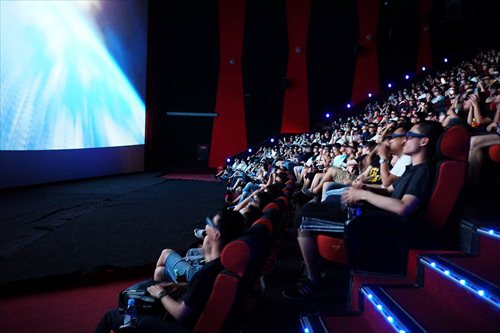
Most of the audiences at festival film screenings are unaware of the work involved in producing subtitles. Photo: CFP
A visual feast for film lovers in China, the 19th Shanghai International Film Festival (SIFF) screened nearly 600 local and foreign films over nine days and in some 50 cinemas in June.
Unlike other foreign films screened in China, most of the foreign films being screened at the festival arrived without embedded subtitles. Because the SIFF only held the screening rights, the prints the film production companies provided could not be modified. The Chinese subtitles audiences saw in the cinemas were projected simultaneously by a group of unsung heroes, the ZimuZu, a team of student volunteers from universities in Shanghai.
But during the festival, while most fans enjoyed the range of films, reports of subtitle glitches went viral on blog sites like Weibo and Douban.
People grumbled about the ZimuZu ruining highly anticipated films with the subtitles not matching the on-screen conversations or appearing after the speeches had ended. Some of the Chinese translations made no sense and some audience members said they hadn't understood the films at all because of poor subtitling.
Hit back
But the ZimuZu members hit back on their blogs explaining the difficulties they faced and begged for more understanding of their work.
Luan Chutong, a junior from Shanghai University, has worked at the festival for three years as a subtitle projectionist. She leads Juhua Bang, an established 15-man subtitling team which was founded in last April and mostly works with the Shanghai Art Film Federation.
Luan said she accepted the criticisms because there had been errors. "But we are making improvements year by year. This is my third year with the SIFF ZimuZu, and the system is getting better. I think we have kept the number of mistakes to a minimum," Luan told the Global Times.
She said many of the translation delays were caused by technical problems with the subtitle projectors. "Our job means we have to click the enter button on the projectors when conversations begin and the translations will appear on-screen. But some of the projectors in some of the cinemas were not up to scratch and the subtitles were delayed or sometimes, if there was a long conversation, would not appear."
She explained that most of the basic translation work had been outsourced to a private company. "The translations for the films I was responsible for were good on the whole. When we previewed prints, we revised the subtitles to correct any mistakes we found," Luan said.
"But every year some of the prints that are screened are not the same as the preview films we have watched and that's why some of the subtitles didn't match the films."
She said the subtitle team members could only enter the translations they had been given.
Encrypted prints
Tang Jingyi, the SIFF ZimuZu chief coordinator, said that for copyright reasons film producers only provided them with sample preview prints for their work.
Some of these prints were even encrypted and could only be decoded 30 minutes ahead of their set cinema screening.
"The print of the classic 1916 film Intolerance, for example, was very different from the preview sample we had watched. So many of the subtitles we had prepared didn't match. After we found this during the first screening at the Shanghai Film Art Centre, we immediately started revising our work."
Tang said that day he and the revising team members stayed in the Peace Cinema, where the film was to be screened watching it until 3 am and then got up at 6 am checking the revised subtitles.
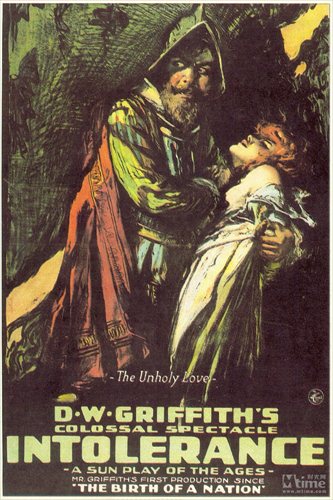
Poster of the movie Intolerance (1916). Photo: Mtime.com
"The coordinating team made sure all the problems were solved and the mistakes corrected as soon as possible. Basically, most of the subtitle problems happened in the first-run screening of some of the films but they didn't appear again after that."
A junior from Shanghai University, Tang has been the ZimuZu coordinator at SIFF for two years. He said that as the festival has expanded, more and more volunteers were taking part in subtitling. This year, 298 ZimuZu volunteers (100 more than last year) were selected for subtitling from 900 applicants and they worked on more than 1,200 screenings.
"This year we had tighter standards for training and we had better overall systems. We also had a guidebook based on what we had encountered in previous years to help our team members," Tang said.
Fully prepared
The coordinator explained how they worked to prepare themselves and the translations to create the best possible viewing experience for the audiences. "Each subtitle projectionist had to watch the preview print for the film they would be responsible for at least twice in our office. The preview prints were under copyright restrictions so we couldn't let members view them at home."
They also had emergency backups - each auditorium had two projectionists and there were rosters so that subtitle projectionists were always on hand if needed. "The coordinators got up at 6 am every day and phoned the projectionists to make sure they would get to the cinemas on time."
He said most of the ZimuZu members this year had worked there in previous years and senior experienced members were paired with newcomers.
Meng Chenhui is an experienced member and took care of several screenings this year and last year at the festival. A senior university student majoring in English at Shanghai University, Meng was assigned to the Grand Theatre, where the most prestigious films were screened. He and his partner ran 50 screenings last year, and 40 this year.
"You might think subtitle projecting is easy but a perfect 'enter' click means the projectionist has to watch the film several times beforehand to know it. It's no easy job," Meng said.
With so many films to work on, Meng had to keep viewing preview films constantly. "Over that nine days, my life was totally taken up watching films. I was either watching previews in the office or projecting subtitles in cinemas. There wasn't much time for sleep."
Meng's work was tiring and time-consuming. "I had to be completely concentrated and remember when each film conversation would begin. For long or quickly-spoken speeches I would watch the same scene several times to make sure I got the subtitling right in the screening."
Another difficulty, Meng said, was that some films were not in English and the subtitling projection team couldn't understand the language. "I was lucky that most of the time there were English subtitles embedded in these films. It wasn't the best result but we tried hard."
A guessing game
There were exceptions. The 1995 Yugoslav film Underground for example, was in Serbian and the embedded subtitles were in French. This was a tough call for Meng, whose second foreign language is French. "I basically had to guess at the French meanings and matched the subtitles that way."
After just one day of projecting subtitles, Meng said his fingers ached.
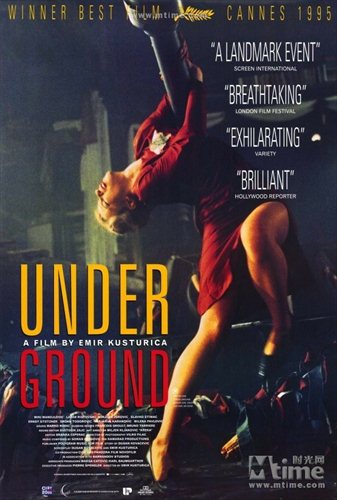
Poster of the movie Underground (1995). Photo: Mtime.com
Another member of the ZimuZu coordinating team, Ai Pingfangzi from Shanghai International Studies University, worked in several cinemas for the festival and told the Global Times one of the other problems encountered by the subtitling teams.
She said that while most of the teams worked in big auditoriums with areas set aside for them in the front or at the rear, sometimes the screening rooms were so small that the teams had to work from inside the projection booths.
"They had to watch the film through the little windows where the film was being projected and listen to the soundtrack on headphones even though it was noisy in the booth. It was almost impossible - sometimes they had to kneel on their desks to see the film on the screen. You don't know h0w difficult it was to provide subtitles for these films," she said.
While Ai admitted there had been mistakes in the festival, she said on the whole the ZimuZu had done a wonderful job, especially considering the many difficulties.
Wu Jueren is the director of the SIFF ZimuZu and works in the Film Division of the committee of the Shanghai International Film & TV Festival. He said foreign production companies were not likely to create embedded subtitles for Chinese viewers.
However the committee was looking for technical improvements and technological innovations for subtitling.
Professional and dedicated
This was the first year Wu had worked with the subtitling teams and he praised their efforts. "Many of their students are very professional and they are all very dedicated. I saw their enthusiasm and love for films," Wu said.
The subtitling volunteers also injected their own personalities into their work. Before each film Meng would tap out on the screen a welcome from himself and the team to the audience.
"It's not just about some stale routine job. We want to create the best possible viewing experience for the audience. As a film lover myself, I was really happy when the audience applauded after a film. Even though they were applauding the film, I was affected because it was my work that helped their enjoyment."
The article was written by Gu Qianwen
Newspaper headline: Making it meaningful
Posted in: Metro Shanghai, City Panorama