Shanghai’s baseball fans and players look to restore old glories
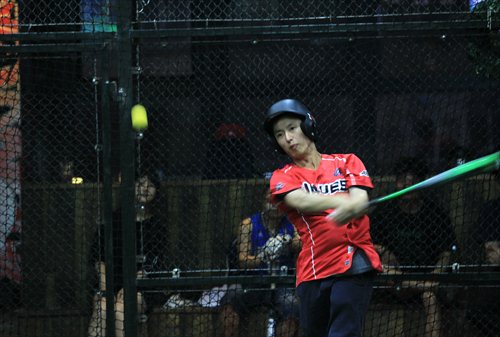
A young player practices at an indoor stadium.
The Japanese anime baseball television series Touch brought baseball culture to China in the 1990s. People began to learn about the sport and played the game as they watched the hit show. Although baseball is not as popular as basketball or football in Shanghai, enthusiastic fans still carry on the tradition and enjoy themselves.
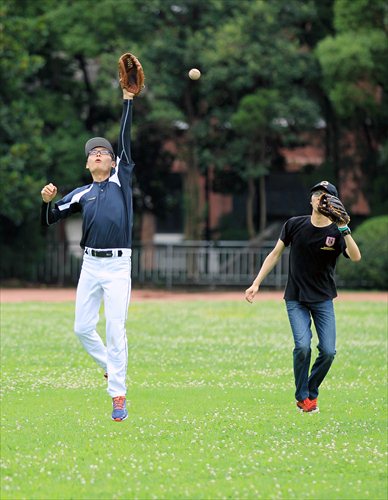
A baseball player takes a catch in mid-air.
Dai Jianqiu is the director of the Shanghai Savages. He learned about baseball from the Japanese manga series. At first, he just tried to play baseball and run a team without experience or expertise. Now he is one of the leaders promoting baseball in Shanghai. In Dai's 10-year amateur baseball career he has learned a lot and seen the game in China take shape.
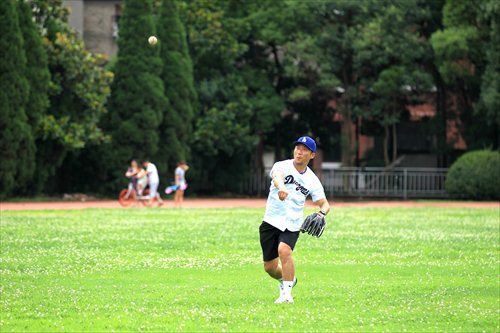
Throwing accurately is a key skill.
Because at first Dai only knew the basics of the game and there were very few stores selling baseball equipment in Shanghai, he ordered his first baseball bat and gloves online. However it was only when he began wearing the glove in a game that he realized he had been sold a toy set, not the real thing.

Baseball also attracts keen women players.
"Actually a long time ago China used to be a baseball leader, and Shanghai once had famous professional baseball teams. But that was all lost somehow," Dai said. Now Dai and his friends are devoted to promoting baseball. He is confident about the future of the sport in China.
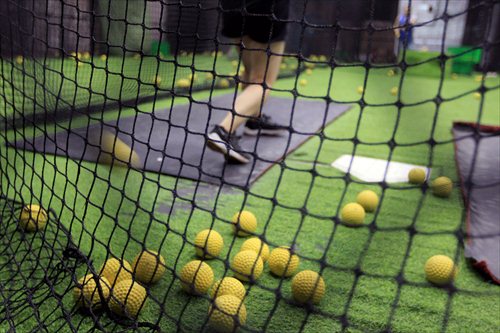
The cost of equipment and the complex rules slow the acceptance of baseball in Shanghai.
"Baseball will be back in the 2020 Olympic Games. Nowadays more people are playing baseball in Shanghai. I hope that one day there will be a Chinese sport star like Yao Ming in the Major League Baseball (MLB). And then, amateur baseball will be better here too," Dai said.
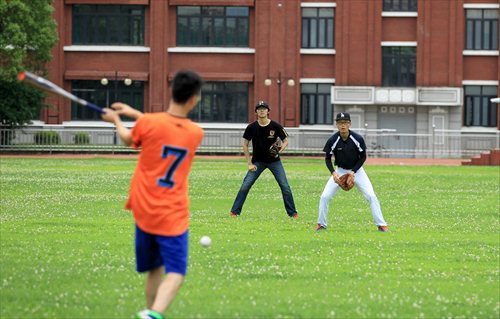
Many of Shanghai's young baseball enthusiasts are attracted to the sport through the Japanese manga series Touch.
There are about 10 amateur baseball teams in Shanghai, and they play several games throughout the season with support from friends and players in the US and Japan. Although they do not have the best coaches, equipment, fields or medical support (yet), their skills and enthusiasm are growing exponentially.
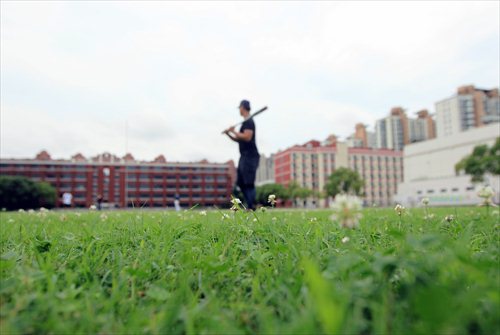
Many players in the city lack professional coaches and proper stadiums to train in. Photos: Yang Hui/GT
Newspaper headline: Hoping for homers