Weaving together a culture frayed by modernity
By Global Times, Published: 2015-11-30 17:39:23
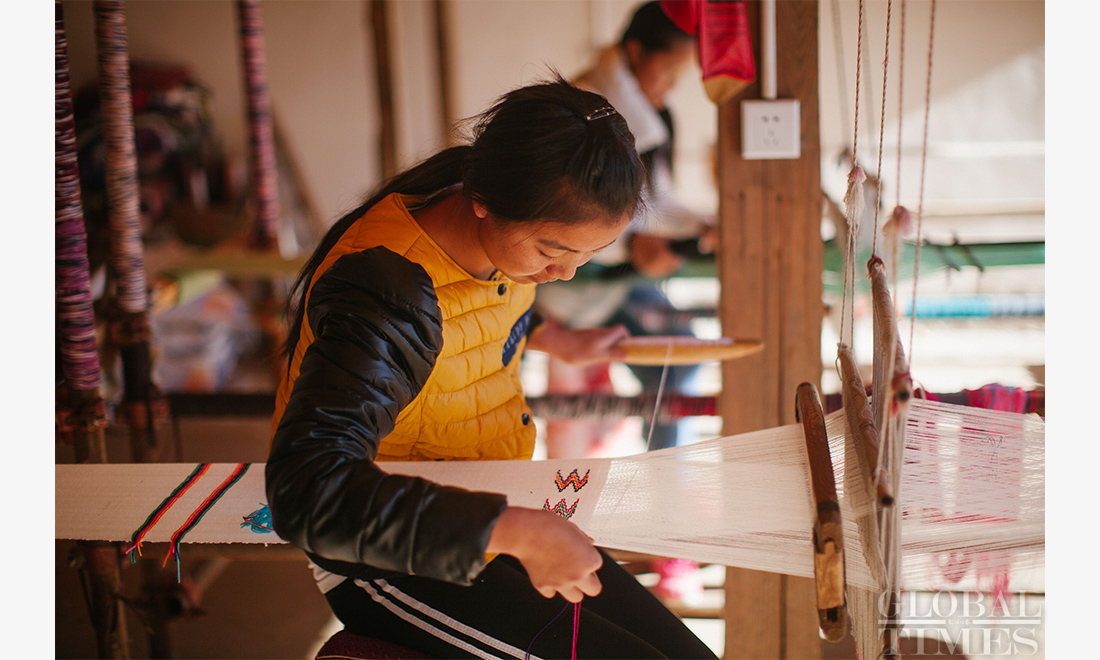
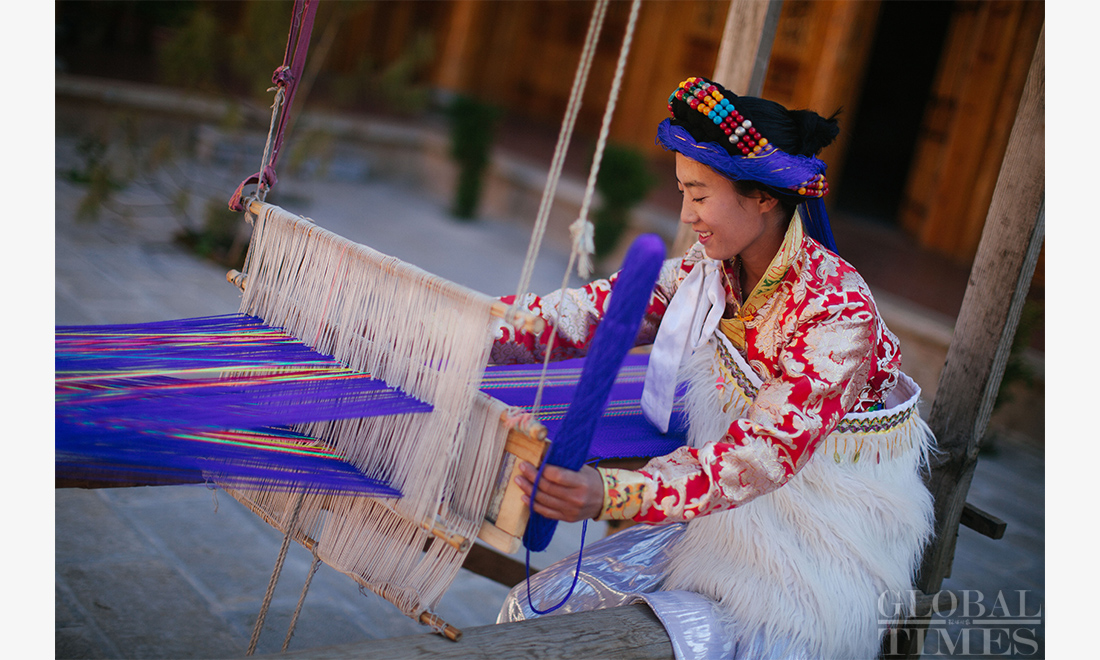
Local resident Shougong Geiru Yongqing, 24, weaves on a loom at her house in Walabi Village in Lijiang, Yunnan Province, on November 22, 2015. She used to work in Lijiang, but came back to the village three years ago when her parents insisted women need to follow tradition and stay home to run their households. Photos: Li Hao/GT
Editor's Note:
A few thousand Mosuo people live in villages next to the Lugu Lake in Lijiang, Yunnan Province. They are the only existing matriarchal society in China, where women are the heads of households.
But in recent years, their society is breaking down because young people, especially women, are leaving the village to find jobs. Living in the rural villages can't satisfy them anymore.
A couple of years ago, UNDP and a few companies started a program to help young people move back in by having them learn traditional Mosuo weaving. The program helped the villages for a while, but gradually, people lost enthusiasm when the hand weavings failed to compete in the market against machine-woven fabrics.
Shougong Geiru Yongqing weaves on a loom at her house.
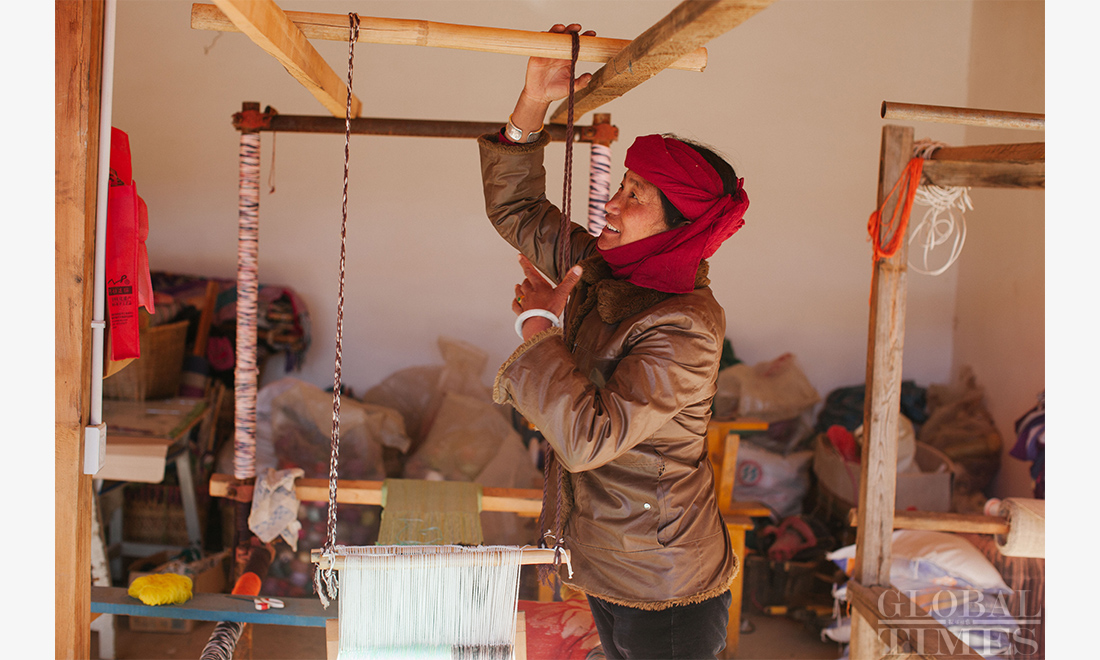
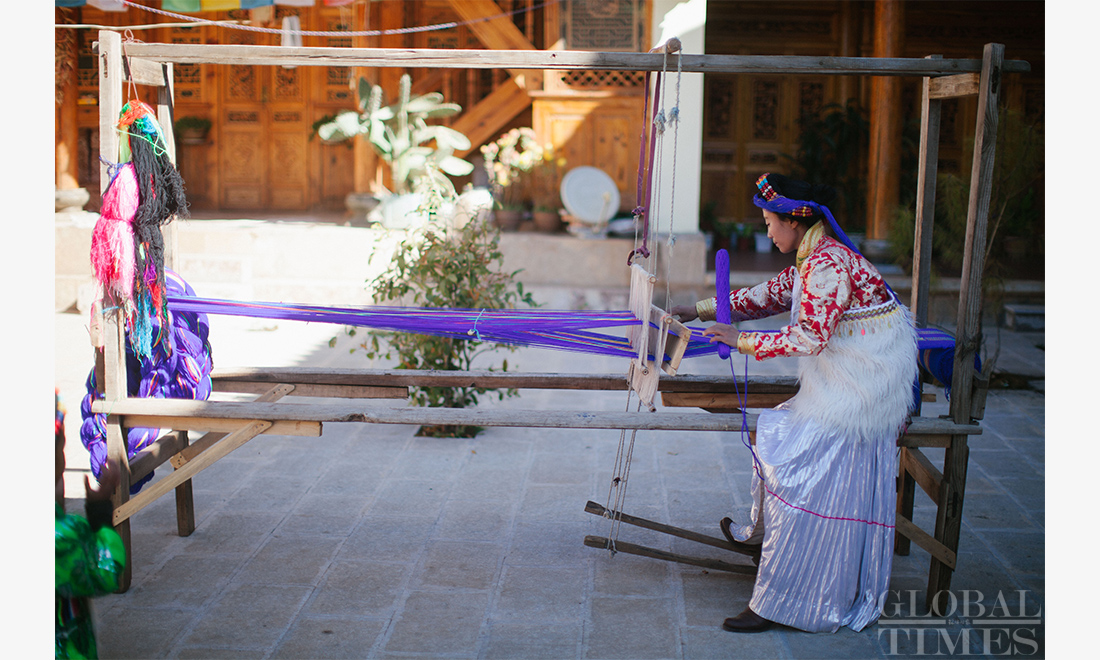
Shougong Geiru Yongqing‘s mother Shougong Zhima is dressed in traditional Mosuo clothes and weaves on a loom.
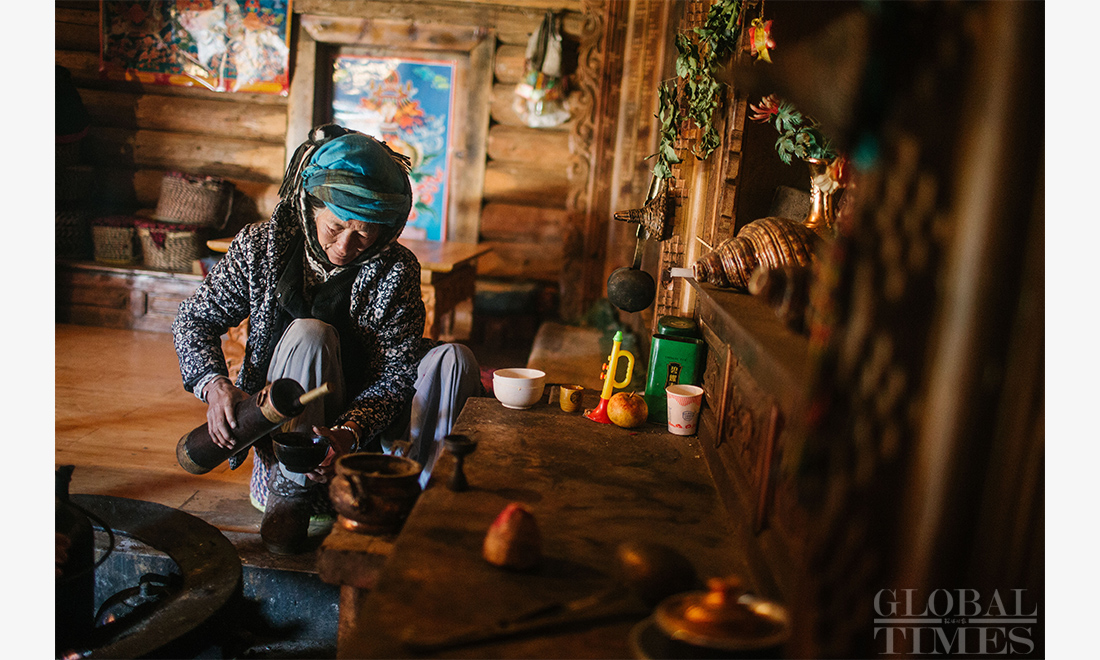
Shougong Zhima makes traditional butter tea for breakfast.
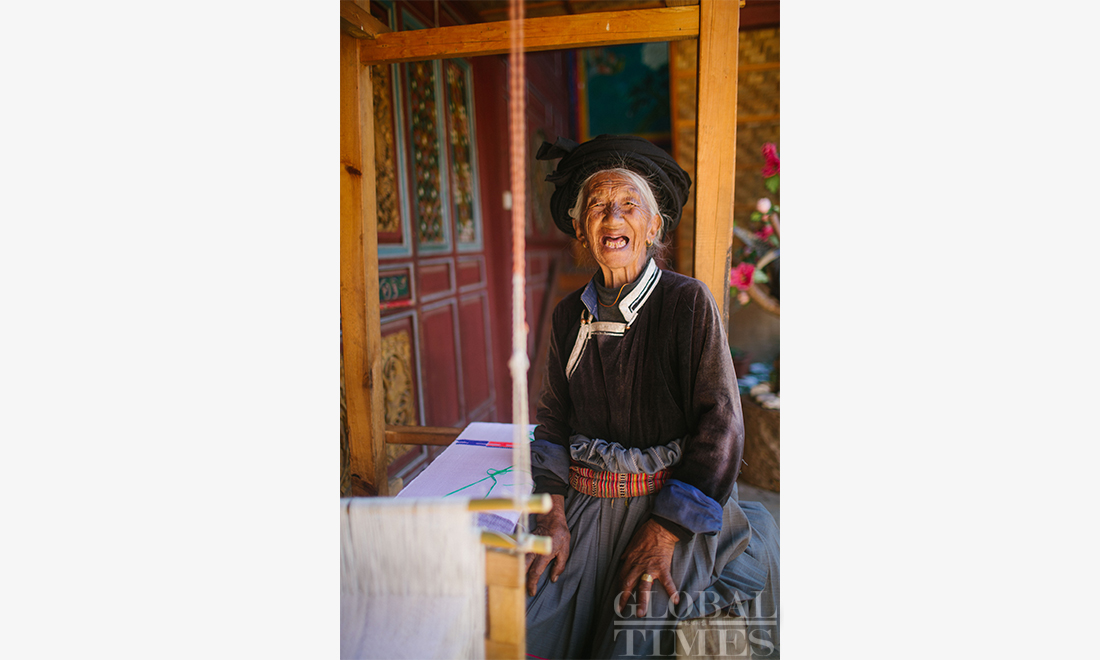
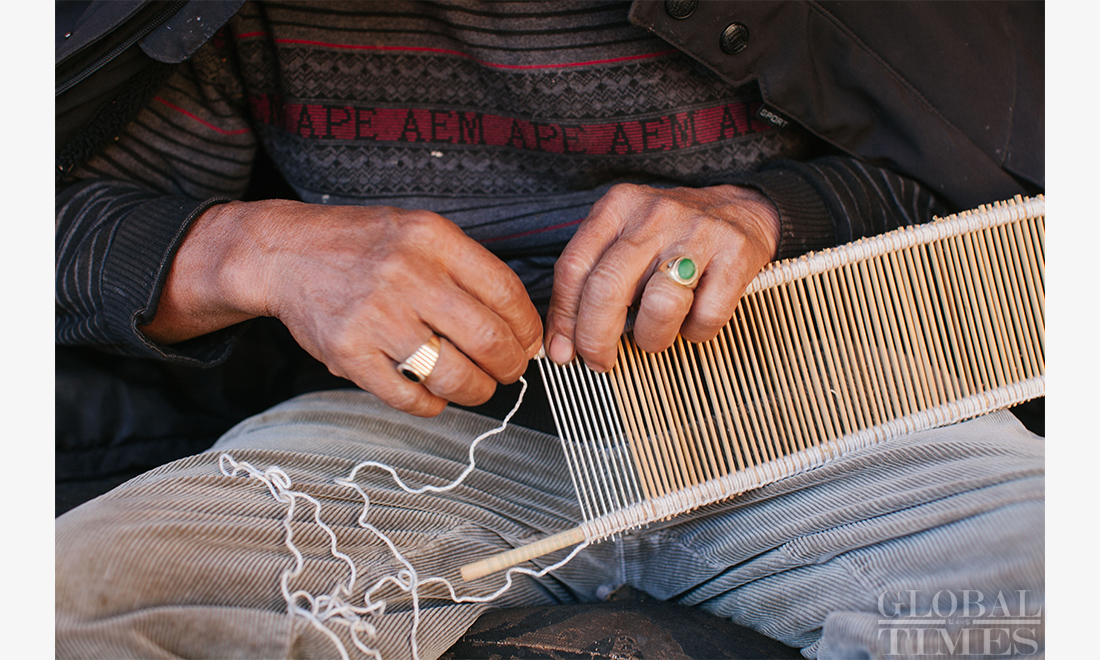
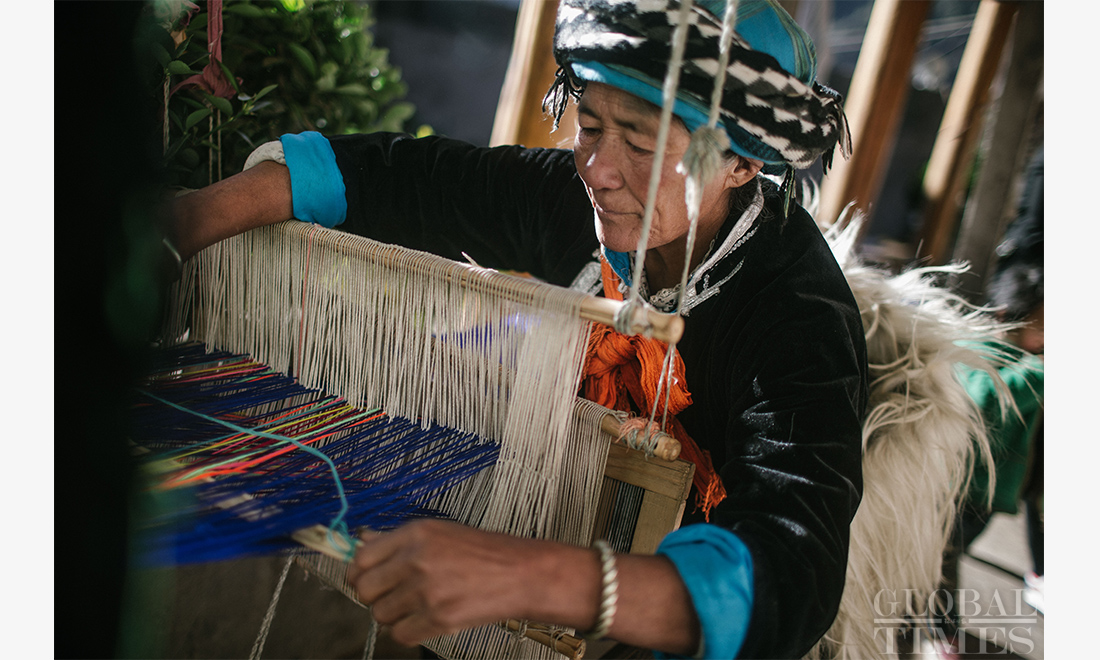
Shougong Zhima’s mother-in-law sits next to her loom. The traditional weaving technique is usually taught inside families, from women to women.
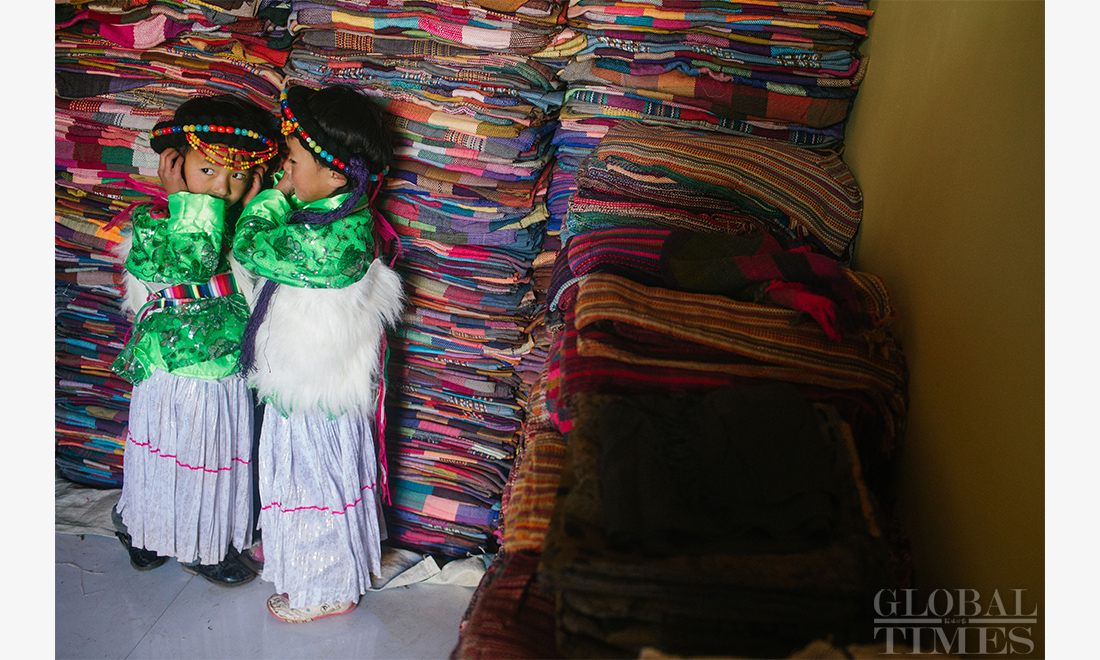
Three-year-old twin Mosuo girls play in a storage room in the Shougong household. The storage room is full of scarves and table clothes woven by the women in the family that have not been sold. Recently, business has been rough because the market was flooded with cheap machine-woven products.
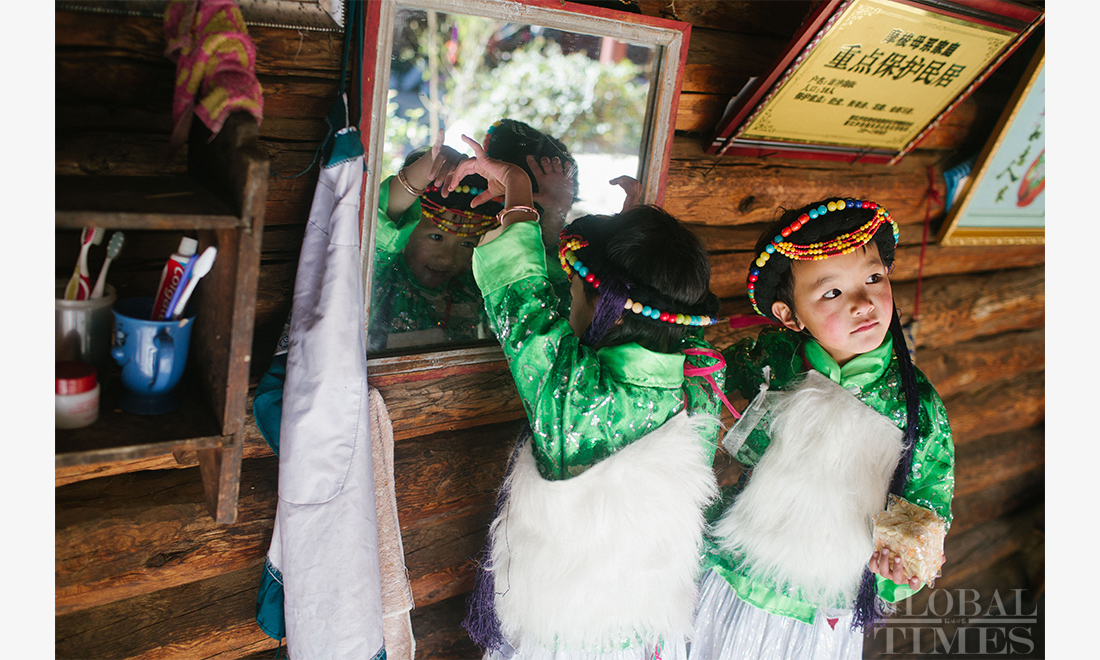
Twin Mosuo girls pose in front of a mirror.
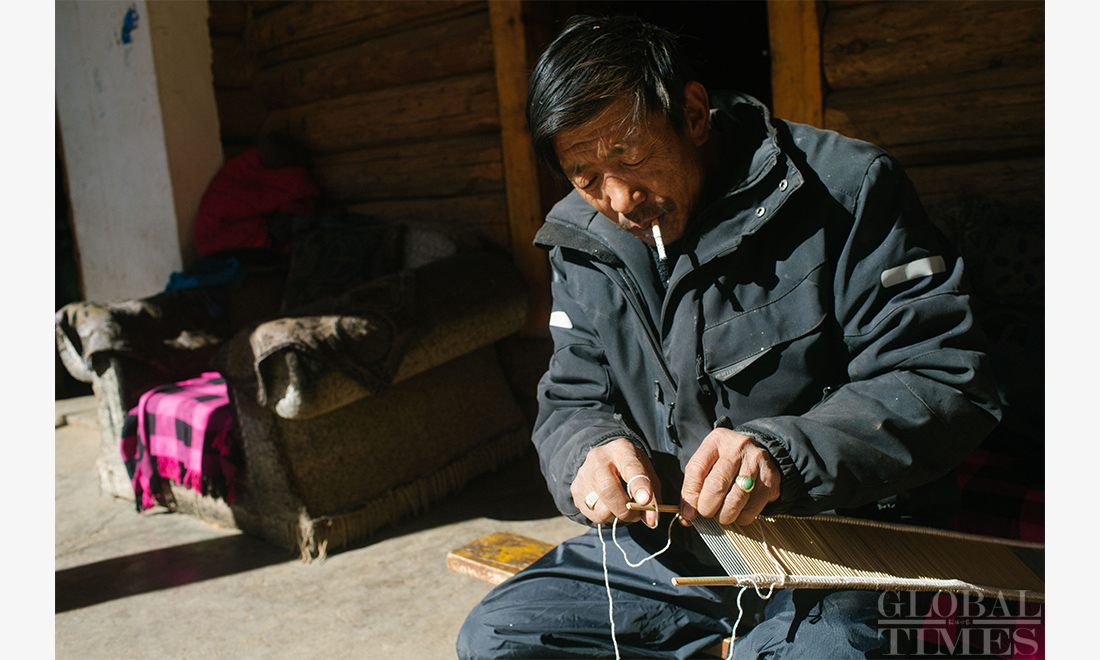
Shougong Geiru Yongqing’s father, Wengchong Gaoru, fixes the shuttle on the loom.
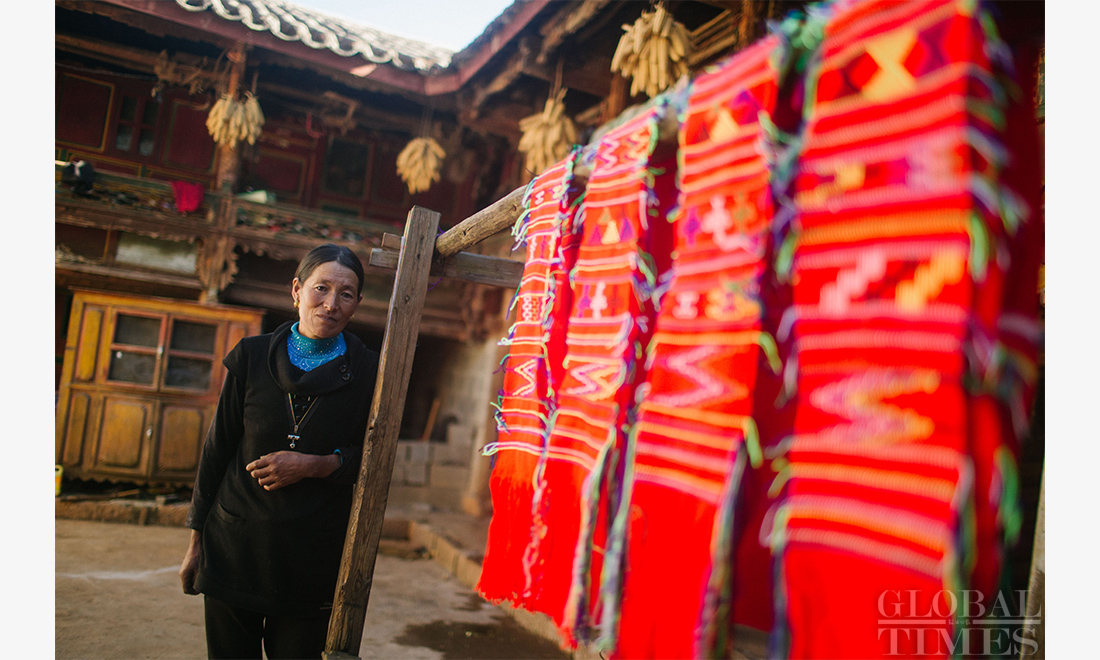
Ani Buchi stands next to a few belts she weaved for her daughter, who will get married in two months. It’s tradition for Mosuo mothers to weave their children something before their wedding.
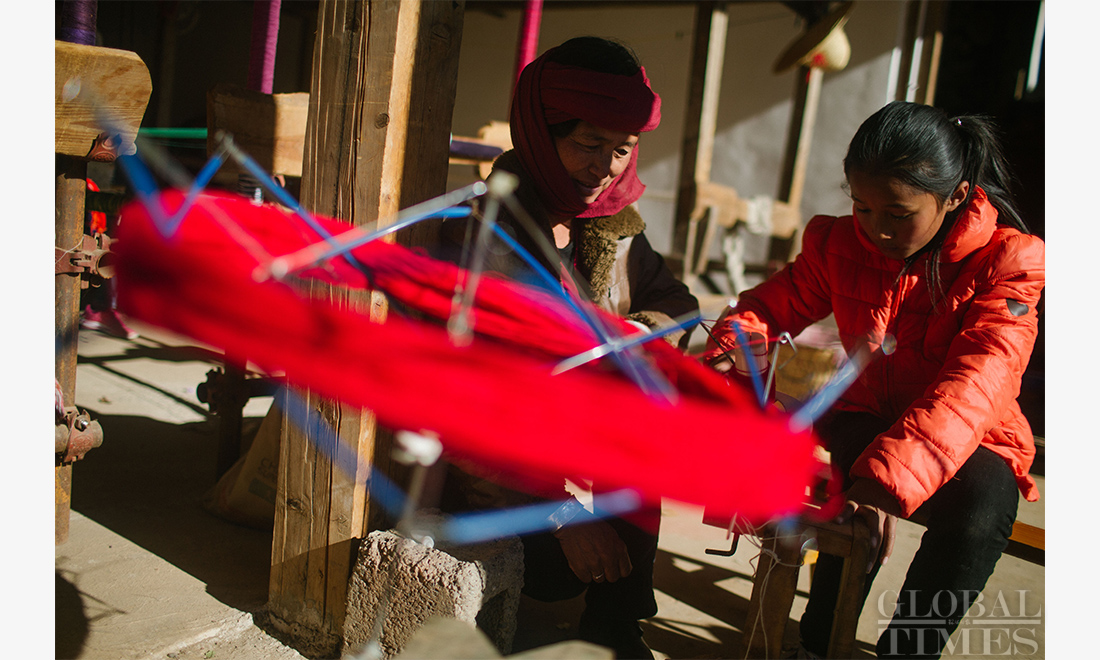
Aqi Duzhima (left), a famous artisan in the village, teaches a 9-year-old girl how to weave.
Aqi Duzhima.
Children in Mosuo villages learn weaving at a young age from their mothers.
Sixteen-year-old Bajin Zhima weaves on the loom. Many children are happy to carry on the Mosuo tradition, but it’s difficult to make a living out of weaving and many have left to wait tables in cities. Bajin Zhima says she has friends who are working in Lijiang right now, after graduating from high school.
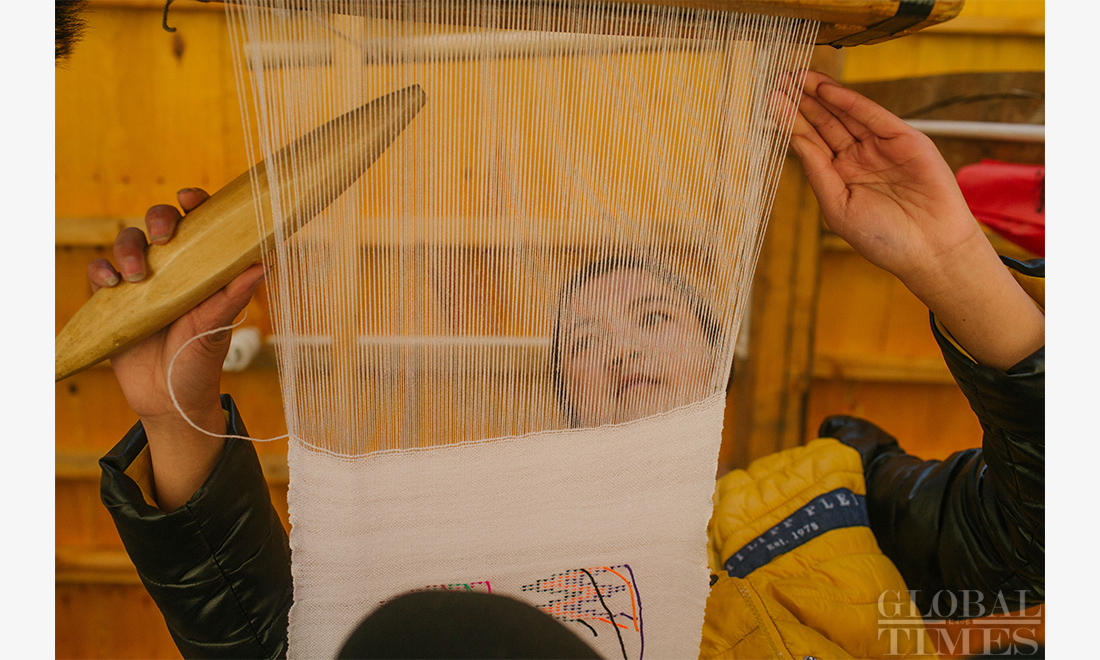
Bajin Zhima weaves on a loom.
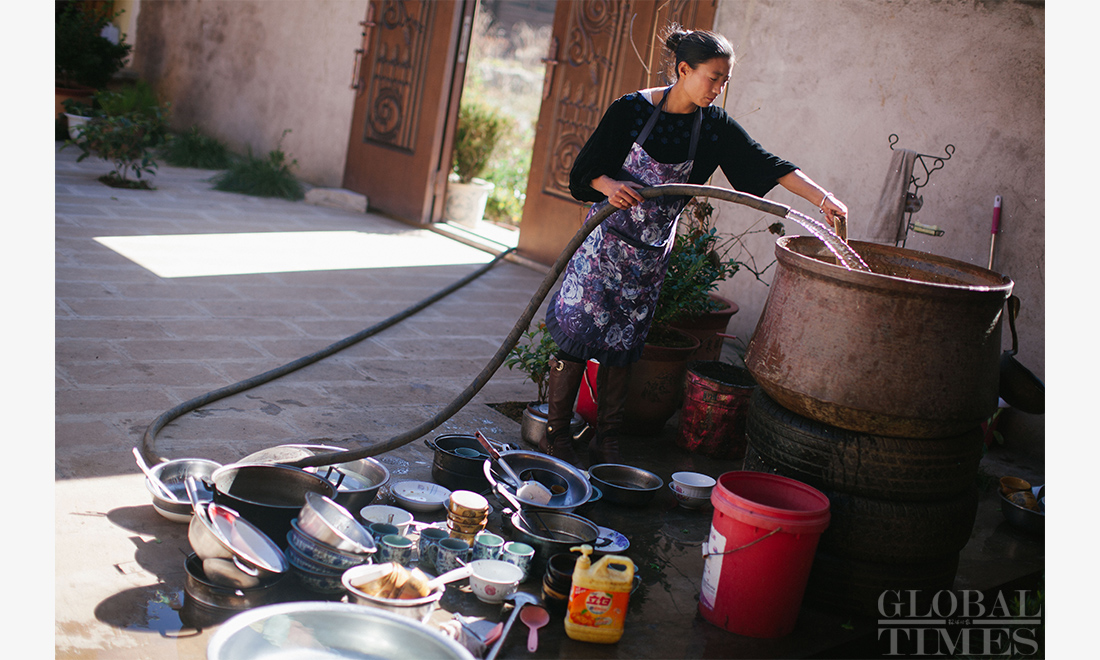
Shougong Geiru Yongqing washes dishes in her courtyard. Like many women in the village, she takes care of family members and does all the chores.
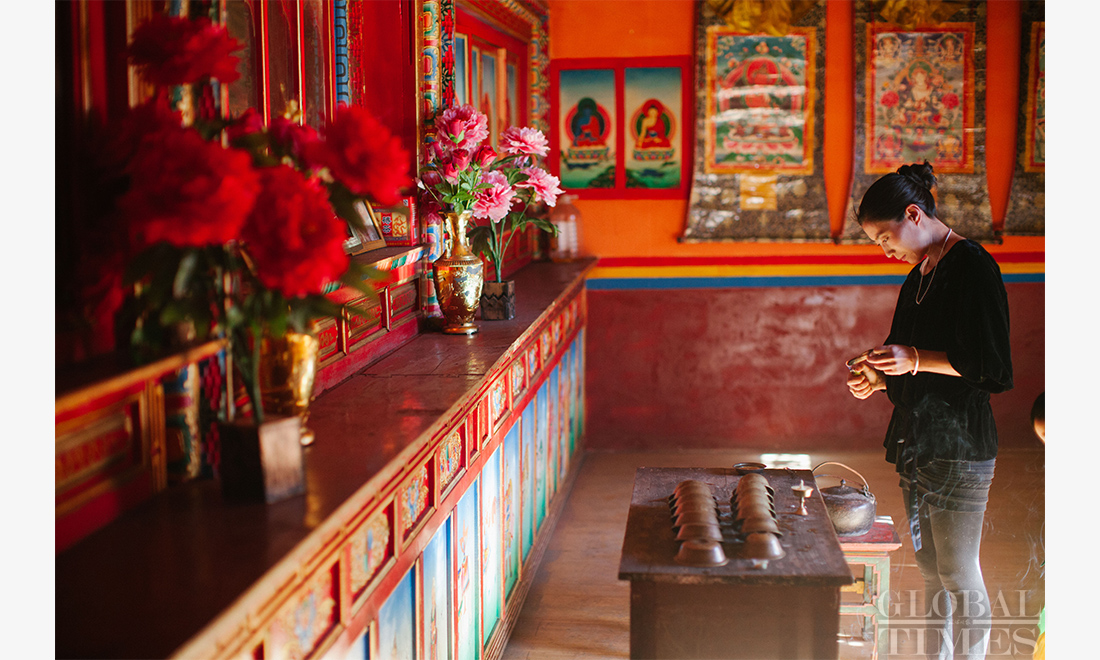
Shougong Geiru Yongqing prays at the family Buddhist altar.
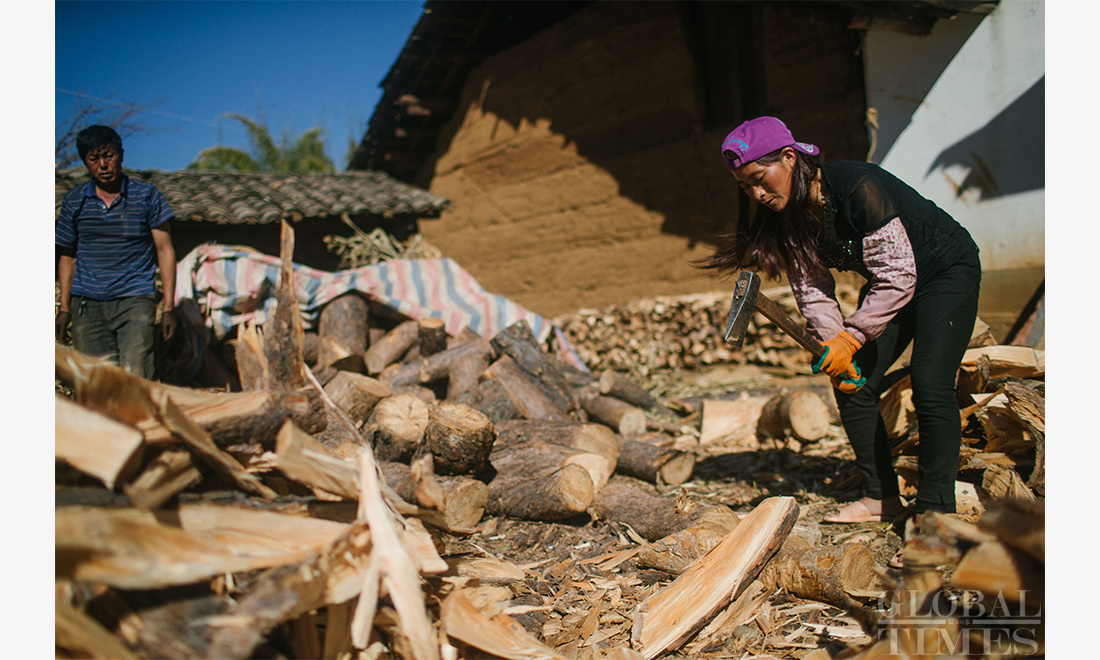
A woman chops firewood.