Made in Lhasa: Traditional Tibetan arts and crafts
By Zhang Yiqian, Published: 2016-07-07 13:56:16
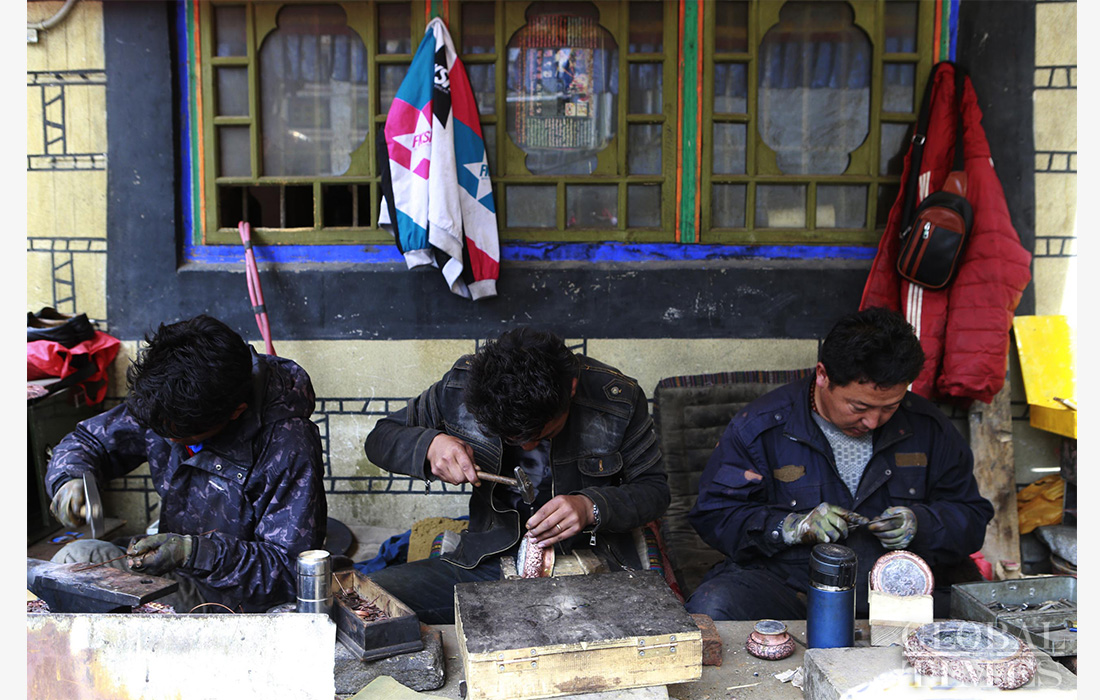
Three workers sit in a row, hammering copper wires into shape.
Editor's Note:
When walking through a secluded courtyard in the shadow of the Jokhang Temple in the heart of Lhasa, one is greeted by a chorus of metallic hammering. A handful of artisans sit in the open air, shaping their copper Buddha statues with skilled strikes of their tools. In recent years, as more and more tourists choose Tibet as a holiday destination, traditional Tibetan arts and crafts are in high demand. With this renaissance in full swing, many farmers and herdsmen have traded in their crooks for artisan tools, training themselves in the ancient arts of sculpting, woodworking and tangka, the Tibetan art of painted embroidery. Photos: Li Hao/GT
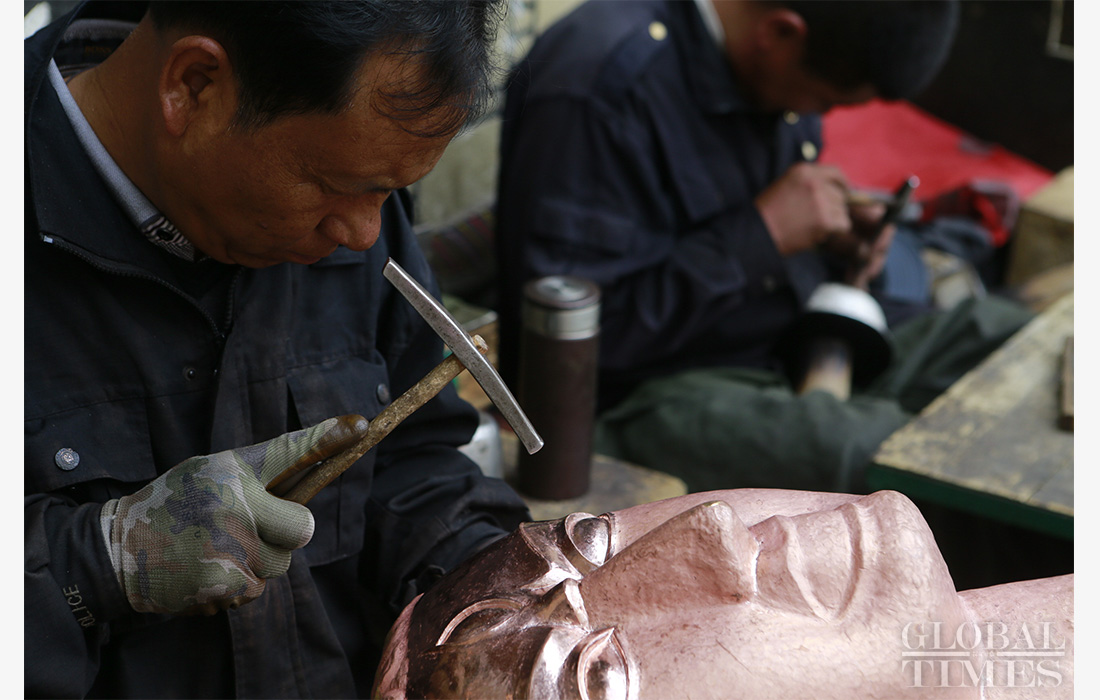
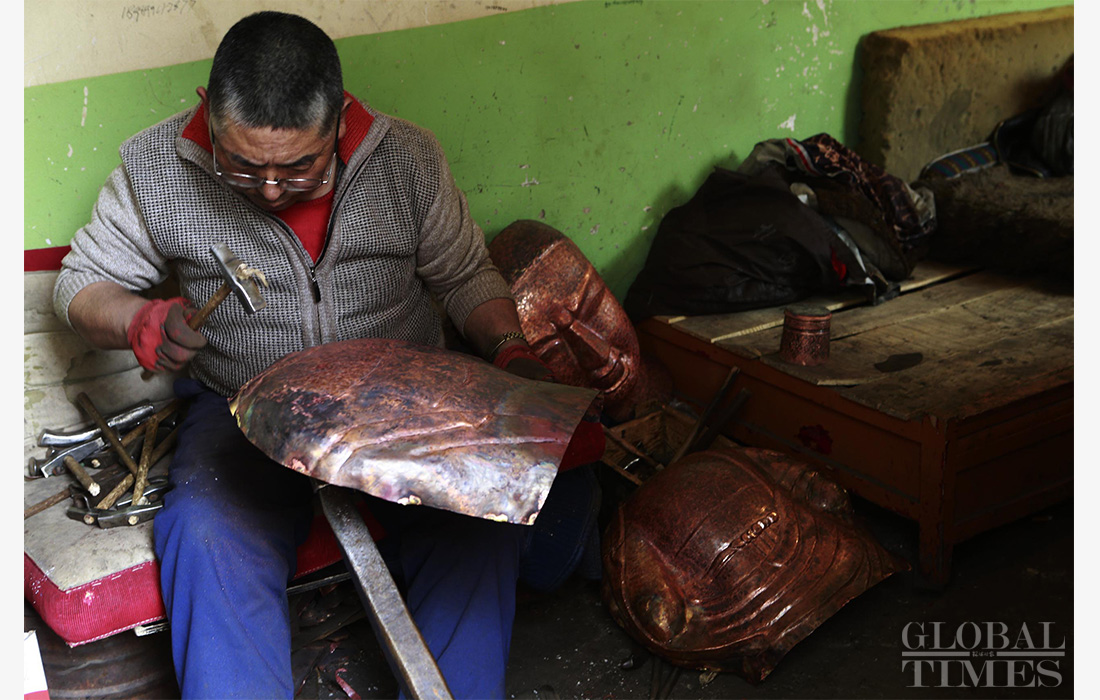
A worker shapes the eyebrow of a Buddha sculpture.
A worker sits alone as he hammers the back of a sculpture.
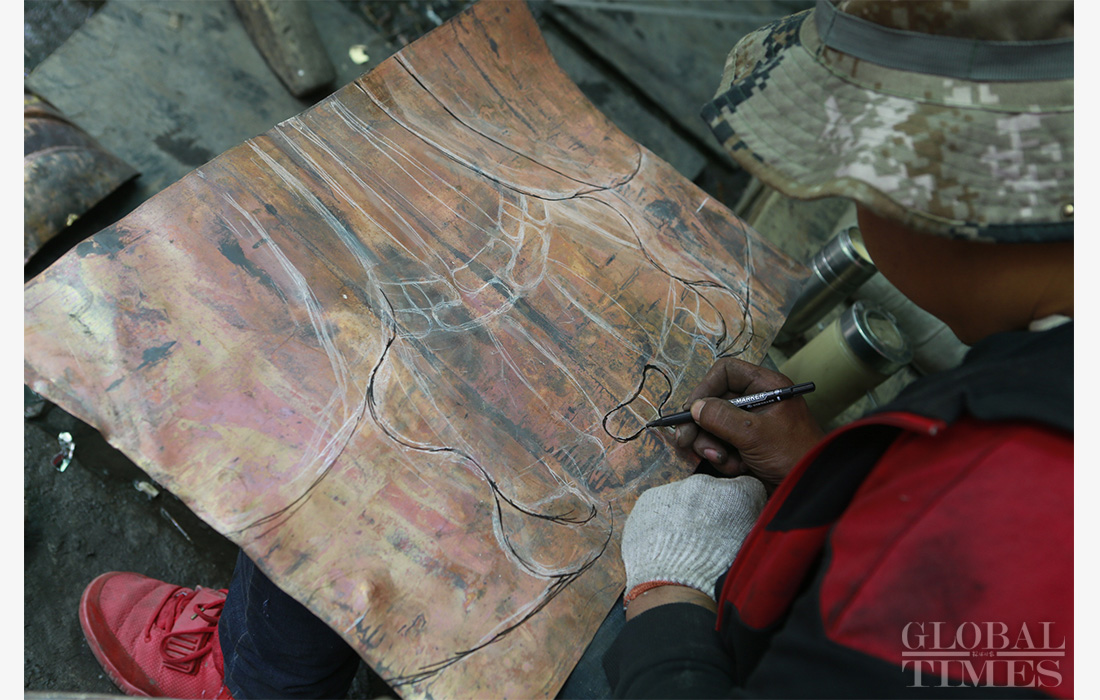
A worker outlines his cuts during the design stage.
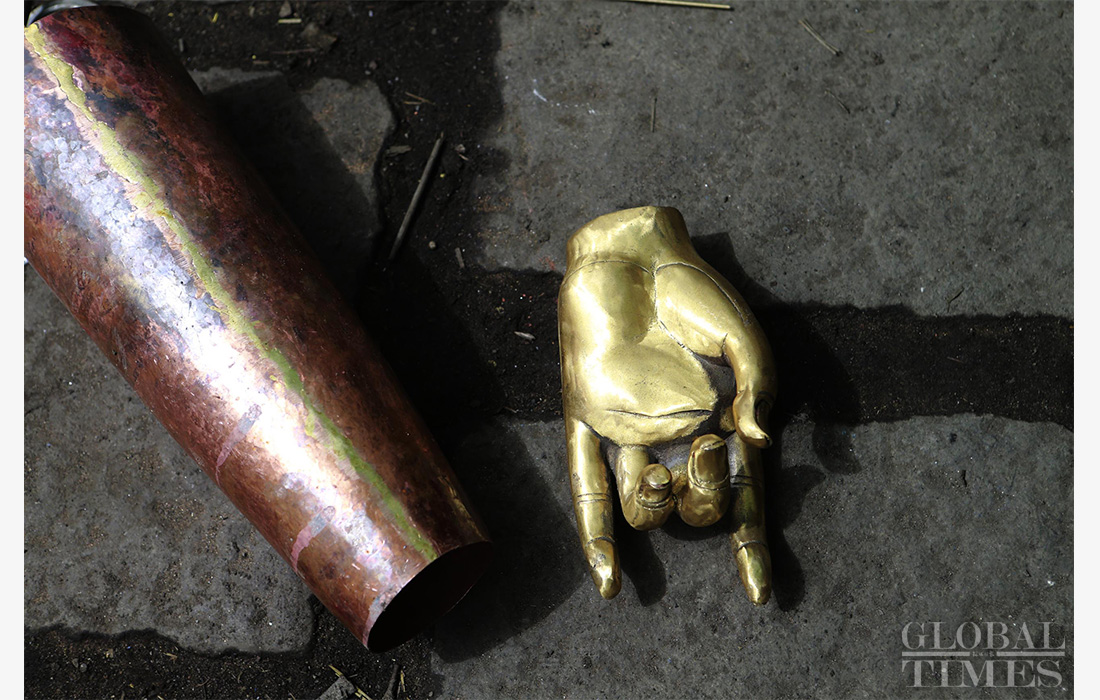
A Buddha hand lies on the ground.
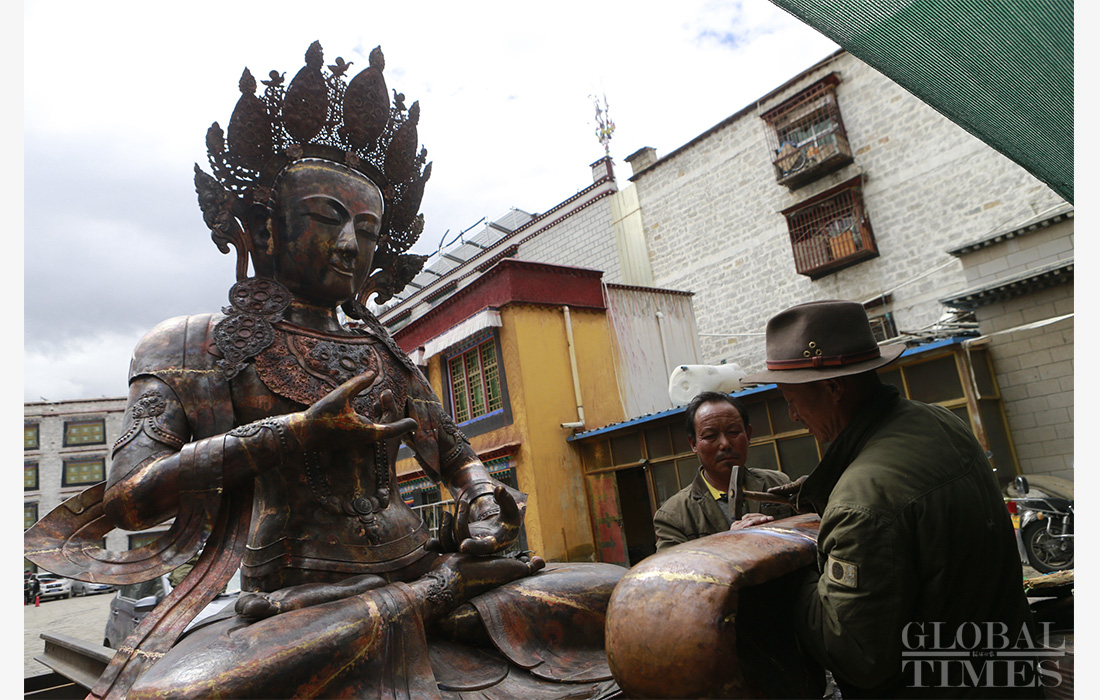
Two workers install the final piece of a copper Buddha sculpture.
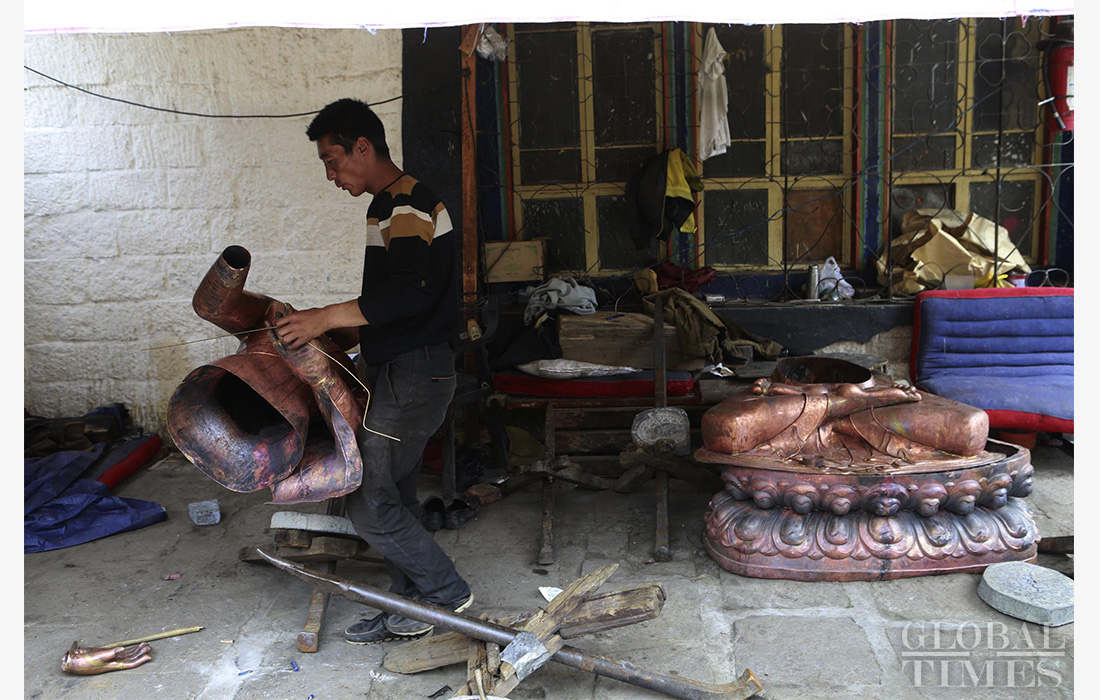
A worker carries unassembled parts of a Buddha sculpture.
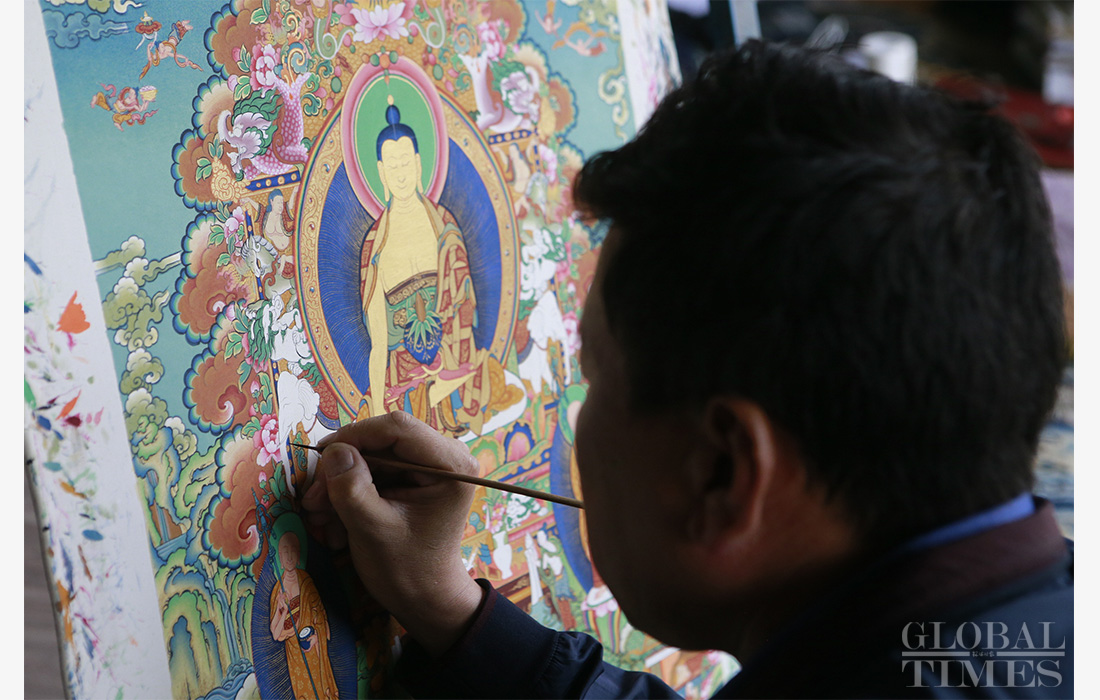
An artisan paints a tangka. The company he works for receives orders from both local temples and overseas collectors.
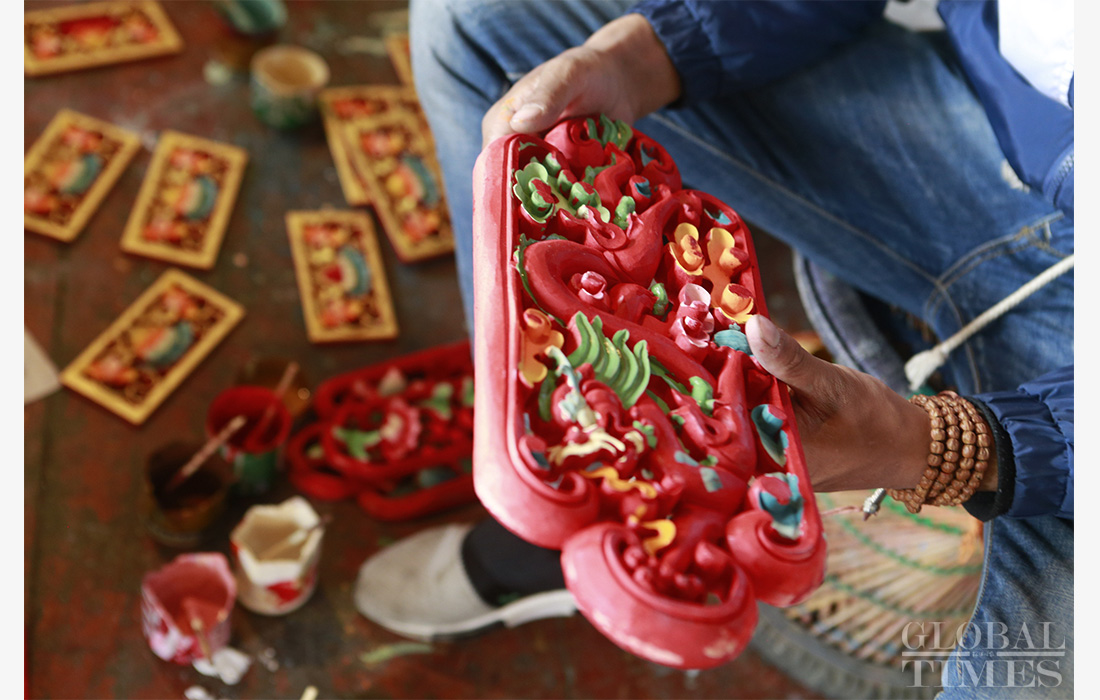
An artisan paints a wooden ornament.
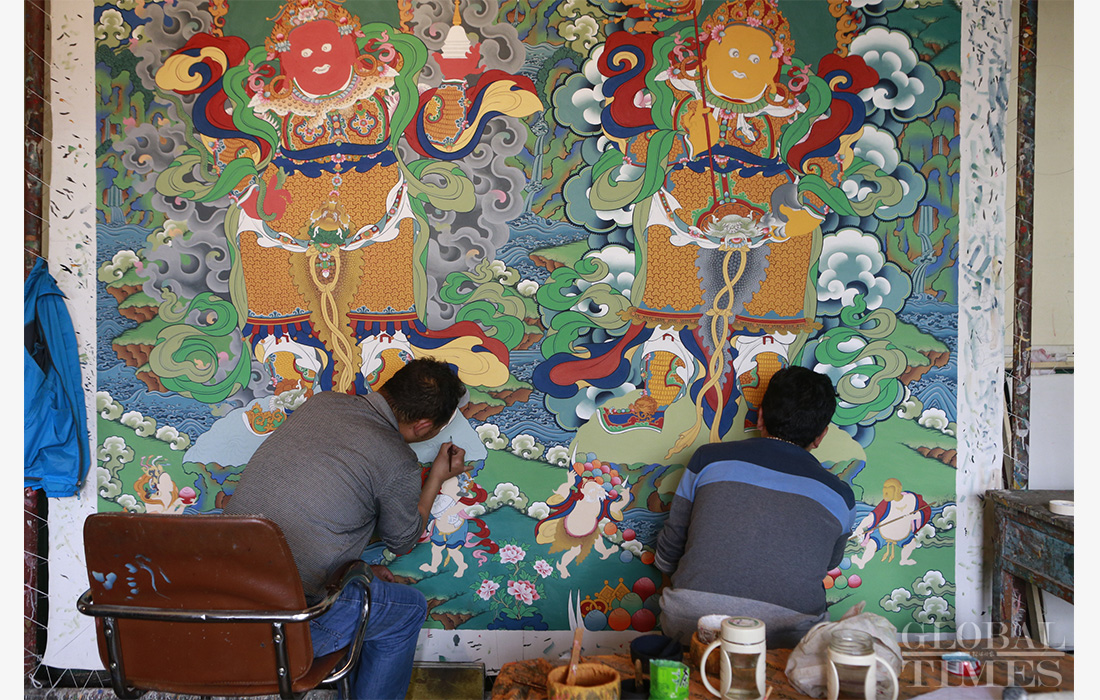
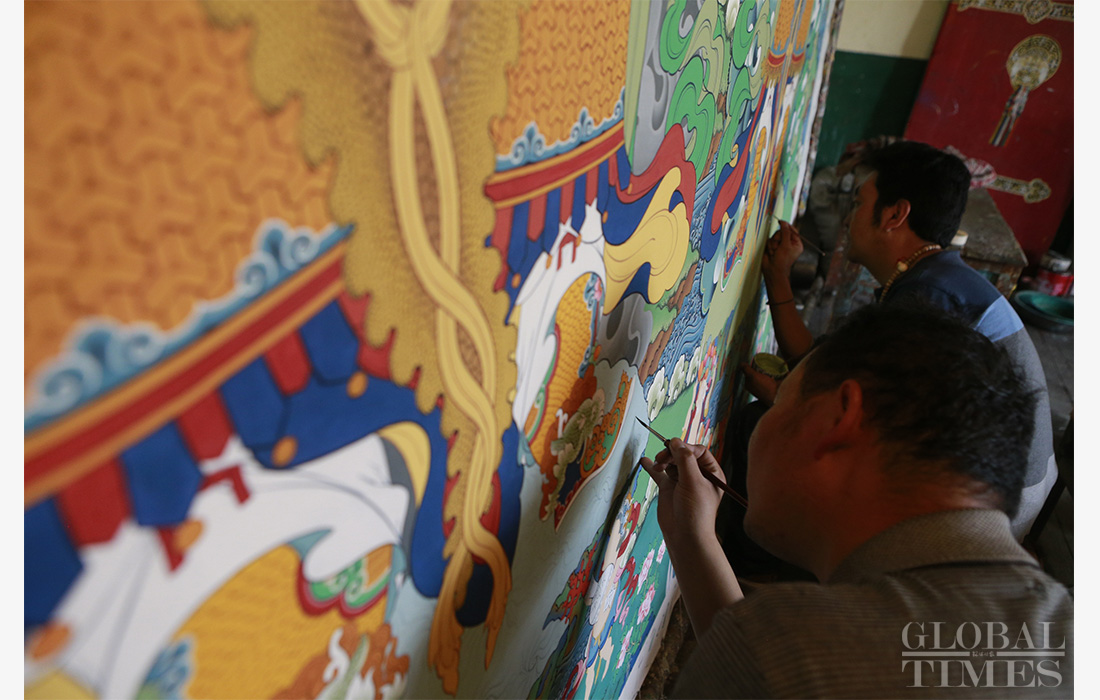
Two artisans paint a large wall tangka. A tangka this size can take a team up to six months to finish.
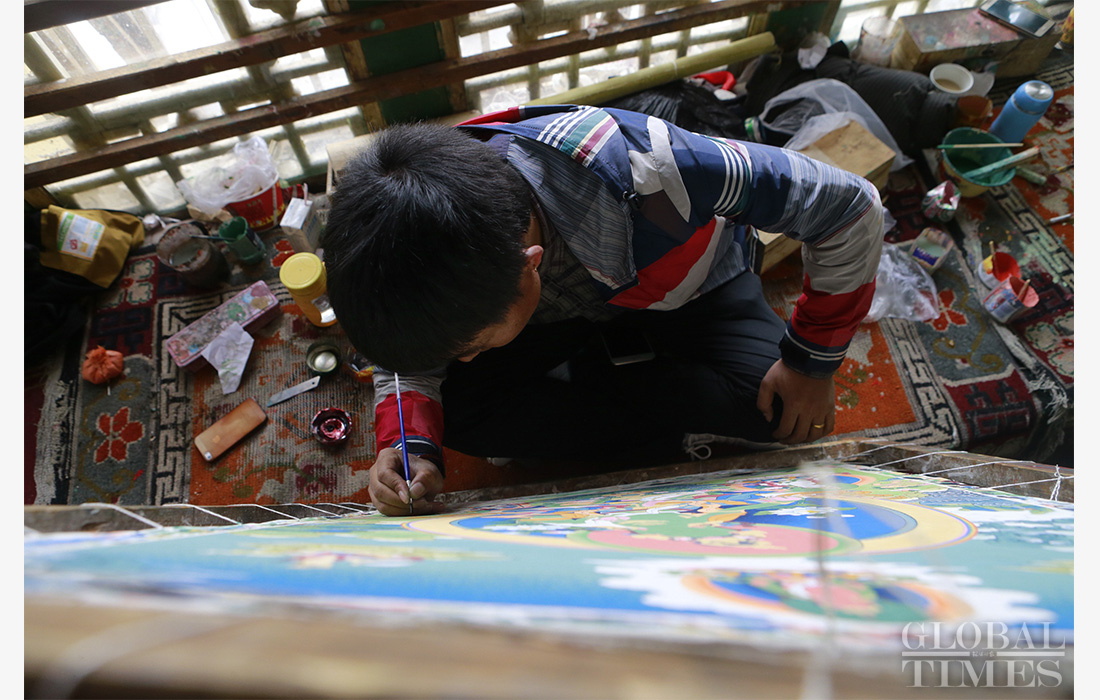
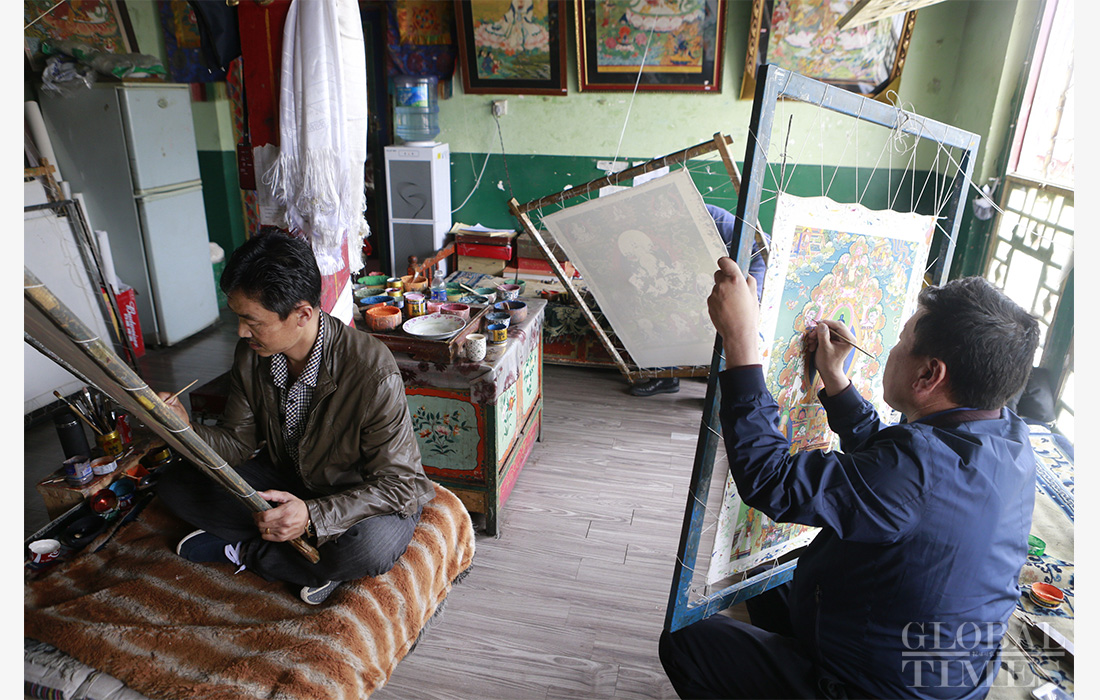
Two artisans paint tangka in their workshop.
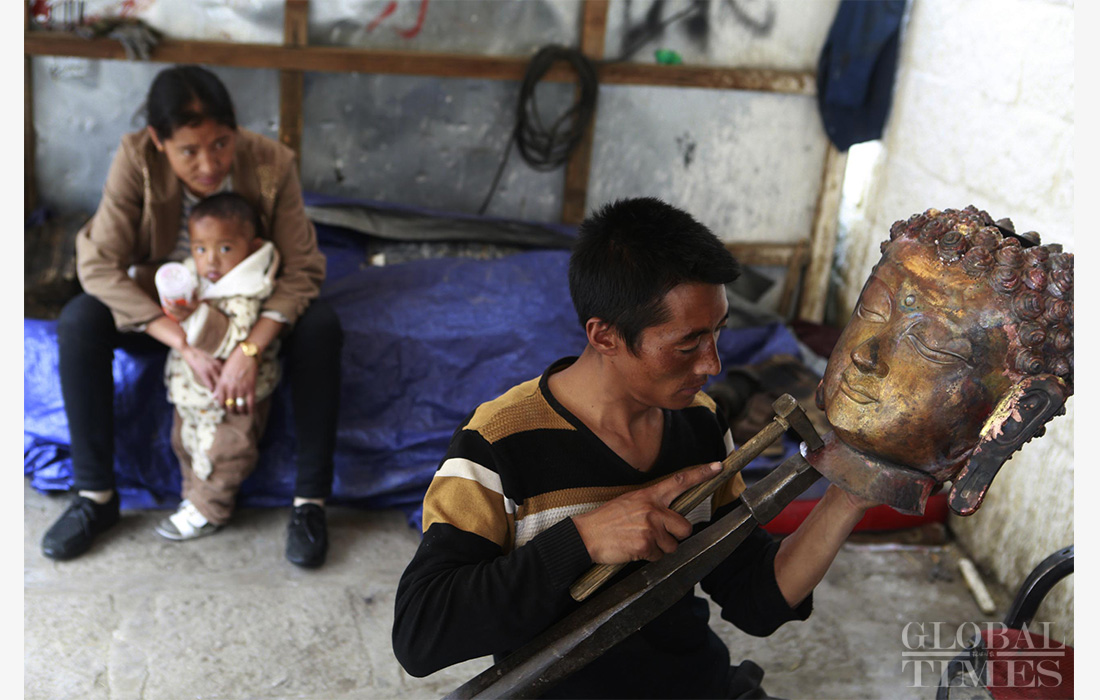
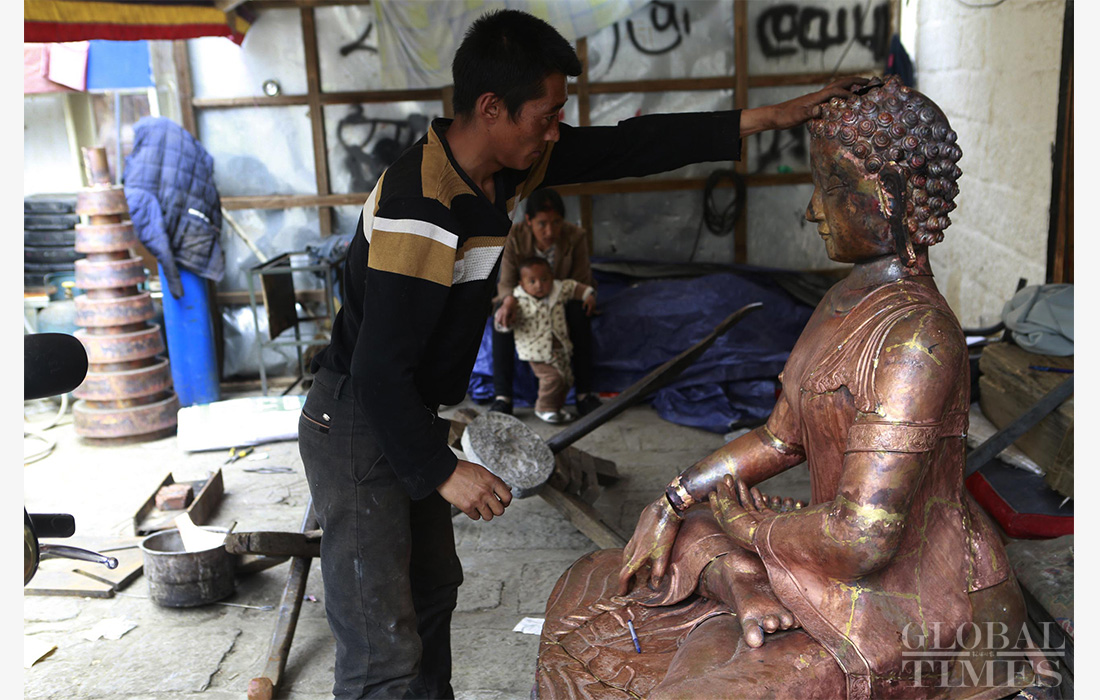
A worker shapes a copper Buddha head as his wife and child look on.
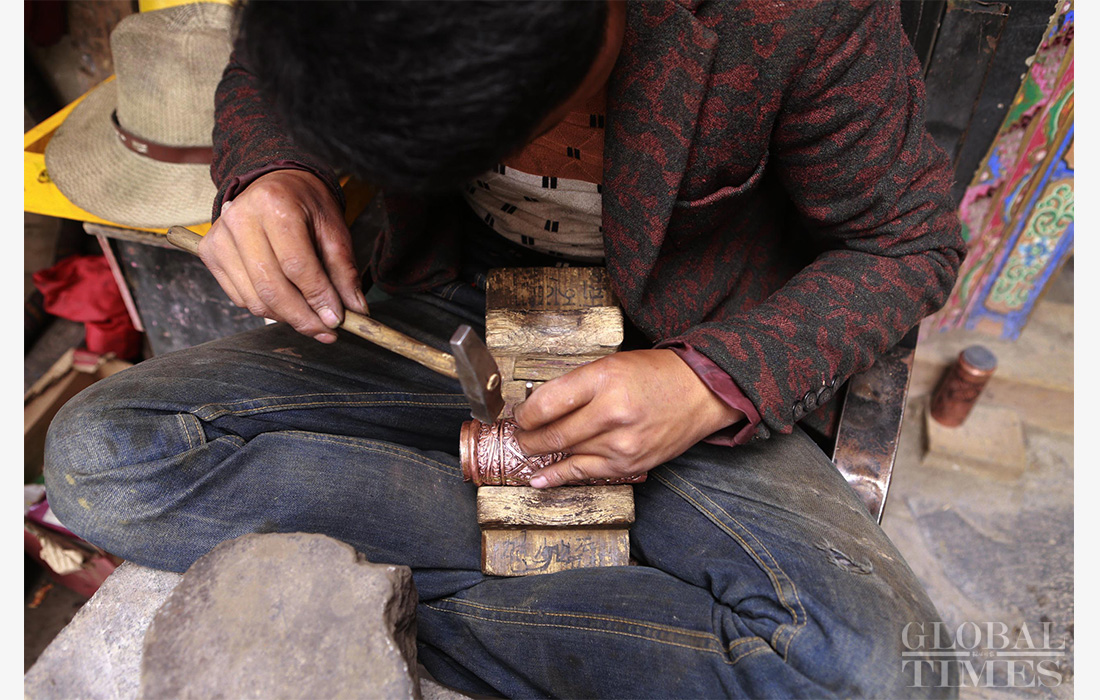
A worker carefully shapes a small sculpture piece.
A worker attaches the head to a Buddha body.
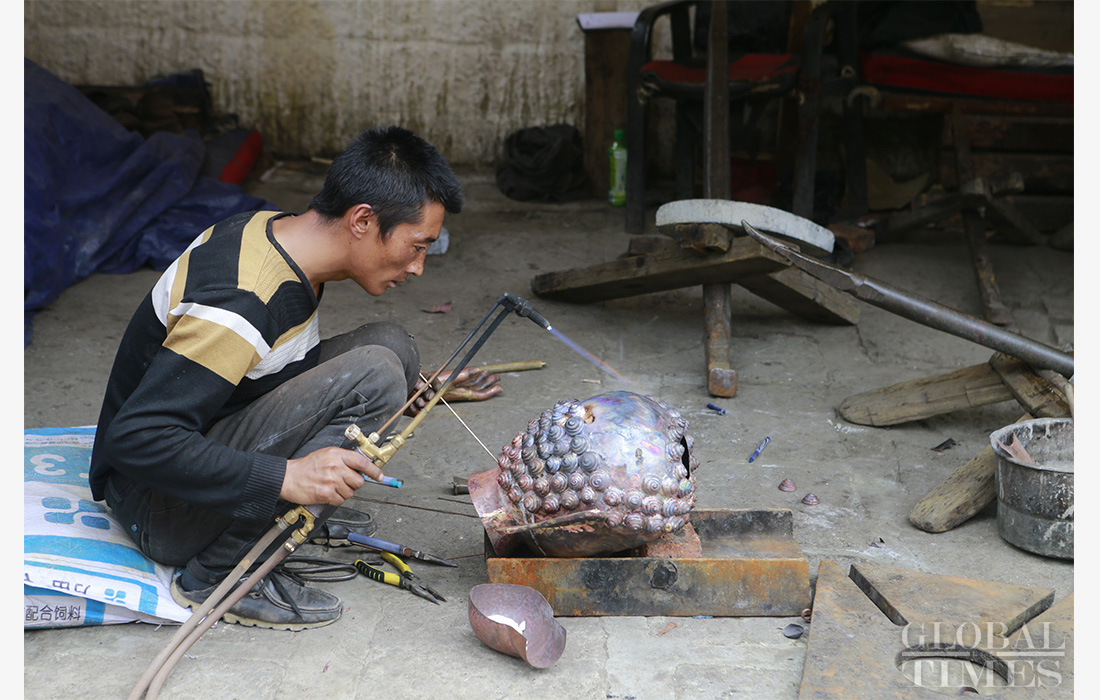
A worker shapes a Buddha head.