METRO BEIJING / METRO BEIJING
Heel Thyself
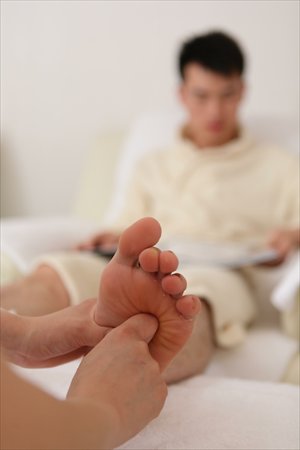
Discomfort in any part of the foot signals problems in other parts of the body. Photo: CFP
Although she has never tried any Traditional Chinese Medicine (TCM) herbs or pills because they take too long to take effect, Amanda Laverick likes the immediate gratification of TCM foot massage. "Afterwards, I feel like I am floating in the air," she said.
Laverick, 39, the chief operating officer at The Charlesworth Group, first tried foot massage six years ago in Beijing, and has come to value the therapy as a method of alleviating work-related stress. "When I go home after foot massage, I fall asleep very easily. Sometimes I even fall asleep during the process," said Laverick, who is from England.
The experience is intended to be soothing, starting with a hot bath for the feet. In water heated to 40 C and infused with saffron and other herbs, the customer's feet are allowed to soak for about 15 minutes to relax and improve circulation. Only then does the kneading begin.
Du Fuying, a masseuse at Dragonfly Therapeautic Retreat, said that unlike the TCM decoctions that are designed to cure diseases, foot reflexology massage serves as preventive health.
"Every part of the human body corresponds to a certain point in the feet. For instance, the toes represent the brain. The middle section of the foot corresponds to the large intestine and small intestine. Any discomfort at an acupoint in the foot reflects some kind of imbalance in the corresponding body part," said Du, who has worked in this field for more than five years.
Laverick says that she often feels acute pain when the masseuse touches the midsection of her feet, which correlates to the stomach and digestive tract. "But I never have any problems with my digestion - maybe because the foot massage has prevented it," Laverick joked, adding that she often checks the Internet after her massages to see which part of her body may be experiencing a problem.
According to Du, the most important acupoint in the feet is the Yongquan point, which helps regulate the kidney. It is located in the middle of the sole; if massaged constantly, TCM practitioners claim, it will improve the circulation of nutrients throughout the body.
It typically takes at least one month to be trained to perform reflexology massage properly, but Du noted that self-massage at home can yield health benefits.
She also recommends reconsidering one's choice of footwear. "Wearing high heels will hinder the blood circulation in the heel. Flip-flops, which compress the toes, are not good for the health either."
Ye Chunyan, the manager of the Sanlitun branch of Dragonfly, told Metropolitan that 80 percent of their customers are foreigners, of which more than 30 percent prefer foot massage.
"However, for children under 12 and elderly people above 70, foot massage is not recommended. This is because their bones can't bear too much pressure," said Du.
It's not uncommon for customers to feel ticklish when they first try foot massage, but once they get accustomed to it, they often ask the massage therapist to take a firmer hand.
Günter Schneider, 42, a senior director at Microsoft who hails from Austria, told Metropolitan that he prefers that the masseur exert considerable force during his weekly massages. It makes him feel that the reflexology is really working. "I'll ask them to press with more strength," he said. "I feel super relaxed during foot massage, which takes me to another world."
