METRO SHANGHAI / METRO SHANGHAI
Left on the shelf
Shanghai’s small local libraries suffer in the electronic era
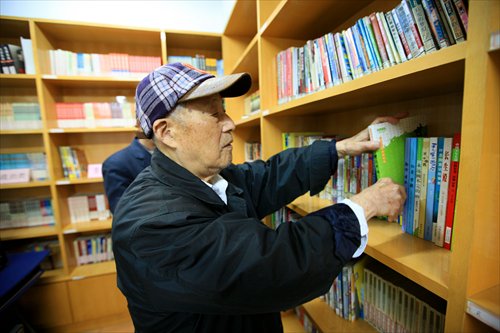
A man searches for a good read in a library. Photo: IC
Some Westerners know about and a few even use the Shanghai Library, that huge (it is one of the largest public libraries in China) city institution. It spreads over 127,000 square meters and is home to millions of books.
But few Westerners visit the libraries that serve most Shanghai residents - the district, sub-district or community libraries that are scattered throughout the city. According to the report Shanghai Public Culture Service Development 2013 which was published last year, Shanghai has 238 libraries with a three-level network (Shanghai Library, district libraries and sub-district libraries, also known as community libraries) and, officially, there's a library here for every 100,000 people.
Although this is less than the one library for every 50,000 people proposed by the International Federation of Library Associations and Institutions in the 1970s, Shanghai leads China for the number of libraries per head of population.
In April 2014 a survey of 100 community libraries in Shanghai estimated that the average local library has 30,000 books on its shelves and operates with an average annual budget of 80,000 yuan ($12,803) for purchasing new books, although both these figures are below the national average, people.cn reported.
The Tilan Bridge Sub-district Library is located on the third floor of the Tilan Bridge Cultural Activity Center in Hongkou district. This library has about 30 chairs for readers and keeps 25,000 books. Staff told the Global Times the collection was updated every year with hundreds of new books. "Many people come here to this sub-district library especially the seniors and middle-aged readers who like borrowing books."
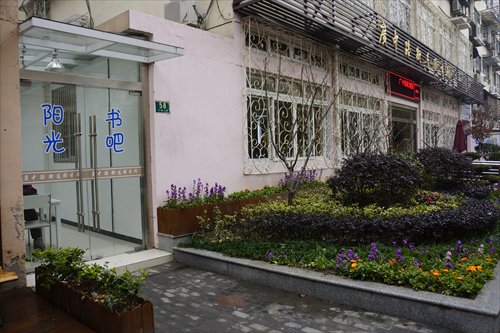
Outside the Guangzhong Road Sub-district Library Photo: Li Kewei
New titles
The Gucun Town Library of Baoshan district offers readers the choice of 16,000 books with new titles added every year. The Tinglin Town Library in Jinshan district has nearly 50,000 books. These libraries together attract 50 or 60 readers every day - on a busy day perhaps 100 will visit.
The Lujiazui Sub-district Library of Pudong New Area has nearly 60 chairs and 20,000 books but most of the clientele are elderly people although some children and younger people visit during vacations. The Nanjing Road East Sub-district Library in Huangpu district has about 80 chairs and 30,000 books. This library offers a service where readers can ask for titles not currently stocked.
The community libraries in Shanghai are overseen by the district libraries and the Shanghai Library. Readers who have borrowed books from district libraries or the Shanghai Library can return the books to sub-district libraries.
Most of the sub-district libraries have special children's sections but the staff at the Tilan Bridge Library said, few children visited or used these. The librarians there, who checked with colleagues in other districts, said most of the regulars at their libraries were the elderly who came to read newspapers or magazines.
At the Guangzhong Road Sub-district Library last Friday most of seats were occupied by seniors reading newspapers - some with their own magnifying glasses. One old man surnamed Wang told the Global Times that he came to the library every morning except Monday because the library didn't open until 1:30 pm on Mondays. He usually reads newspapers and sometimes books but he's finished all the titles that interest him at present. "I wish the sub-district library could buy more history books - us old people always like reading history," Wang said.
Websites blocked
Another man surnamed Hu came into the library with his own laptop although there are computers available in the library. "I come here to read the newspapers and I use the laptop to look for information - the computers here have blocked many websites."
At the Sichuan Road North Sub-district Library on a Sunday, 90 percent of the chairs were taken by seniors in the book and e-reading areas. One man sat alone in the quiet children's area reading a newspaper. In the computer section seniors were seated at the keyboards of the 20 computers available there - most were playing games.
It is not common to find young people in these sub-district libraries. A 15-year-old girl told the Global Times that she came to this library on weekends to study. "The sub-district library is close to home and quieter - besides it has air conditioning."
A 50-something woman at the library said she didn't go there for reading but to borrow books so that she could read them at leisure. She said many of the books there were rather old-fashioned but she could still find good titles although she now sometimes read books on her smartphone.
There are good reasons why younger people don't frequent these small libraries. A university student who lived nearby said she didn't use the sub-district library but went to the Shanghai Library when she needed to. "The atmosphere there makes me study better and focus on my reading. And it is easy to find the books you need." If she has to get books now she buys them online because it's cheaper than buying them in bookstores.
Another student in her third year of a master's degree said that she used to go to a sub-district library near her home but brought her own textbooks with her. Nowadays she doesn't go to the local library but reads inexpensive e-books. She said the books in the sub-district library had no appeal for her. When she was asked if she would use the sub-district library more often if it stocked up-to-date novels and the latest bestsellers she said she certainly would. "Reading real books is definitely more enjoyable than the electronic books - the print editions don't hurt my eyes."
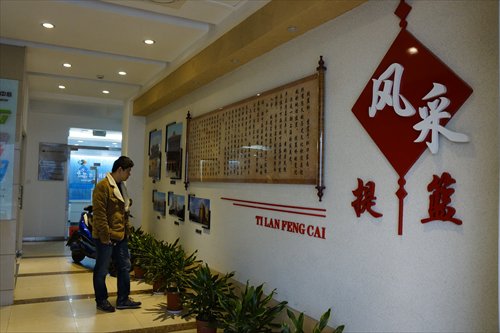
Inside the Tilan Bridge Sub-district Library Photo: Li Kewei
Designed to serve
Sub-district libraries are the grass-roots libraries in Shanghai and are designed to serve the people nearby. They are more than just a place for seniors to get together and read newspapers. A lot of people still want to read books if this can be done easily.
In China in 2013 people read an average 4.77 books a year - which contrasts with France where the average is 20 books a year and Japan, which averages 40 books a year, according to the Shanxi Evening News.
Many people still prefer printed books. One 27-year-old office worker said he always preferred "real" books as long as he can get them easily. "I did go to a sub-district library on a weekend a while ago but the selection was old and out-of-date - perhaps because of a lack of budget. But fewer books will attract fewer readers."
Gu Xiaoming is a professor of history and tourism at Fudan University and agreed that if the form of these community libraries didn't change, people wouldn't use them any longer - and more and more elderly people were mastering e-books.
He suggested that libraries could try different approaches, like offering books to read in gyms or coffee bars where people socialize and could enjoy reading as well. He said libraries and young people should not be opposed to each other and a new approach to libraries was needed - especially in an era when passengers on metro and high-speed trains can plug into e-readers at their seats.
Global Times
