METRO BEIJING / INTEL
Back-to-school phobia
How parents and kids can learn to deal with pre-semester fear
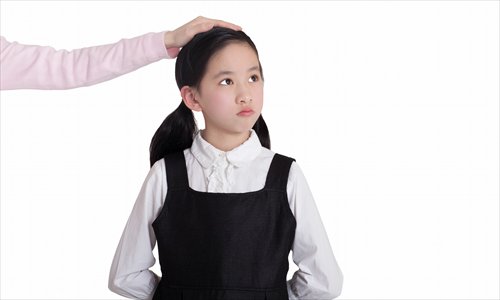
As school begins, parents and schools can take action to counter students' fears of returning to the classroom. Photo: IC
Starting from the third grade in primary school, an 11-year-old girl surnamed Yan has suffered from anxiety right before each semester is about to start. The closer to the new term, the more anxious she would be.
Her panic attacks came without any signs and would come at any time, several times a day. During the first month of the fourth grade, she also would get headaches and stomachaches at the thought of going to school.
"This is a classic case of 'school phobia,' which is a serious mental illness that children can suffer from," Luo Xiangyang, director of the neurology department at Sun Yat-Sen Memorial Hospital of Sun Yat-Sen University, told the Yangcheng Evening News .
As the summer holiday comes to an end, many students in China suffer from similar symptoms as Yan does. In less serious cases, they will feel down, tense, become bad-tempered and can not focus their attention. In other cases, they may suffer from insomnia, headaches, or stomach pains.
Luo said there are usually three types of phobia that occur in three different age ranges: The first is from 5 to 7 years old, which is thought to be caused by separation anxiety before going to school for the first time. The second is 11 to 12 years old, which can be credited to the fear of starting middle school because of more academic pressure.
"Students will see the third peak [of school phobia] after they turn 14, and it is mainly caused by puberty-related characteristics, such as changes of the body and unstable emotions," he said.
Luo said parents should know the difference between when their children are pretending to be sick to avoid school and actually suffering from anxiety. If they suffer from pains at school, but it goes away when the children are at home, parents should consider consulting a doctor.
Luo also suggests parents take some step-by-step approaches. For example, first a parent can take the students for a walk outside the campus, and then if they can deal with it, a walk around the campus, and later accompany them to stay in the classroom for a short time.
However, while helping their children, parents should be aware that those with high expectations are also at risk of putting themselves through similar symptoms.
A mother surnamed Zhang from Nanjing, Jiangsu Province told Yangtze Evening News that she felt terrible when the new semester began and she found out that her daughter's classmates had already previewed the new textbooks.
"Some parents took their children to tutors and did not let their children relax for even a moment during the holiday," said Zhang. The possibility of her daughter falling behind others makes Zhang feel anxious.
Schools can play their part in minimizing school phobia for both the parents and students. Han Dong, the head teacher of a fourth grade class at Tsinghua University Primary School, told Metropolitan that teachers can take different actions depending on the situation.
"We found that some of students are afraid of going to school because they did not finish their holiday homework - some focused on relaxing during the holiday and could not get accustomed to busy study life," Han said. "And some have so much pressure from their parents that they are not interested in their studies."
Han said that to cope with the phobia, it has been proven to be effective if the teachers communicate with students by phone or by WeChat during the holidays to see what they're interested in and get them excited about the coming semester. The school also conducts a training session for parents, and students play icebreaker games before they start classes to familiarize themselves with their peers and their environment.
"No matter what causes their fears, communication is the most important," Han said.
Agencies - Global Times
