METRO SHANGHAI / METRO SHANGHAI
Expats explore Shanghai’s old town on foot
Walk the talk
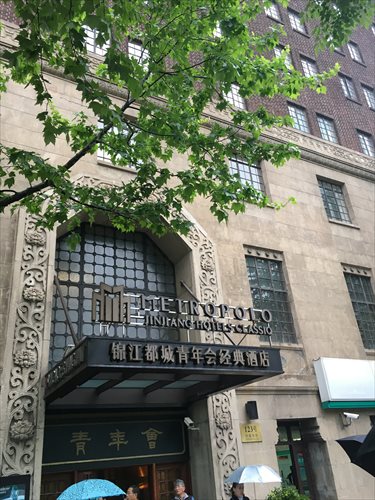
Historic Shanghai recently held a walking tour around the city's former race course, which today most people know as People's Square. The three-hour tour started at Jinjiang Metropolo Hotel Classiq, YMCA (pictured bottom right) and covered many notable nearby roads such as Nanjing Road Pedestrian Street and Fuzhou Road before ending at the Grand Theatre on Nanjing Road West.
Historic Shanghai was founded in 1998 by expats Tess Johnston, Wm Patrick Cranley and Tina Kanagaratnam with the goal of raising awareness of Shanghai's heritage and cultural history. The group hosts a monthly "drop-in" walking tour to illustrate and illuminate the lesser-seen parts of Shanghai.
Despite the heavy rains and gusty winds that Shanghai has been suffering from recently, the weather did not "dampen" any of the participants' enthusiasm. Following the lead of our guides Cranley and Kanagaratnam, this Global Times reporter along with 12 others set out to see and listen to their tales of old Shanghai.
Art Deco
Unlike other cities in China, the history of Shanghai is comparatively brief yet much more sophisticated. Many old buildings in Shanghai were built during the "glory years" of the 1930s in a unique combination of Western and Eastern styles. Their creators were primarily foreigners or Western-trained Chinese.
At least 10 of the 20 architectures seen in the tour were designed in the now-classic Art Deco style. Some of the most representative structures, like Park Hotel (also known as the International Hotel), Continental Emporium and Grand Theatre, are today household names for many native Shanghainese.
Cranley elaborately explained each building's background, such as why the Great World eventually became the Shanghai Entertainment Center, what the symbols on the Grand Theatre's terrazzo mean, and how Moore Memorial Methodist Church got its name.
"If you read their books beforehand, it's more likely to strike a chord when you actually see these buildings yourself," a Chinese attendee told the Global Times, referring to Cranley and Johnston's acclaimed "Shanghai Walk" guidebook series, the latest and last - The Where's Where of the Who's Who of Old Shanghai - which was published last month. "Beyond their exquisite appearance, it's fascinating to read the stories behind these heritage sites," she said.
Untrodden ways
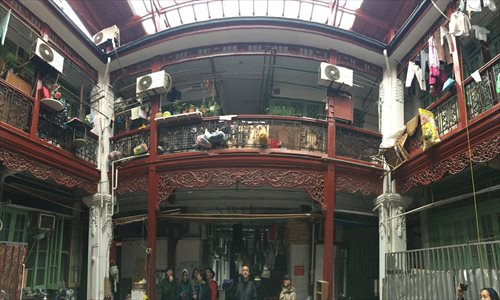
Beyond Shanghai's many modern commercial buildings, Cranley and Kanagaratnam also led the group on an expedition into the labyrinthine back alleys of Shanghai, called lilong (lane neighborhoods), some which feature the distinct shikumen-style stone-gated homes that make old Shanghai so charming.
We arrived at Lane 140 on Fujian Road Middle, hardly a common destination for the average foreign travelers or package tour groups, which made our presence there even more surreal. To help the foreigners in our group better understand Shanghai's traditional neighborhoods, our guides compared the lilong with Beijing's more well-known hutong (alleys) and siheyuan (quadrangle courtyard).
"When living in a lilong, you always saw your neighbors, as they were just opposite to you. Several households all shared the same kitchen and their children always played together. Whereas in Beijing the siheyuan are separated, and each courtyard contains only one family," said Cranley.
Ben, an expat who has been living in Shanghai for three years, told the Global Times that the first time he joined this walking tour was six years ago. Now that he is working here, he wants to become more familiar with the lesser-seen aspects of the city. "There's always something to learn about Shanghai, this city seems to change every month, every week," he said. "The buildings of Shanghai were all made in a very human, personal scale, so it's insightful to learn about their complex histories."
Due to the growing popularity of Cranley and Kanagaratnam's tours, Historic Shanghai will soon be extended to areas outside of Shanghai, including neighboring Nanjing, which the guides say contains even more history and sites than Shanghai.
Elsie, a native Shanghainese fashion designer accompanied by her German husband, told the Global Times that it was their second time to join the Historic Shanghai walking tour. "If it wasn't for this tour, I'd hardly pay a special trip to these places," she said. "But I find it really interesting listening to Patrick's explanations. Sometimes I feel so sad that Shanghai's old architecture is being completely reconstructed just because of the booming economy."
Those interested in Historic Shanghai's upcoming events can view their website: http://www.historic-shanghai.com/
The article was written by Qu Xinyi
Historic Shanghai was founded in 1998 by expats Tess Johnston, Wm Patrick Cranley and Tina Kanagaratnam with the goal of raising awareness of Shanghai's heritage and cultural history. The group hosts a monthly "drop-in" walking tour to illustrate and illuminate the lesser-seen parts of Shanghai.
Despite the heavy rains and gusty winds that Shanghai has been suffering from recently, the weather did not "dampen" any of the participants' enthusiasm. Following the lead of our guides Cranley and Kanagaratnam, this Global Times reporter along with 12 others set out to see and listen to their tales of old Shanghai.
Art Deco
Unlike other cities in China, the history of Shanghai is comparatively brief yet much more sophisticated. Many old buildings in Shanghai were built during the "glory years" of the 1930s in a unique combination of Western and Eastern styles. Their creators were primarily foreigners or Western-trained Chinese.
At least 10 of the 20 architectures seen in the tour were designed in the now-classic Art Deco style. Some of the most representative structures, like Park Hotel (also known as the International Hotel), Continental Emporium and Grand Theatre, are today household names for many native Shanghainese.
Cranley elaborately explained each building's background, such as why the Great World eventually became the Shanghai Entertainment Center, what the symbols on the Grand Theatre's terrazzo mean, and how Moore Memorial Methodist Church got its name.
"If you read their books beforehand, it's more likely to strike a chord when you actually see these buildings yourself," a Chinese attendee told the Global Times, referring to Cranley and Johnston's acclaimed "Shanghai Walk" guidebook series, the latest and last - The Where's Where of the Who's Who of Old Shanghai - which was published last month. "Beyond their exquisite appearance, it's fascinating to read the stories behind these heritage sites," she said.
Untrodden ways
Beyond Shanghai's many modern commercial buildings, Cranley and Kanagaratnam also led the group on an expedition into the labyrinthine back alleys of Shanghai, called lilong (lane neighborhoods), some which feature the distinct shikumen-style stone-gated homes that make old Shanghai so charming.
We arrived at Lane 140 on Fujian Road Middle, hardly a common destination for the average foreign travelers or package tour groups, which made our presence there even more surreal. To help the foreigners in our group better understand Shanghai's traditional neighborhoods, our guides compared the lilong with Beijing's more well-known hutong (alleys) and siheyuan (quadrangle courtyard).
"When living in a lilong, you always saw your neighbors, as they were just opposite to you. Several households all shared the same kitchen and their children always played together. Whereas in Beijing the siheyuan are separated, and each courtyard contains only one family," said Cranley.
Ben, an expat who has been living in Shanghai for three years, told the Global Times that the first time he joined this walking tour was six years ago. Now that he is working here, he wants to become more familiar with the lesser-seen aspects of the city. "There's always something to learn about Shanghai, this city seems to change every month, every week," he said. "The buildings of Shanghai were all made in a very human, personal scale, so it's insightful to learn about their complex histories."
Due to the growing popularity of Cranley and Kanagaratnam's tours, Historic Shanghai will soon be extended to areas outside of Shanghai, including neighboring Nanjing, which the guides say contains even more history and sites than Shanghai.
Elsie, a native Shanghainese fashion designer accompanied by her German husband, told the Global Times that it was their second time to join the Historic Shanghai walking tour. "If it wasn't for this tour, I'd hardly pay a special trip to these places," she said. "But I find it really interesting listening to Patrick's explanations. Sometimes I feel so sad that Shanghai's old architecture is being completely reconstructed just because of the booming economy."
Those interested in Historic Shanghai's upcoming events can view their website: http://www.historic-shanghai.com/
The article was written by Qu Xinyi
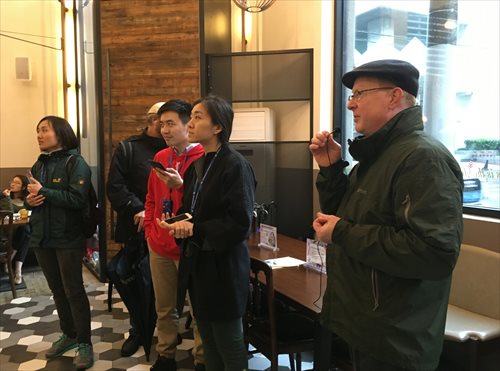
Wm Patrick Cranley (right) leads the Historic Shanghai walking tour.
A lilong at Lane 140 on Fujian Road Middle
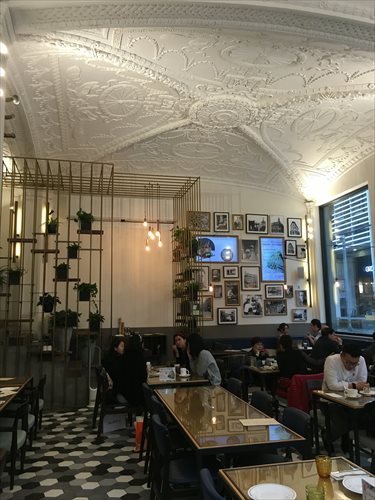
The old office of former Shun Pao, which today is a cafe
Jinjiang Metropolo Hotel Classiq, YMCA at People's Square
Photos: GT
