METRO SHANGHAI / CONSULATE
A city of gardens for gourmets
Suzhou a short hop to a World Heritage Site and mythically good noodles
With crisscrossing canals, a generous number of ponds and streams, and of course the Yangtze River, Jiangsu Province's best-known tourist city Suzhou is the water town of water towns.
Take the high-speed railway from Shanghai and within 30 minutes there it is, green and serene.
The city's first and foremost tourism trademark has to be the well-preserved classical gardens, which can date back as far as the 6th century. They are considered the epitome of the garden style of Jiangnan, the historically prosperous region immediately to the south of the lower reaches of the Yangtze River.
Nine of them became a collective UNESCO World Heritage Site known as the Classical Gardens of Suzhou, and I packed into my leisurely schedule the Humble Administrator's Garden, or Zhuozheng Garden, and the Lion Forest Garden.
I visited both in my childhood, but they are surely places that don't easily get boring over time.
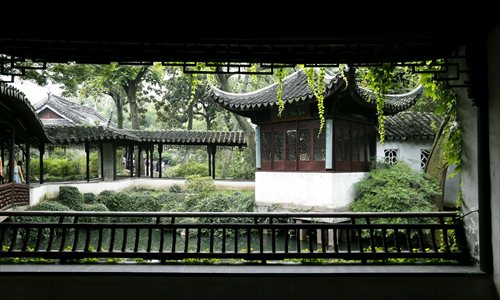
I began with the Humble Administrator's Garden, Suzhou's largest garden at 52,000 square meters. It is often called the greatest of southern gardens.
The very humble administrator that gave the garden its name is a former government official from the Ming Dynasty (1368-1644) called Wang Xianchen.
He gave up his last official post after various demotions and promotions and built the garden for a simple, hermitic retirement. Later its ownership changed hands.
Fine gated houses, pavilions and towers dot the eastern, central and western sections, and each enjoys a number of ponds.
One highlight of the eastern garden is the square-shaped, simply designed Looking Far Away Pavilion, which sits atop a small hill surrounded by water.
The petite pavilion feels quite private due to the effort required to reach it, traversing the meandering and rocky upward path to it.
Though the views are not very distant, it nevertheless offers a beautiful vista of nearby architecture, water and plants.
Interesting sites in the central garden include the Flying Rainbow Bridge, the one and only arched bridge found in Suzhou gardens, and the Fragrant Isle, a boat-shaped building named after the lovely smell of lotus blossoms in the pond it sits in.
To me, the garden is particularly special because it is allegedly where Cao Xueqin, author of the masterpiece Dream of the Red Chamber, spent his teenage years. Many believe that the garden inspired his depiction of the Daguan Garden in the novel.
As I found myself arriving at a dense grove of bamboo standing quietly outside a mansion within the western section, I couldn't help connecting the area to Xiaoxiang Hall, where the novel's heroine lives.
This section also accommodates With Whom Shall I Sit Pavilion, a free-standing, fan-shaped construct that is named after the poet Su Shi's famous verse in which he expressed his wish to sit with "the bright moon" and "refreshing breeze." Indeed, here, it can come true.
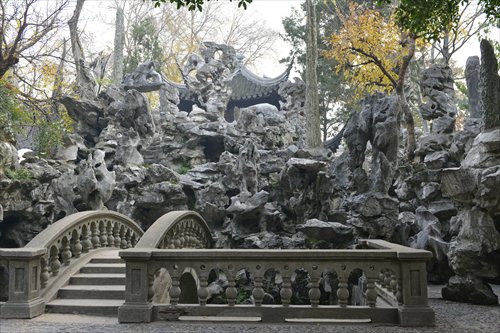
Together, these rockeries form a labyrinthine grotto. One is free to walk over these artificial hills, as well as beneath them, in the semi-secluded caves.
Part of the garden's fame comes from its association with two famous emperors of the Qing Dynasty (1644-1911). Kangxi visited the garden in 1703, and his grandson Qianlong visited it in 1765 and left an inscribed tablet, True Delight, as a gift to the garden.
He liked the place so much that he also had replicas of the garden constructed in the royal palaces in Beijing and Chengde. This part of history is told in details in an exhibition hall within the housing complex.
Local dining
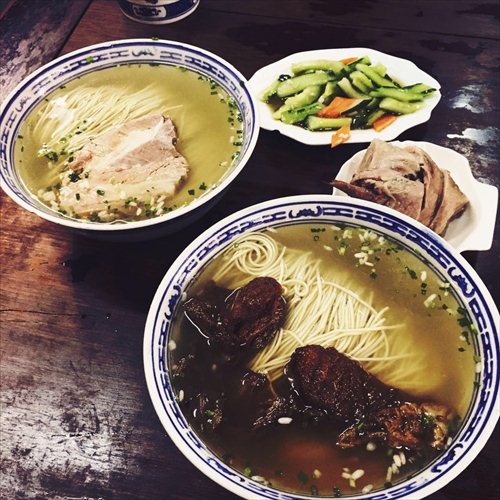
For many gourmets, Suzhou is synonymous with Suzhou-style soup noodles (pictured above). It isn't rare for a die-hard fan to take a train from Shanghai just for a bowl to slurp.
But it's common for celebrated dishes to become myths, and for me that's Suzhou noodles. At least, the renditions at the city's supposedly best noodle shop, Tongdexing, fail to impress.
Still, they do at least outdo their Shanghai counterparts, with better-timed noodles, a remarkably tastier soup base, and more generous splashes of fresh spring onions and ground pepper. On the other hand, the shop's most recommended toppings, braised pork and fried fish, are mediocre.
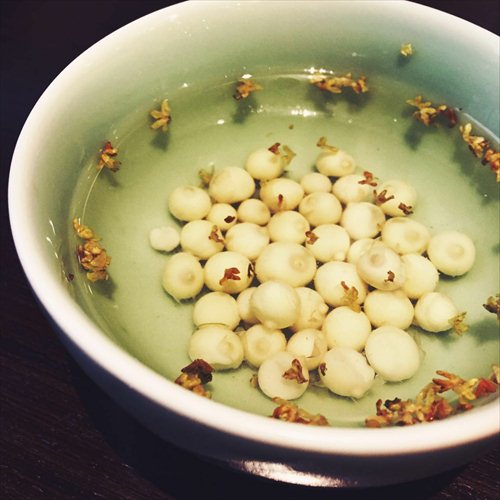
Another much-talked about local snack, euryale seeds in osmanthus flower soup (above), is simply delicious. The seeds look like a smaller version of chickpeas, but are chewier. They are nearly tasteless themselves, which is why the sweetness of the osmanthus flower soup makes a wonderful complement.
I had it as a dessert, and can't be happier that it is the last thing I ate in Suzhou. A very fragrant ending.
Take the high-speed railway from Shanghai and within 30 minutes there it is, green and serene.
The city's first and foremost tourism trademark has to be the well-preserved classical gardens, which can date back as far as the 6th century. They are considered the epitome of the garden style of Jiangnan, the historically prosperous region immediately to the south of the lower reaches of the Yangtze River.
Nine of them became a collective UNESCO World Heritage Site known as the Classical Gardens of Suzhou, and I packed into my leisurely schedule the Humble Administrator's Garden, or Zhuozheng Garden, and the Lion Forest Garden.
I visited both in my childhood, but they are surely places that don't easily get boring over time.
The Humble Administrator's Garden is the largest garden in Suzhou.
A landmarkI began with the Humble Administrator's Garden, Suzhou's largest garden at 52,000 square meters. It is often called the greatest of southern gardens.
The very humble administrator that gave the garden its name is a former government official from the Ming Dynasty (1368-1644) called Wang Xianchen.
He gave up his last official post after various demotions and promotions and built the garden for a simple, hermitic retirement. Later its ownership changed hands.
Fine gated houses, pavilions and towers dot the eastern, central and western sections, and each enjoys a number of ponds.
One highlight of the eastern garden is the square-shaped, simply designed Looking Far Away Pavilion, which sits atop a small hill surrounded by water.
The petite pavilion feels quite private due to the effort required to reach it, traversing the meandering and rocky upward path to it.
Though the views are not very distant, it nevertheless offers a beautiful vista of nearby architecture, water and plants.
Interesting sites in the central garden include the Flying Rainbow Bridge, the one and only arched bridge found in Suzhou gardens, and the Fragrant Isle, a boat-shaped building named after the lovely smell of lotus blossoms in the pond it sits in.
To me, the garden is particularly special because it is allegedly where Cao Xueqin, author of the masterpiece Dream of the Red Chamber, spent his teenage years. Many believe that the garden inspired his depiction of the Daguan Garden in the novel.
As I found myself arriving at a dense grove of bamboo standing quietly outside a mansion within the western section, I couldn't help connecting the area to Xiaoxiang Hall, where the novel's heroine lives.
This section also accommodates With Whom Shall I Sit Pavilion, a free-standing, fan-shaped construct that is named after the poet Su Shi's famous verse in which he expressed his wish to sit with "the bright moon" and "refreshing breeze." Indeed, here, it can come true.
Rockeries in the Lion Forest Garden Photos: Liao Fangzhou/GT and CFP
Meanwhile the Lion Forest Garden is a lot of fun. Known as the Kingdom of Artificial Hills, it features man-made, miniature mountains, consisting of unique Taihu Lake stone formations that are said to resemble lions.Together, these rockeries form a labyrinthine grotto. One is free to walk over these artificial hills, as well as beneath them, in the semi-secluded caves.
Part of the garden's fame comes from its association with two famous emperors of the Qing Dynasty (1644-1911). Kangxi visited the garden in 1703, and his grandson Qianlong visited it in 1765 and left an inscribed tablet, True Delight, as a gift to the garden.
He liked the place so much that he also had replicas of the garden constructed in the royal palaces in Beijing and Chengde. This part of history is told in details in an exhibition hall within the housing complex.
Local dining
For many gourmets, Suzhou is synonymous with Suzhou-style soup noodles (pictured above). It isn't rare for a die-hard fan to take a train from Shanghai just for a bowl to slurp.
But it's common for celebrated dishes to become myths, and for me that's Suzhou noodles. At least, the renditions at the city's supposedly best noodle shop, Tongdexing, fail to impress.
Still, they do at least outdo their Shanghai counterparts, with better-timed noodles, a remarkably tastier soup base, and more generous splashes of fresh spring onions and ground pepper. On the other hand, the shop's most recommended toppings, braised pork and fried fish, are mediocre.
Another much-talked about local snack, euryale seeds in osmanthus flower soup (above), is simply delicious. The seeds look like a smaller version of chickpeas, but are chewier. They are nearly tasteless themselves, which is why the sweetness of the osmanthus flower soup makes a wonderful complement.
I had it as a dessert, and can't be happier that it is the last thing I ate in Suzhou. A very fragrant ending.
