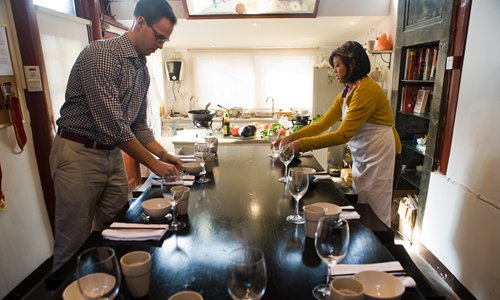
For many foreigners, growing up in China has allowed them to experience cultural differences that give them the advantage of learning about mutual acceptance, understanding and coexisting peacefully. Photo: Li Hao/GT
Maneza Mohammad Ali, whose parents moved to China from Afghanistan when she was just 3 years old, gets questions about being culturally confused all the time.
All fluent in Chinese, she and her three younger brothers went through Chinese public education system while attending primary and high schools.
"[In Beijing] I have more Chinese than expat friends. For years my main language was Chinese. I feel like I am half Chinese," said the 27-year-old Afghan girl.
Maneza just moved to New Jersey from Beijing a little more than six months ago and she often reminisces about her life in China's capital.
Growing up abroad has an enduring impact that shapes a person in many ways. In a poll conducted in 2014 by expatchild.com, a website dedicated to helping parents when moving with children overseas, respondents were asked to rate the top benefits of growing up as an expat child. Experiencing different cultures was the top answer, followed by international awareness and appreciation for diversity.
Even though young people adapt to changing environments more easily and there are many benefits associated with living abroad, growing up in a culture other than their own may still cause them cultural confusion, which may make them feel like they do not fit in.
As globalization brings more foreigners opportunities to grow up in China, expats with this specific experience shared with Metropolitan both the cultural confusion and benefits of their living or growing up abroad.
Acceptance and tolerance
According to an article in December 2012 from the Global Times, in 10 years, the first generation of Chinese-born Westerners who grew up in China would come of age and enter the work force.
It said their influence would be increasingly felt. Their bicultural fluency will help them better integrate into Chinese organizations and introduce foreign ideas in an acceptable way in the Chinese context.
Maneza has recently accepted a job with New Jersey City government's special project that focuses on undocumented migrants and attempts to protect their rights and give them opportunity for work and education within the US.
"I am pretty sure all those things I've experienced and learned will be very helpful for my future work and projects," she said.
Thanks to the international environment of universities in Beijing, Maneza was able to interact with people from many different nationalities and cultures, and experience many different points of view.
While she completed her graduate and post-graduate degrees, she learned how to listen to, respect and value others' opinions, and make friends and exchange ideas with people from different backgrounds.
In her opinion, one of the best experiences growing up in a Chinese society is the fact that it accepts all cultures, nationalities and religions. This acceptance was not only seen when expressing opinions and views, but with personal and religious beliefs and customs.
"Since I am Muslim, I sometimes wear a hijab; I don't eat pork, and I don't drink alcohol. In China, no one has ever offended me, pushed me to drink or called me an extremist or terrorist with regard to my religion."
She said that since moving to the US, she has gained an understanding of what it is like to be perceived as an "immigrant."
"That word sometimes implies a negative connotation. In China, foreigners are not treated like that," she said.
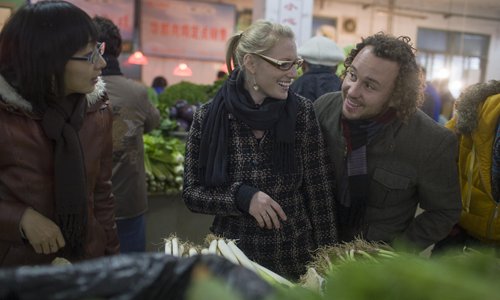
Experts say, foreigners' experiences of growing up and living in China reflect the trends of globalization and localization. Photo: Li Hao/GT
Obstacles and limitations
Maneza said that she sometimes feels more accepted and connected to Chinese than to Afghans or friends of other nationalities.
"I felt a disconnection when voicing opposing views to the ones that prevail in Afghanistan with other nationals who grew up there. For them, I am an Afghan national who grew up abroad that did not face the same problems," she said.
"They think I do not have the right to complain or comment on certain issues," she said, adding that Chinese friends and colleagues valued her opinions related to various topics.
"They knew how to listen and they respected differences," she said. In addition, she said when she arrived in Beijing she felt people were friendly, welcoming and helpful. "It was certainly obvious I was different, but I was treated really well.
Although Maneza never faced discrimination while growing up in China, there were other problems. She felt like she was not able to get the most out of her education.
Her teachers and local friends were very friendly and helpful, but they had lower expectations from her than from Chinese students just because she was a foreigner.
She felt excluded from the system itself because the common belief was that she was only there to learn Chinese.
"I was going to school for an all-around education, just like any other student. When foreigners enter schools in China, everyone focuses on them learning Chinese, and educators place less emphasis on foreigners' performance in other subjects. I had significantly less homework and they were less strict with me," she said.
These issues were even more visible when she was at university.
"While studying for my master's degree at Peking University, I had less to do than my peers, and I was always demanding more. In addition, I also had fewer opportunities as a non-Chinese national since 95 percent of international and UN related activities and scholarships at my university were only for local students," she said.
At that point, she realized that it would be hard to achieve a political career in China and that she would need to explore new possibilities in other countries.
Going global
Marijana Jurcic and her family moved from Croatia to Beijing a little over seven years ago. When they first arrived in Beijing, her two sons Luka and Renato were three and nine respectively.
When she and her family moved to Beijing, she was faced with questions from friends and family about how growing up abroad would affect her two young boys.
"I know Chinese culture is different from ours. However, the only challenges I see are the same challenges my children would face in Croatia or anywhere else. They are going to school, participating in sports, learning, making friends and falling in love. The normal things all kids experience worldwide."
Jurcic also pointed out that growing up in China is a unique opportunity to accept differences and break racist or chauvinist patterns.
In her opinion, being exposed to other cultures, especially in the melting pot that China offers while also learning about your own unique culture, opens the door for peace and integrity.
"My youngest son speaks better English than Croatian and is also making huge progress in Chinese. He also uses chopstick better than a fork. They do not consider skin color or religion as something important. China and this significant time in which we are living now will shape both of my boys in a very positive way," said Jurcic.
Jurcic said that while tapping into all those multicultural gains that it is still necessary to give her children a constant glimpse of their roots.
"We have witnessed rapid changes since the day of our arrival. China is an open country that has developed very quickly during the past two decades, and it is becoming even more convenient and welcoming for foreigners. It is also much safer than other countries around the world, and we can be more relaxed as parents," Jurcic said.
Thanks to globalization, foreign kids have a chance to be born in or grow up in China. Xia Xueluan, a professor of sociology from Peking University, attributed the increasing number of foreigners coming to China to the growth of China's national strength and improved global image.
He said foreigners' experiences of growing up and living in China reflect two trends, namely globalization and localization.
He noted that, having more foreigners work and live in China shows that the country is actively involved in international communication.
Maneza said that the opportunity of growing up in China has brought to light great cultural differences that give her an advantage. Learning about them along with the mutual acceptance, understanding and peaceful coexisting was something that shaped her in a very positive way and she hopes that everyone can accept that pattern too.
