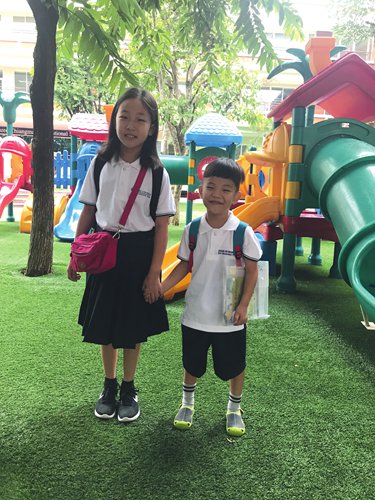
Peggy Wang's daughter and son pose for a photo at their school in Chiang Mai, Thailand. Photo: Courtesy of Peggy Wang
As Peggy Wang positioned her smartphone to take the photo, her daughter, a grade five student, and her son, who is in grade one, smiled into the camera, their white and blue school uniforms standing out against the colorful playground behind them.
The two Chinese children moved from Beijing to Chiang Mai, Thailand with their family in May. For Wang, who runs her own business, the most important factor that led her to relocate the family to Chiang Mai is the quality international education available in the country.
"The Thai international schools run systematic educational programs based on American or European curriculums, which provide a more relaxed learning environment for children compared to that of schools in China," said Wang.
Wang is not alone. A growing number of China's middle-class families are turning to Southeast Asian countries, such as Thailand and Malaysia, for international education. The past decade has seen an international school boom in China, with international or private bilingual schools becoming the primary choice for many wealthy and elite families.
Drawn by more affordable tuition and the slower pace of life in Thailand, some Chinese families have started enrolling their children in international schools in the country.
Thai education
The international school Wang's children attend uses the British education system and is one of the eight international schools in Chiang Mai, a tourist city in northern Thailand and one of the most popular Thai destinations among Chinese travelers.
Wang got the idea to relocate while vacationing in Chiang Mai with her children during Spring Festival.
"We all fell into the cozy and slow-paced lifestyle in the city. It's not as crowded as Beijing where traffic congestion and air pollution always turn people down," she said. "The international school fees are also cheaper in Thailand."
Thai international schools charge around 80,000 yuan ($12,119 ) per year, much less than the average of 200,000 yuan required by international schools in Beijing.
Wang said she is satisfied with the well-established international education system in Thailand, a country that has a long history of offering international education to meet the demands of a large number of Western residents.
Students admitted to the international schools are mainly from Thailand, the US and European countries. Wang's daughter is in a class of 12 students, three of which are from China. Her son is one of two Chinese in a class of 20.
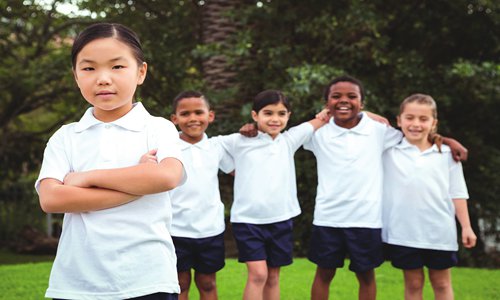
Many Thai international schools have seen a rise in the number of Chinese students in recent years.
Rising demand
Roy Lewis, the head teacher at Lanna International School Thailand in Chiang Mai, said the school has seen a significant increase in the number of Chinese applicants over the past three years. Lanna currently has 30 Chinese students in a school population of 480 students.
However, while the number of students from China has increased, those who meet the school's entrance requirements are a relatively small percentage of the applicants, said Lewis.
"We have a selection process for all students above kindergarten age, and it is based on English language proficiency. This is because we follow a curriculum that is academically rigorous and requires English language competence," said Lewis.
To ensure a mix of cultures and nationalities, many international schools in Thailand have policies to avoid the situation of one nationality dominating student numbers. Lanna caps the number of students from each nationality at 30 percent per class.
"Any Chinese student who meets our entry requirements is accepted, as at present, we do not have the 30 percent cap in any class for them," said Lewis. "We do not apply different criteria to Chinese applicants to our school."
According to Lewis, Chinese students at Lanna are similar to their counterparts from other countries both academically and in sports. However, some may take time to adjust to Western teaching styles, especially if they had little exposure to the world outside of China before attending the school.
Wang's children studied at international schools in Beijing, which made their transition to a Thai school much smoother. The family lives in a villa not far from the school, and Wang said the area is very safe.
"My neighbor has lived here for decades and told me that she has never heard of any criminal cases in the region," said Wang. "She doesn't even lock her door."
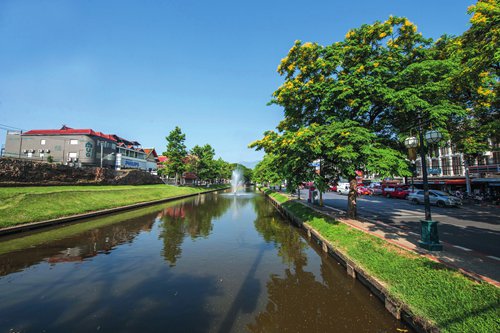
Thailand's proximity to China and slower pace of life contribute to the popularity of Thai international schools among Chinese families. Photos: IC
A more diversified approach to teaching
Li Meng, an expert in international education in China, visited Chiang Mai in the summer to conduct some research on international schools in Thailand. In his opinion, the rise in the number of Chinese students in Thailand reflects the trend of Chinese parents today increasingly accepting a more diversified approach to educating their children.
"Compared with the older generations, young Chinese parents are more open-minded," said Li.
"While the old generations tend to choose one good school for their children to study in from beginning to the end, some young parents believe it's better for their children to experience the different cultures of various countries at a younger age to better prepare them for their future in the increasingly globalized world," he said.
Thailand's proximity to China, the convenient commute between the countries, lower living costs and better air quality also contribute to the popularity of Thai international schools among Chinese families, he said.
However, Li said that Thai international schools do not suit all families. For example, some parents would find Thailand an unsuitable place to build their career because Thailand is not as developed as China.
"Usually, one of the parents needs to quit their job to stay in Thailand with their children," said Li.
He used one of his friends as an example. She lives with her daughter in Thailand so that the child can attend an international school. Her daughter, who plans to become a golfer in the future, finds Thailand an ideal country to practice golf while receiving an international education at the same time.
Another disadvantage of studying in Thailand is that parents may find that Thai cities lack adequate after school training programs to help their children develop their hobbies, especially in the arts, said Li.
Zhu Haoyang, who lives in Qinhuangdao, Hebei Province, plans to send her son to Thailand to continue his studies after he graduates from primary school.
Zhu, who earned a postgraduate degree from a university in Beijing, said her family has decided that her son would go to a Western university and an international school would help her son achieve that goal.
To get her son prepared for a Western learning environment, Zhu sends him to local English language training centers where he learns English from native speakers. Zhu's son, who shows great talent in music, also plays the piano and drums.
The family decided to let him complete primary school in China because Zhu believes China provides children with a more competitive education at the primary school level.
"The fundamental education for children in China, such as math, is better than that of other countries in the world," she said. "But middle schools in my city are not good enough."
Wang said she doesn't want her children to suffer from the academic pressure that many Chinese children face in the exam-dominated education system.
She doesn't think the lack of after school training sources in Thailand is a problem. On the contrary, she finds the after-class activities provided at her children's international school are interesting, very creative, and appeal to children.
"The other day, while learning to use digital maps during a club meeting after school, my daughter found the school she attended in Beijing and proudly showed it to her peers," she said. "My son attends drama club, English and basketball classes, and every day he runs home from school sweating and smiling."
