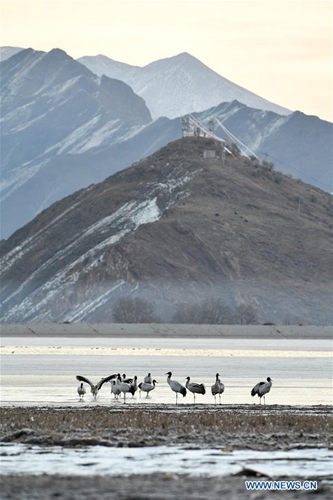
Black-necked cranes rest at a reservoir in Lhunzhub County, Lhasa, southwest China's Tibet Autonomous Region, Jan. 1, 2019. Because of fine environment and abundant food, Lhunzhub County and Dagze District have become ideal habitats for black-necked cranes in winter. (Xinhua/Zhang Rufeng)
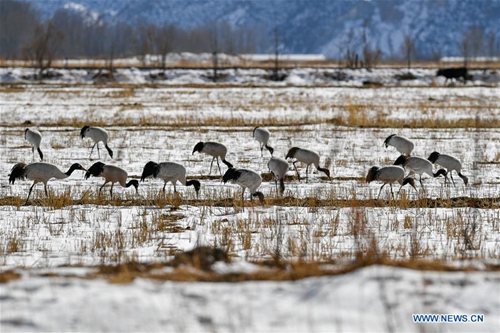
Black-necked cranes search for food in fields of Dagze District, Lhasa, southwest China's Tibet Autonomous Region, Jan. 1, 2019. Because of fine environment and abundant food, Lhunzhub County and Dagze District have become ideal habitats for black-necked cranes in winter. (Xinhua/Zhang Rufeng)
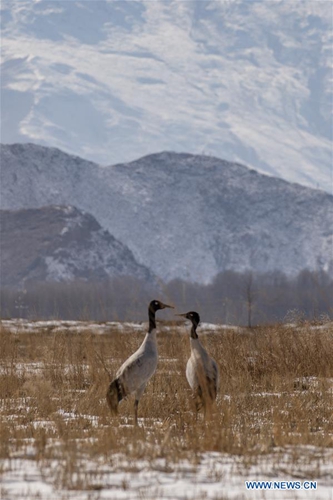
Black-necked cranes are seen at the foot of a snow mountain in Dagze District, Lhasa, southwest China's Tibet Autonomous Region, Jan. 1, 2019. Because of fine environment and abundant food, Lhunzhub County and Dagze District have become ideal habitats for black-necked cranes in winter. (Xinhua/Sun Fei)
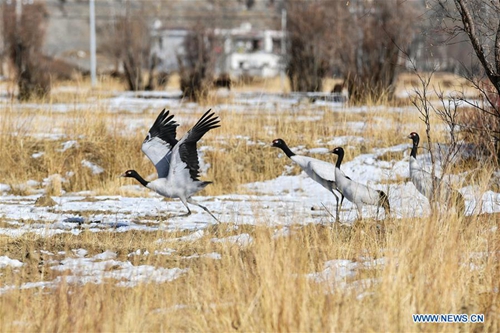
Black-necked cranes are seen in fields of Dagze District, Lhasa, southwest China's Tibet Autonomous Region, Jan. 1, 2019. Because of fine environment and abundant food, Lhunzhub County and Dagze District have become ideal habitats for black-necked cranes in winter. (Xinhua/Zhang Rufeng)
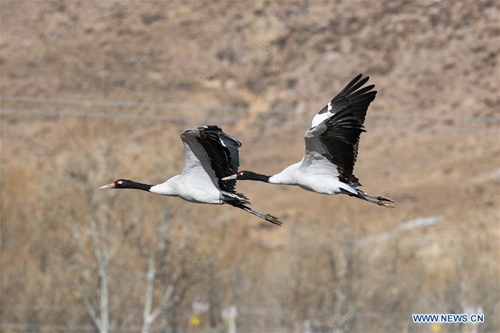
Black-necked cranes fly over fields of Dagze District, Lhasa, southwest China's Tibet Autonomous Region, Jan. 1, 2019. Because of fine environment and abundant food, Lhunzhub County and Dagze District have become ideal habitats for black-necked cranes in winter. (Xinhua/Zhang Rufeng)
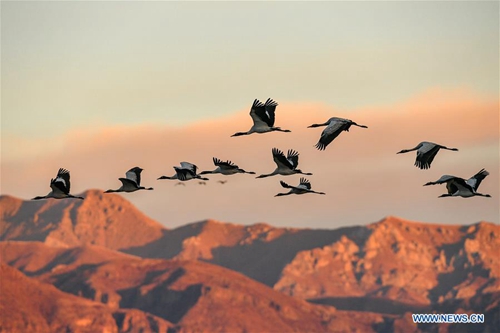
Black-necked cranes fly over the natural reserve for black-necked crane in Lhunzhub County, Lhasa, southwest China's Tibet Autonomous Region, Jan. 1, 2019. Because of fine environment and abundant food, Lhunzhub County and Dagze District have become ideal habitats for black-necked cranes in winter. (Xinhua/Zhang Rufeng)
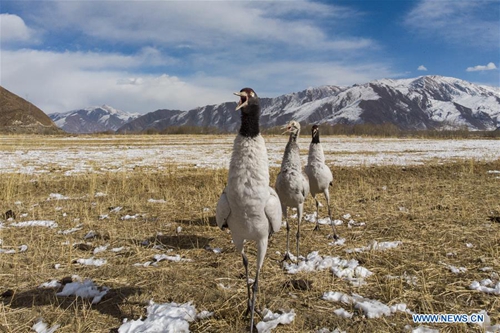
Black-necked cranes shout in fields in Dagze District, Lhasa, southwest China's Tibet Autonomous Region, Jan. 1, 2019. Because of fine environment and abundant food, Lhunzhub County and Dagze District have become ideal habitats for black-necked cranes in winter. (Xinhua/Sun Fei)
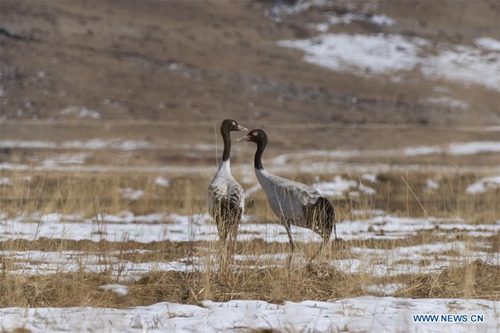
Black-necked cranes are seen in fields in Dagze District, Lhasa, southwest China's Tibet Autonomous Region, Jan. 1, 2019. Because of fine environment and abundant food, Lhunzhub County and Dagze District have become ideal habitats for black-necked cranes in winter. (Xinhua/Sun Fei)
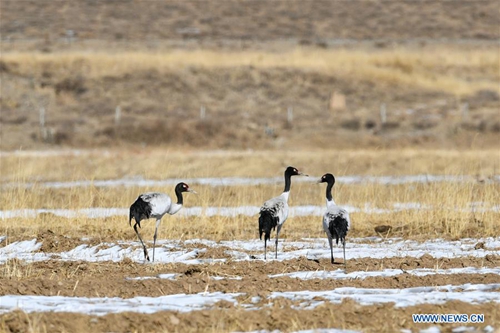
Black-necked cranes rest in fields in Dagze District, Lhasa, southwest China's Tibet Autonomous Region, Jan. 1, 2019. Because of fine environment and abundant food, Lhunzhub County and Dagze District have become ideal habitats for black-necked cranes in winter. (Xinhua/Zhang Rufeng)
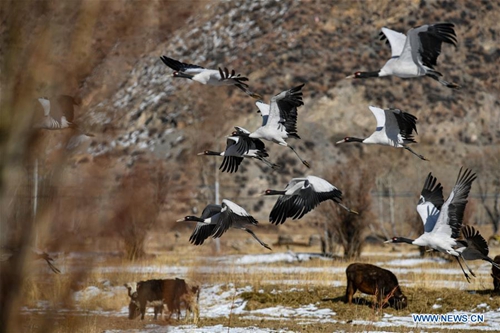
Black-necked cranes fly over fileds of Dagze District, Lhasa, southwest China's Tibet Autonomous Region, Jan. 1, 2019. Because of fine environment and abundant food, Lhunzhub County and Dagze District have become ideal habitats for black-necked cranes in winter. (Xinhua/Zhang Rufeng)
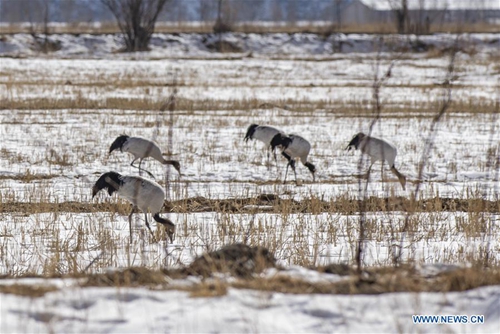
Black-necked cranes search for food in fields in Dagze District, Lhasa, southwest China's Tibet Autonomous Region, Jan. 1, 2019. Because of fine environment and abundant food, Lhunzhub County and Dagze District have become ideal habitats for black-necked cranes in winter. (Xinhua/Sun Fei)
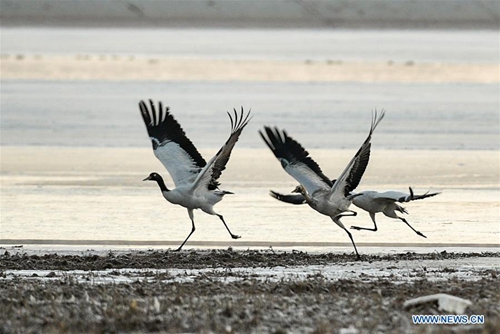
Black-necked cranes rest at a reservoir in Lhunzhub County, Lhasa, southwest China's Tibet Autonomous Region, Jan. 1, 2019. Because of fine environment and abundant food, Lhunzhub County and Dagze District have become ideal habitats for black-necked cranes in winter. (Xinhua/Zhang Rufeng)
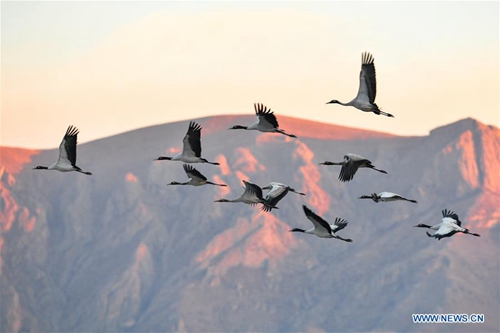
Black-necked cranes fly over the natural reserve for black-necked crane in Lhunzhub County, Lhasa, southwest China's Tibet Autonomous Region, Jan. 1, 2019. Because of fine environment and abundant food, Lhunzhub County and Dagze District have become ideal habitats for black-necked cranes in winter. (Xinhua/Zhang Rufeng)
