PHOTO / CHINA
Measures taken to protect habitat of black-necked cranes in Zhaotong, Yunnan
Published: Feb 28, 2021 10:28 AM
A flock of black-necked cranes fly over the Dashanbao Black-neck Crane Nature Reserve in Zhaotong City, southwest China's Yunnan Province, Feb. 24, 2021. The Dashanbao Black-neck Crane Nature Reserve, established in 2003 for the endangered black-necked cranes, has witnessed over 1,400 black-necked cranes wintering here this year. In recent years, local authorities have taken a variety of measures such as ecological restoration and food source base construction to protect the habitat of black-necked cranes.(Photo: Xinhua)
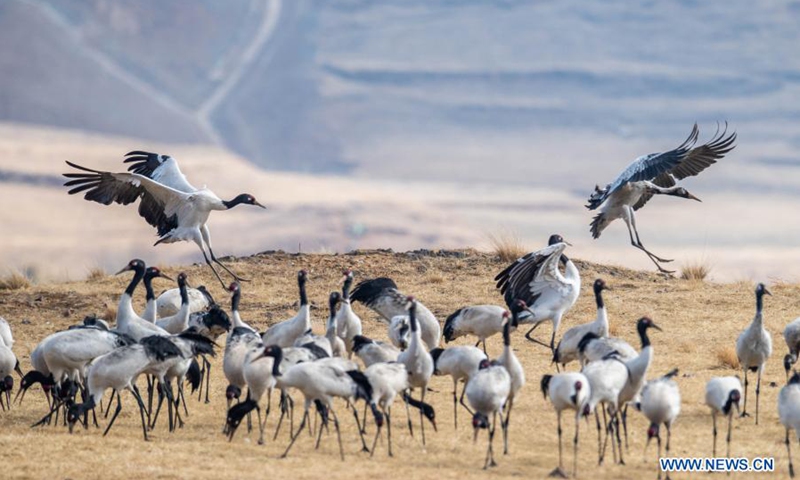
A flock of black-necked cranes fly over the Dashanbao Black-neck Crane Nature Reserve in Zhaotong City, southwest China's Yunnan Province, Feb. 24, 2021. The Dashanbao Black-neck Crane Nature Reserve, established in 2003 for the endangered black-necked cranes, has witnessed over 1,400 black-necked cranes wintering here this year. In recent years, local authorities have taken a variety of measures such as ecological restoration and food source base construction to protect the habitat of black-necked cranes.(Photo: Xinhua)


Black-necked cranes are seen at Dashanbao Dahaizi Wetland in Zhaotong City, southwest China's Yunnan Province, Feb. 26, 2021. The Dashanbao Black-neck Crane Nature Reserve, established in 2003 for the endangered black-necked cranes, has witnessed over 1,400 black-necked cranes wintering here this year. In recent years, local authorities have taken a variety of measures such as ecological restoration and food source base construction to protect the habitat of black-necked cranes. (Photo: Xinhua)

Black-necked cranes are seen at Dashanbao Dahaizi Wetland in Zhaotong City, southwest China's Yunnan Province, Feb. 26, 2021. The Dashanbao Black-neck Crane Nature Reserve, established in 2003 for the endangered black-necked cranes, has witnessed over 1,400 black-necked cranes wintering here this year. In recent years, local authorities have taken a variety of measures such as ecological restoration and food source base construction to protect the habitat of black-necked cranes. (Photo: Xinhua)
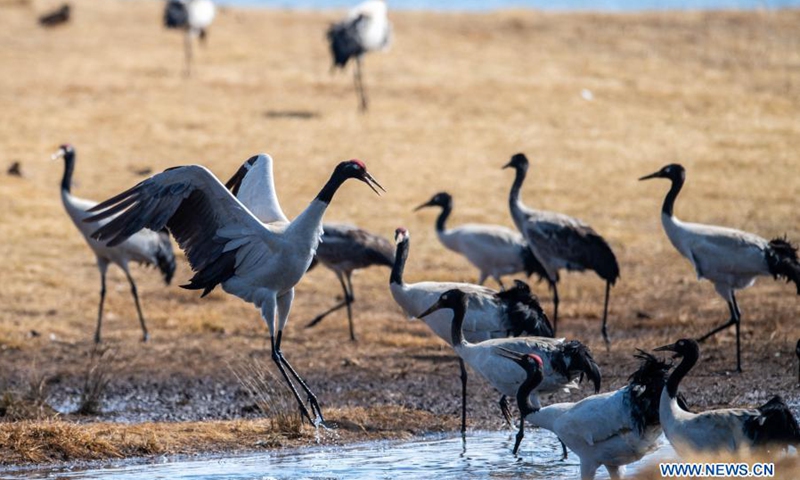

 
Black-necked cranes forage at Dashanbao Dahaizi Wetland in Zhaotong City, southwest China's Yunnan Province, Feb. 24, 2021. The Dashanbao Black-neck Crane Nature Reserve, established in 2003 for the endangered black-necked cranes, has witnessed over 1,400 black-necked cranes wintering here this year. In recent years, local authorities have taken a variety of measures such as ecological restoration and food source base construction to protect the habitat of black-necked cranes. (Photo: Xinhua)

Black-necked cranes forage at Dashanbao Dahaizi Wetland in Zhaotong City, southwest China's Yunnan Province, Feb. 24, 2021. The Dashanbao Black-neck Crane Nature Reserve, established in 2003 for the endangered black-necked cranes, has witnessed over 1,400 black-necked cranes wintering here this year. In recent years, local authorities have taken a variety of measures such as ecological restoration and food source base construction to protect the habitat of black-necked cranes. (Photo: Xinhua)


Black-necked cranes forage at Dashanbao Dahaizi Wetland in Zhaotong City, southwest China's Yunnan Province, Feb. 24, 2021. The Dashanbao Black-neck Crane Nature Reserve, established in 2003 for the endangered black-necked cranes, has witnessed over 1,400 black-necked cranes wintering here this year. In recent years, local authorities have taken a variety of measures such as ecological restoration and food source base construction to protect the habitat of black-necked cranes. (Photo: Xinhua)

Black-necked cranes forage at Dashanbao Dahaizi Wetland in Zhaotong City, southwest China's Yunnan Province, Feb. 24, 2021. The Dashanbao Black-neck Crane Nature Reserve, established in 2003 for the endangered black-necked cranes, has witnessed over 1,400 black-necked cranes wintering here this year. In recent years, local authorities have taken a variety of measures such as ecological restoration and food source base construction to protect the habitat of black-necked cranes. (Photo: Xinhua)